Knowledge · process
Anaerobic Fermentation
How oxygen-free fermentation in sealed tanks reshapes coffee flavor — from carbonic maceration to temperature-controlled anaerobic tanks, and the ongoing debate between process-driven intensity and terroir expression.
Key facts
- Also called
- Oxygen-free fermentation in sealed tanks
- Key vessel
- Hermetically sealed stainless steel tank with one-way valve
- Originates from
- Carbonic maceration winemaking technique, Beaujolais region
- Flavor profile
- Intensely fruity, floral, vinous, whisky-like notes
- Primary controls
- Temperature, pH, and fermentation time
- Historical basis
- Louis Pasteur's 1872 observations on CO₂ effects
- In our catalog
- 83 anaerobic-process coffees
What Is Anaerobic Fermentation?
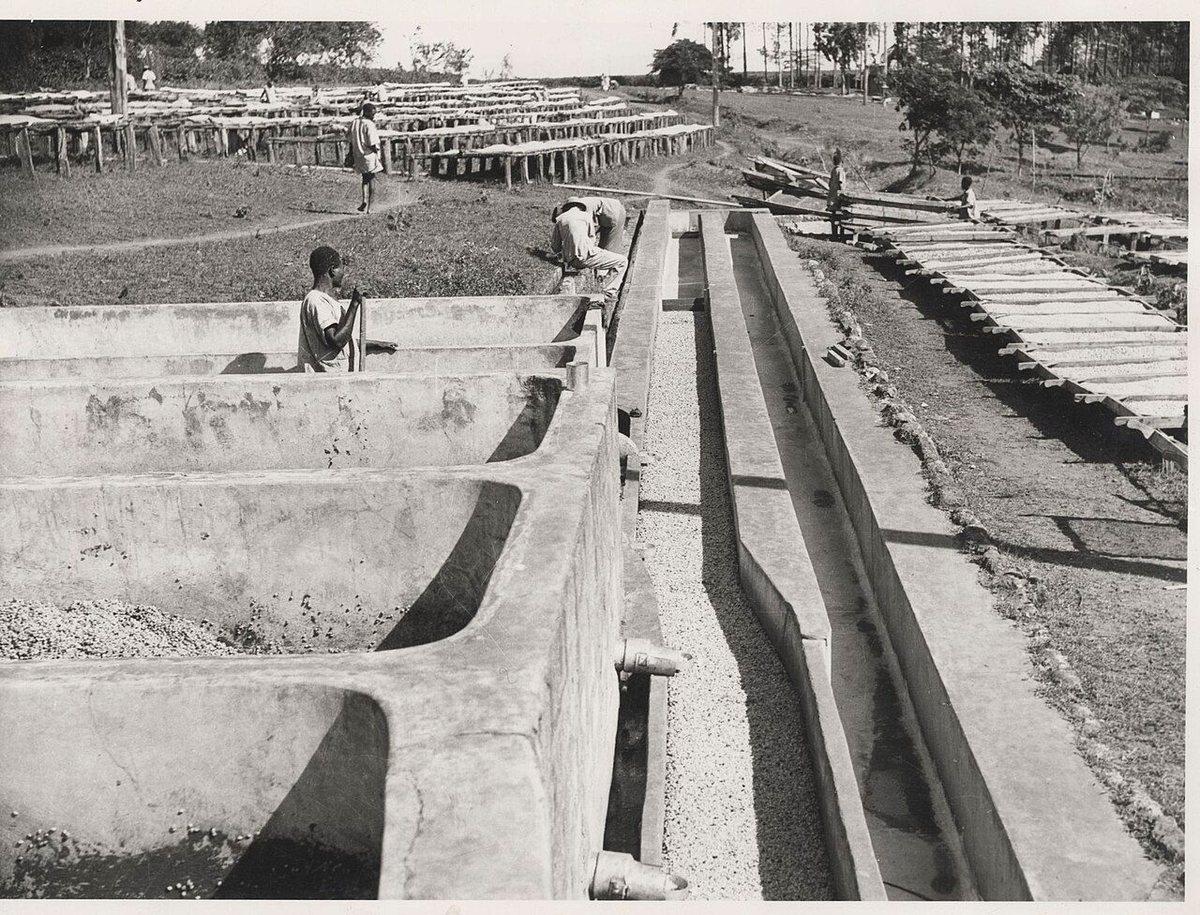
Anaerobic fermentation is a post-harvest coffee processing technique in which ripe coffee cherries — either whole or depulped — are sealed inside airtight vessels, typically stainless steel tanks fitted with one-way pressure-release valves, and left to ferment in the complete or near-complete absence of oxygen. The exclusion of oxygen fundamentally changes the microbial ecology of fermentation: aerobic bacteria and wild yeasts that dominate open-tank or conventional wet fermentation are suppressed, while anaerobic microorganisms — including lactic acid bacteria, specific strains of Saccharomyces and non-Saccharomyces yeasts, and various acid-producing bacteria — proliferate and drive the chemistry of the process.
While fermentation has always played a role in coffee processing — most famously in the ferment-and-wash step of washed (wet) processing, where mucilage is broken down by microbes over roughly 8 to 36 hours depending on temperature, mucilage thickness, and enzyme concentration — anaerobic fermentation extends and intentionally manipulates that microbial activity to produce flavor compounds far beyond simple mucilage removal. The result is a cup profile that is often described as intensely fruity, floral, vinous, or even reminiscent of spirits such as whisky, and which sits at the experimental frontier of specialty coffee.
As a category, anaerobic fermentation falls under the broader umbrella of experimental processing, though it has become sufficiently established in the specialty trade to merit dedicated treatment.
Historical Context and the Wine Parallel
The intellectual and practical roots of anaerobic coffee fermentation lie in carbonic maceration, a winemaking technique long associated with the Beaujolais region of France and its Gamay-based wines. In carbonic maceration, whole, uncrushed grape clusters are placed in a sealed vessel that is purged with carbon dioxide. An anaerobic environment is created, and fermentation begins at an intracellular level — inside each intact berry — rather than being driven primarily by external yeasts acting on free juice. Carbon dioxide permeates grape skins, stimulating a distinctive suite of chemical reactions. The resulting wines are notably fruity, low in tannins, and ready to drink quickly.
Some of the earliest documented scientific observations of oxygen-exclusion effects on fermentation were made by Louis Pasteur, who noted in 1872 that grapes stored in a carbon dioxide-rich environment before crushing produced wines with different flavor characteristics than those fermented conventionally in an oxygen-rich setting. This observation — that the atmosphere surrounding fermenting fruit profoundly shapes flavor — is now central to anaerobic coffee processing.
In wine, the technique gave rise to both full carbonic maceration (whole-cluster, fully CO₂-purged) and semi-carbonic maceration (a shorter anaerobic phase followed by conventional yeast fermentation, as used in Beaujolais Nouveau). Coffee producers, particularly in the specialty sector, have adapted both models. As documented in coffee production literature, ripe coffee cherries are placed inside hermetic stainless steel tanks and left to undergo anaerobic fermentation, a process noted to produce intense aromas with taste profiles reminiscent of red wine and whisky, often yielding a full-bodied cup.
Mechanics: The Sealed Tank Environment
The practical apparatus of anaerobic coffee fermentation is straightforward in concept, though demanding in execution:
- Vessel: Hermetically sealed stainless steel tanks are standard. The seal is critical — any oxygen ingress shifts the microbial balance and can introduce undesirable acetic acid (vinegar) notes or spoilage organisms.
- One-way valve: A pressure-release or airlock valve allows CO₂ produced by microbial activity to escape without allowing atmospheric oxygen back in. This is analogous to the airlocks used in home brewing and wine fermentation.
- Substrate: The cherry can be fermented whole (analogous to carbonic maceration), depulped with mucilage intact (analogous to a honey or pulped-natural substrate — see Honey & Pulped-Natural Processing), or fully depulped. Each substrate configuration exposes the bean to different concentrations of sugar, organic acids, and microbial metabolites.
- Carbon dioxide dynamics: As anaerobic microorganisms metabolize sugars, they release CO₂, which accumulates inside the tank, further suppressing oxygen and sustaining the anaerobic environment. Some producers also inject exogenous CO₂ at the outset to purge residual oxygen before microbial activity is established, more closely mirroring the wine carbonic maceration protocol.
The fermentation process must be carefully monitored. As with all fermentation in coffee production, the goal is to develop desirable flavor compounds while preventing spoilage. Temperature, time, and pH are the primary control variables.
Temperature, pH, and Time Control
Precise environmental control is what separates intentional anaerobic fermentation from accidental oxygen exclusion. The key variables are:
Temperature
Temperature governs both the rate of microbial metabolism and the specific metabolic pathways that become dominant. Lower temperatures slow fermentation, extend the process timeline, and tend to favor the production of delicate aromatic esters and lactic acid compounds. Higher temperatures accelerate fermentation but increase the risk of over-fermentation and the accumulation of off-flavors. Many specialty producers conducting controlled anaerobic fermentation work in cool, temperature-stable environments or use jacketed tanks, though the specific temperature ranges employed vary by producer and are not yet standardized across the industry.
pH
As fermentation proceeds, organic acids accumulate and pH drops. Monitoring pH serves two purposes: it provides a proxy indicator of fermentation progress, and it acts as a food-safety check, since a sufficiently low pH environment inhibits pathogenic organisms. The pH trajectory during anaerobic fermentation differs from open-tank washed fermentation because of the different microbial consortia involved — lactic acid bacteria in particular tend to dominate in low-oxygen, sugar-rich environments and drive rapid acidification.
Time
Conventional washed fermentation typically runs 8 to 36 hours. Anaerobic fermentation processes are frequently extended well beyond this range — runs of 48, 72, or even 96 hours or more are reported in specialty coffee contexts, depending on temperature and the flavor profile targeted. The extended timeline allows for a greater accumulation of fermentation-derived flavor precursors and aromatic compounds in the bean. However, it also narrows the margin for error: the difference between a prized fruit-forward coffee and an over-fermented, alcohol-sour cup can be a matter of hours at a given temperature.
Producers may use a combination of sensory evaluation (smell and taste of the fermenting liquid), pH measurement, and Brix readings (measuring dissolved sugar concentration) to determine when to terminate fermentation and move the coffee to drying. This is analogous to how, in conventional wet processing, the end of fermentation is assessed by feel — when the parchment surrounding the bean loses its slimy texture and acquires a rougher, pebbly character.
Carbonic Maceration as a Distinct Sub-Style
Within the broad category of anaerobic fermentation, carbonic maceration coffee (sometimes abbreviated CM) represents the most direct adaptation of the Beaujolais wine technique. Key distinguishing features:
- Whole cherry: The coffee is fermented intact, unbroken, so that some proportion of fermentation is intracellular, occurring inside the cherry itself rather than purely in the surrounding liquid environment.
- CO₂ purge: The tank is actively purged with CO₂ before sealing, creating an environment as close as possible to the wine carbonic maceration model from the outset.
- Flavor signature: Carbonic maceration coffees are frequently noted for particularly bright, candy-like fruit notes — tropical fruits, berry compote, maraschino cherry — alongside a smooth, low-perceived-acidity body that echoes the low-tannin profile of carbonic maceration wines.
Known coffee varieties processed with semi-carbonic maceration include Red Catuai and Yellow Catuai, as documented in the specialty coffee literature. The technique has been adopted most visibly in competition-circuit coffees and in micro-lot offerings from producers in Colombia, Panama, Ethiopia, and Costa Rica, among others. Coffees like the Colombia Doña Martha Gesha (Onyx Coffee Lab) and the Colombia El Jardin Gesha (Onyx Coffee Lab) represent the category of high-intervention specialty processing applied to exceptional-terroir Gesha lots — a convergence of variety, origin, and process precision.
Flavor Outcomes: The Intense, the Vinous, and the Divisive
The flavor results of anaerobic fermentation are among the most dramatic achievable through processing, and they are a central reason for the technique's rapid adoption in competition and specialty retail contexts. Commonly observed cup characteristics include:
- Intense fruit: Tropical fruit (mango, passionfruit, pineapple), stone fruit (peach, apricot), and berry notes at intensities that exceed what the same variety and origin would express through washed or natural processing.
- Vinous and winey qualities: Red wine, port, or grape juice characteristics, directly traceable to the overlap in microbial chemistry with wine fermentation.
- Spirit-forward notes: Whisky, rum, or brandy-like impressions, arising from the accumulation of higher alcohols and esters during extended fermentation.
- Full body and syrupy texture: Fermentation byproducts contribute to mouthfeel; anaerobically processed coffees frequently exhibit a heavier, more viscous body than their washed counterparts.
- Reduced perceived brightness: Some anaerobic coffees present with a lower-perceived-acidity profile relative to the same origin processed by washed methods, though this is not universal and depends heavily on fermentation parameters.
These profiles are not universally celebrated. Critics within the specialty coffee community note that extreme anaerobic fermentation can overwhelm the inherent character of a coffee — its varietal aromatics, soil-derived mineral notes, and the altitude and climate signatures that define its origin — with process-generated flavor compounds. A Gesha fermented for 120 hours anaerobically at 30°C may taste more like a fermentation experiment than a showcase of Panamanian terroir, regardless of how remarkable the underlying green coffee is. The Panama Finca Deborah Nirvana Gesha (Onyx Coffee Lab) illustrates how producers navigate this tension: a variety and farm of extraordinary pedigree, where processing decisions carry significant consequences for how the coffee's identity is expressed.
Reproducibility and Standardization Challenges
One of the most significant practical challenges of anaerobic fermentation is reproducibility — the ability to produce a consistent cup profile across multiple batches, harvests, and farms. The challenge operates at several levels:
Microbial variability
The flavor of an anaerobically fermented coffee is shaped by the specific community of microorganisms present in the tank, on the cherry surface, and in the ambient environment of the processing facility. These communities vary by geography, season, and even individual farm. Two tanks sealed under nominally identical conditions at different farms — or even at the same farm in different harvest years — may produce meaningfully different results if the microbial populations differ.
Some producers have begun experimenting with inoculated fermentation, introducing cultured starter organisms (specific yeast or bacterial strains) to the tank to exert greater control over microbial ecology. This practice, well-established in wine and beer production, remains experimental in coffee, but represents a path toward greater reproducibility.
Altitude and ambient temperature
The ambient temperature of the processing environment varies with altitude and season, meaning that a fermentation protocol developed at one farm may behave quite differently when applied at another. Without temperature-controlled tanks, this variability is difficult to eliminate.
Definition and labeling inconsistency
The terminology applied to anaerobic coffees in the specialty trade is not standardized. Coffees labeled as "anaerobic natural," "anaerobic washed," "carbonic maceration," or "semi-carbonic maceration" may reflect substantially different processing protocols. This makes sensory prediction and quality benchmarking difficult for buyers, roasters, and consumers. Industry bodies and competitions have begun developing more rigorous processing disclosure frameworks, but a universal standard does not yet exist.
The 'Process-Driven vs. Terroir' Debate
No aspect of anaerobic fermentation generates more sustained discussion in the specialty coffee world than the question of whether extreme processing serves or subverts origin expression. The debate maps onto a broader tension in coffee processing between:
Process-first philosophy: The view that fermentation is a legitimate tool for creating flavor, and that a cup profile shaped by 72 hours of controlled anaerobic fermentation in a temperature-stable tank is no less authentic than one shaped by the specific rainfall patterns of a Kenyan micro-climate. Proponents argue that processing is a form of craft that adds value and expressive range to coffee, and that consumers who seek unusual, complex, or unexpected flavor experiences are well served by anaerobic techniques.
Terroir-first philosophy: The view that the highest purpose of processing is to reveal and protect the inherent qualities of the coffee — its variety, altitude, soil, and microclimate — and that heavy fermentation intervention risks homogenizing coffees from disparate origins into a recognizable "anaerobic house style." Critics note that competition-oriented anaerobic coffees can be so dominated by fermentation-derived notes that they are difficult to assess by traditional cupping standards, and that the technique can mask defects in the underlying green coffee as readily as it can amplify virtues.
A pragmatic middle ground holds that both perspectives are valid in their domain: anaerobic fermentation is an appropriate and excellent tool when applied to already high-quality raw material with clear intent, and when the fermentation parameters are disclosed transparently so that buyers and consumers can make informed choices. The analogy with wine is instructive — both minimally-interventionist natural wine and technically precise fermented wine have their place, but the methodology should be legible.
This tension also reinforces the importance of considering anaerobic fermentation alongside the full processing toolkit — natural (dry) processing, washed processing, and honey methods — as one point on a spectrum rather than an isolated category.
After Fermentation: Drying and Green Coffee Quality
Once anaerobic fermentation is terminated, the coffee must be dried. The transition from tank to drying is a critical quality checkpoint: the fermented cherry or parchment carries a significantly altered biochemical load compared to conventionally processed coffee, and the drying phase must be managed carefully to preserve the desired flavor development without introducing mold, over-drying defects, or further unwanted fermentation.
Most producers move anaerobically fermented coffee to raised drying beds, where airflow and temperature can be managed, though the precise protocols vary widely. For a detailed treatment of drying methodology, see Drying Coffee. The high sugar and organic acid content of anaerobically fermented lots can make moisture management more complex than with washed coffees, and moisture meters and Aw (water activity) monitoring are increasingly employed by careful producers.
The green coffee that results from a well-executed anaerobic fermentation is chemically distinct from washed or natural-processed counterparts: it contains elevated concentrations of fermentation-derived compounds that will undergo further transformation during roasting, contributing to the distinctive cup profile that has made these coffees commercially and competitively significant.
Summary
Anaerobic fermentation represents one of the most significant process innovations in specialty coffee of the past decade. By sealing cherries in oxygen-free tanks — drawing directly on the winemaking tradition of carbonic maceration — producers can generate flavor intensity, aromatic complexity, and cup profiles that were previously inaccessible through conventional processing. The technique demands rigorous control of temperature, pH, and fermentation time, and its results, while often spectacular, are subject to significant reproducibility challenges and ongoing debate about whether process-driven intensity enhances or obscures the terroir qualities that define the world's most celebrated coffees.
Coffees demonstrating this
From our catalog of in-stock beans.

Panama · Anaerobic Natural
Panama Finca Deborah Nirvana Gesha
Onyx Coffee Lab · $33
Bright, tart Geisha from Panama with strawberry, rose, and elegant floral notes.
Colombia · Anaerobic Washed
Colombia Doña Martha Gesha
Onyx Coffee Lab · $30
Modern Colombian Geisha with refined florals and elegant structure from El Diviso.

Colombia · Anaerobic Washed
Colombia El Jardin Gesha
Onyx Coffee Lab · $8
Champion producer's anaerobic washed Geisha from newly acquired Colombian farm.
ViewFrequently asked questions
- What makes anaerobic fermentation different from conventional coffee fermentation?
- In conventional washed processing, coffee is fermented in open tanks or in its own juices with exposure to ambient air, typically for 8 to 36 hours, primarily to break down the mucilage. Anaerobic fermentation seals the coffee in airtight vessels, excluding oxygen, which changes the microbial ecology, suppresses aerobic organisms, and enables the accumulation of fermentation-derived aromatic compounds — esters, higher alcohols, and organic acids — that dramatically alter the final cup profile far beyond mucilage removal.
- What is carbonic maceration coffee?
- Carbonic maceration coffee is a specific style of anaerobic fermentation adapted from the Beaujolais winemaking technique, in which whole, intact coffee cherries are placed in sealed tanks purged with carbon dioxide. Fermentation begins at an intracellular level inside each cherry. The resulting coffees are typically noted for intense, candy-like fruit notes, a smooth body, and vinous or spirit-like characteristics.
- How do producers control the flavor of anaerobically fermented coffee?
- The primary control variables are temperature, time, and pH. Lower fermentation temperatures slow microbial activity and tend to produce more delicate aromatic profiles; higher temperatures accelerate fermentation but increase spoilage risk. Producers monitor pH as a proxy for fermentation progress and may also track Brix (dissolved sugar concentration). Fermentation is terminated — and the coffee moved to drying — when target parameters are met, assessed through a combination of measurement and sensory evaluation.
- Is anaerobic fermentation reproducible across harvests?
- Reproducibility is one of the core challenges of anaerobic fermentation. The specific microbial communities present in a tank vary by geography, season, and farm environment, meaning nominally identical protocols can yield different results year to year or across different farms. Some producers experiment with inoculated starter cultures to improve consistency, but standardized protocols are not yet established across the industry.
- Does anaerobic fermentation destroy origin character?
- This is one of the most debated questions in specialty coffee. A 'terroir-first' view holds that heavy fermentation can obscure a coffee's varietal and origin qualities — altitude, soil, microclimate — beneath process-generated flavors. A 'process-first' view treats fermentation as a legitimate craft that adds expressive range. Many practitioners advocate for transparency in processing disclosure so consumers and buyers can understand what they are tasting and assess it accordingly.
- Which coffee varieties are commonly processed using anaerobic or carbonic maceration methods?
- A range of varieties has been processed anaerobically, but the technique has been notably applied to high-value varieties such as Gesha (also written Geisha), as well as documented examples including Red Catuai and Yellow Catuai. The technique is used across producing countries including Colombia, Panama, Ethiopia, and Costa Rica, among others.
See also