Knowledge · sensory
Coffee Sensory & Grading
The science and craft of professional coffee evaluation — cupping protocols, scoring, sensory language, and defect standards explained.
Key facts
- Discipline origin
- Grew with specialty coffee movement, term coined 1974
- Standard protocol
- Cupping with coarsely ground coffee steeped in hot water
- Scoring system
- SCA 100-point scale, 80+ points for specialty grade
- Quality standards
- No more than 0-5 defects per 350g of milled beans
- Sensory framework
- Coffee Taster's Flavor Wheel with hierarchical descriptors
- Key attributes
- Aroma, flavor, acidity, body, balance, sweetness, aftertaste
What Is Coffee Sensory Evaluation?
Coffee sensory evaluation is the systematic, reproducible process by which trained tasters assess the aromatic, gustatory, and tactile qualities of brewed coffee. It sits at the intersection of food science and craft, providing a shared framework that allows growers, exporters, roasters, and buyers to communicate quality across languages and cultures.
The discipline grew in importance alongside the rise of specialty coffee — a term first used in 1974 by Erna Knutsen to describe beans of the best flavor produced in special microclimates. As the third wave of coffee brought heightened attention to single-origin sourcing and terroir-driven flavor, the need for standardized sensory tools became urgent. Today, the Specialty Coffee Association (SCA) sets the benchmarks that underpin the entire evaluation ecosystem.
Cupping: The Foundational Protocol
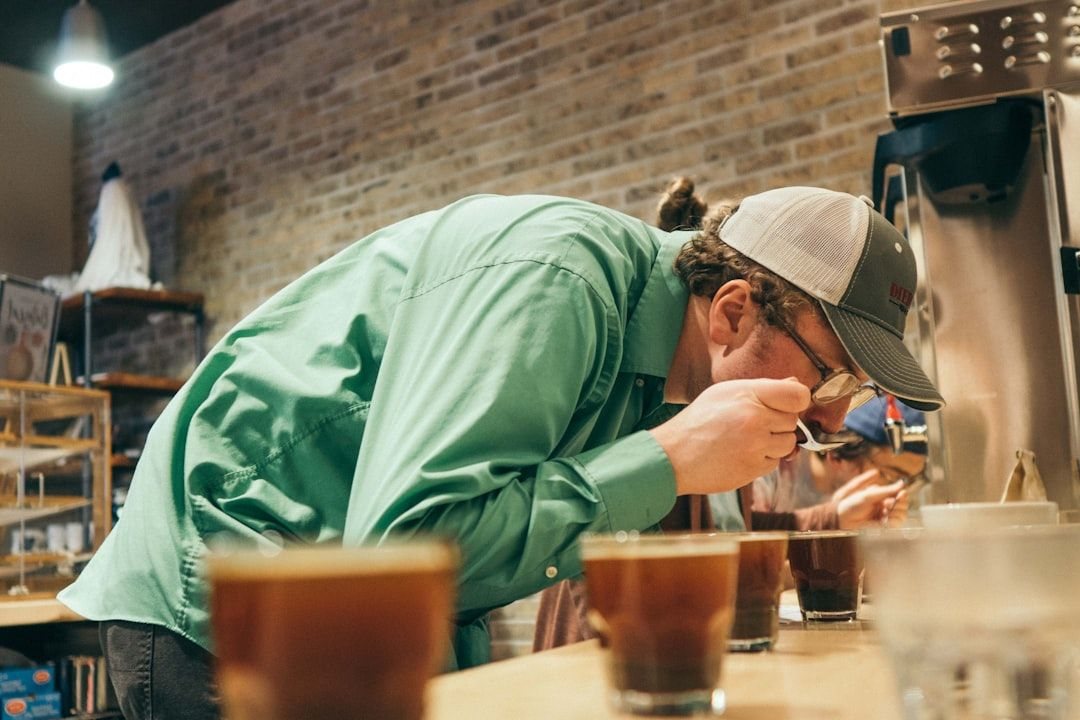
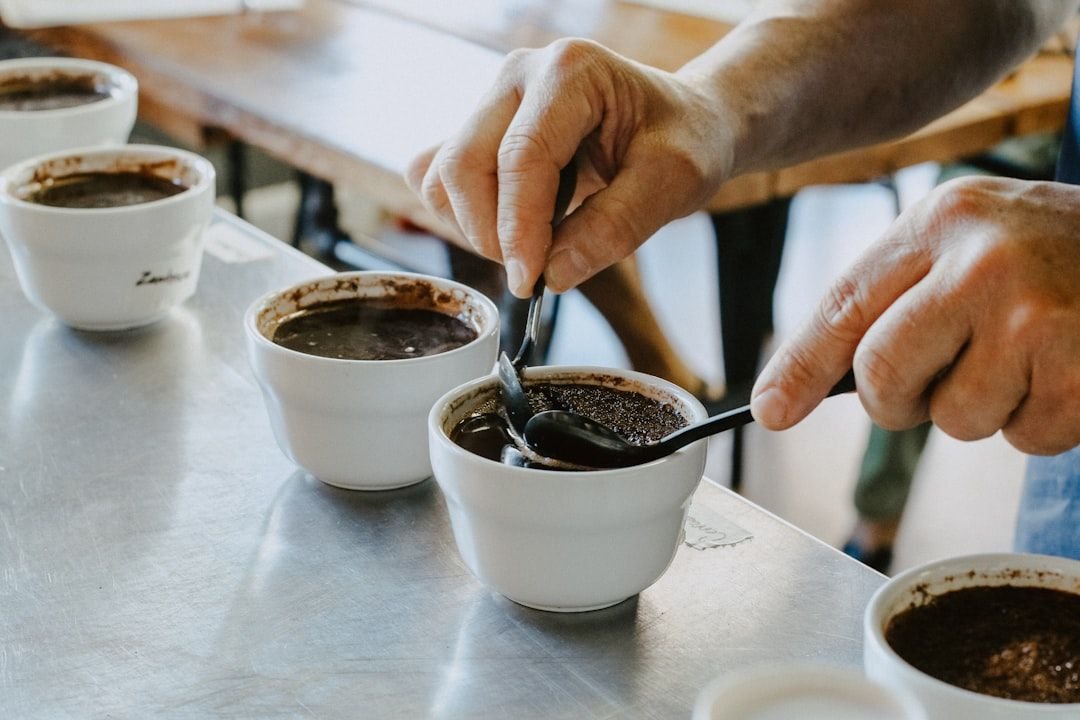
Cupping is the industry-standard method for tasting and comparing coffees. It is a deliberately simple, level-playing-field procedure: coarsely ground coffee is placed in open cups, covered with hot water, and allowed to steep before the crust of grounds is broken and the liquid is assessed by slurping from a spoon.
The simplicity is intentional. By removing brewing variables — no espresso pressure, no filter media, no milk — cupping isolates the intrinsic character of the coffee itself. Panelists typically evaluate multiple samples side by side, moving quickly around the table to capture impressions at different temperature stages as the cup cools.
Key procedural elements governed by the SCA protocol include:
- Grind size and dose: a calibrated ratio of ground coffee to water
- Water temperature: the SCA specifies temperature within a defined range to ensure reproducibility
- Steep time: grounds are typically left undisturbed before the crust is broken
- Evaluation sequence: fragrance (dry grounds), aroma (after water contact), and then the full sensory assessment of the brewed cup
For a full walkthrough of the methodology, see Cupping: The SCA Protocol.
The SCA 100-Point Scale
The most widely recognized scoring system in specialty coffee is the SCA 100-point scale, used on the SCA Cupping Form. The widely accepted definition of specialty coffee is coffee scoring 80 points or above on this scale. The grading bands are:
| Score Range | Grade |
|---|---|
| 90–100 | Outstanding |
| 85–89.99 | Excellent |
| 80–84.99 | Very Good |
| Below 80 | Below specialty grade |
The form breaks the overall score into discrete attributes — such as aroma, flavor, aftertaste, acidity, body, balance, uniformity, clean cup, sweetness, and overall — each evaluated on a structured scale. Individual attribute scores are summed and then adjusted for defects to produce a final score. A minimum requirement for specialty classification also includes a physical green-bean standard: no more than 0–5 defects per 350 g (12 oz) of milled beans.
The Coffee Science Foundation (CSF), the research arm of the SCA, continues to investigate the scientific principles of coffee sensory perception, informing updates to these standards. See The SCA 100-Point Scale for attribute-by-attribute detail.
The Flavor Wheel and Sensory Lexicon
The Coffee Taster's Flavor Wheel is arguably the most recognizable visual artifact in specialty coffee. It provides a shared vocabulary organized from broad, general categories at the center (e.g., fruity, floral, nutty, roasted) to highly specific descriptors at the outer ring (e.g., blackcurrant, jasmine, hazelnut, tobacco).
The wheel functions as a sensory lexicon — a controlled vocabulary that allows a taster in Bogotá and a buyer in Tokyo to use the same word with the same intended meaning. Without such standardization, subjective impressions become untranslatable noise.
Using the wheel effectively requires training. Tasters learn to:
- Identify a broad category first (e.g., fruity)
- Narrow to a sub-category (e.g., berry)
- Arrive at a specific descriptor (e.g., blueberry or raspberry)
This hierarchical approach mirrors how sensory science trains panels in other food and beverage sectors. The lexicon also establishes reference standards — physical or chemical anchors that allow tasters to calibrate their perception of specific terms, reducing subjective drift.
Explore the full structure in The Coffee Taster's Flavor Wheel and the associated Tasting Descriptors article.
Key Sensory Attributes
Several attributes appear consistently across professional cupping forms and competition scorecards. Understanding them is essential to interpreting any quality evaluation.
Acidity
Acidity in coffee does not refer to a low pH in a harmful sense, but to a positive, brightness-contributing quality often described as lively, crisp, or vibrant. It is one of the most prized and debated attributes in specialty coffee evaluation. Well-developed acidity is perceived as a pleasant sharpness that lifts the cup and enhances perceived sweetness and complexity.
Common acidic sub-types include:
- Citric acidity — bright, lemon or orange notes, common in East African washed coffees
- Malic acidity — softer, apple-like, often found in lighter-roasted Central American coffees
- Tartaric acidity — grape-like, less commonly cited
- Phosphoric acidity — associated with a particularly elevated, almost effervescent brightness
Evaluators assess both the intensity and the quality of acidity — a harsh, unpleasant sourness scores differently from a refined, complex brightness.
Body
Body refers to the tactile sensation of weight and texture in the mouth — often described as the coffee's mouthfeel. A high-body coffee might be described as full, round, or syrupy; a low-body coffee as tea-like or thin. Body is influenced by dissolved solids, oils, and colloidal particles in the cup.
Processing method and roast level significantly shape body: naturally processed coffees and darker roasts tend toward heavier body, while washed, lightly roasted coffees can present a cleaner, lighter texture.
Balance
Balance is a holistic attribute that assesses whether the individual components of a coffee — acidity, sweetness, bitterness, and body — coexist in harmonious proportion. A well-balanced coffee does not let any single attribute dominate unpleasantly. On the SCA cupping form, balance is scored as its own discrete attribute, reflecting that a technically high-scoring coffee on individual attributes can still fail to cohere as a unified sensory experience.
Sweetness, Aftertaste, and Uniformity
- Sweetness in specialty coffee is a perceived quality (not simply residual sugar) associated with ripe, well-developed fruit flavors and proper fermentation and drying during processing.
- Aftertaste evaluates the duration and quality of flavor that lingers after swallowing — a long, clean finish is desirable; a short or astringent aftertaste detracts from the score.
- Uniformity and clean cup assess consistency across the multiple cups prepared from a single sample. Inconsistency may indicate processing defects, contamination, or fermentation irregularities.
For a deeper exploration of individual descriptors, see Tasting Descriptors.
Coffee Defects
Defects are deviations from expected sensory quality, attributable to problems at any stage of the supply chain — cultivation, harvesting, processing, milling, storage, or roasting. They fall into two broad categories:
Primary (Category 1) Defects
These are severe faults that significantly compromise cup quality. A single primary defect can disqualify a lot from specialty classification. Examples include full black beans (caused by over-fermentation or severe frost damage) and full sours (caused by bacterial fermentation producing acetic or butyric acid, which creates sharp, vinegary, or rancid flavors).
Secondary (Category 2) Defects
These are less severe but still penalized. Multiple secondary defects in a 350 g sample can push a lot below the specialty threshold. Examples include partial blacks, partial sours, parchment, floaters, and shells (elephant ears).
The SCA standard specifies that a specialty green coffee may have 0 to 5 defects per 350 g sample, with zero Category 1 defects permitted. In the cup, defect flavors include:
- Ferment / sour — sharp, vinegary, or off-fermentation notes
- Phenolic / medicinal — antiseptic, smoky, or plastic-like flavors, often linked to robusta contamination or certain processing environments
- Musty / earthy — damp, soil-like flavors caused by improper drying or storage
- Woody / straw — associated with aged or past-crop beans
- Baggy — characteristic flavor of beans stored in jute sacks for extended periods
Penalties for defects are applied directly to the SCA cupping score, meaning a coffee with strong defect taints cannot score in the specialty range regardless of its other attributes. See Coffee Defects for a full taxonomy with sensory descriptions.
Sensory Training and Calibration
High-stakes evaluations — such as competition judging, green coffee purchasing, or Q Grader certification — require panelists to be calibrated: their individual sensory responses must align closely enough with one another that scores are reproducible and defensible. This is not a natural state; it requires deliberate training.
Calibration involves repeated exposure to reference standards, group cupping sessions where scores and perceptions are discussed openly, and statistical analysis of inter-rater agreement. The SCA's research infrastructure, including the Coffee Science Foundation, actively investigates the scientific principles of sensory perception as they apply to coffee, with the goal of making evaluation more objective and reliable.
The Q Grader program, administered by the Coffee Quality Institute, is the most recognized professional credential for coffee sensory evaluation. Candidates must demonstrate proficiency across a battery of sensory tests, including triangulation, olfactory identification, and blind cupping to the SCA protocol.
Sensory Evaluation Across the Supply Chain
Sensory tools are not confined to the cupping table of a specialty roaster. They function at every node of the supply chain:
- At origin: producers and exporters cup to identify defects and classify lots before export
- At import and trading: importers and green buyers cup arrival samples to verify they match contracted quality
- At the roastery: roasters cup to dial in roast profiles and assess batch consistency
- In competition: World Coffee Championships judges apply structured scorecards to espresso, brewing, and other disciplines
- In research: the SCA and CSF use trained sensory panels to develop and validate standards
The interconnection of these evaluation points means that the vocabulary and scores generated at the cupping table travel with the coffee, creating a quality narrative that links farm to cup. Specialty coffee — defined by Erna Knutsen in 1974 and formally codified as scoring 80 or above on the SCA scale — depends on this chain of accountability at every step.
In this section
Cupping: The SCA Protocol
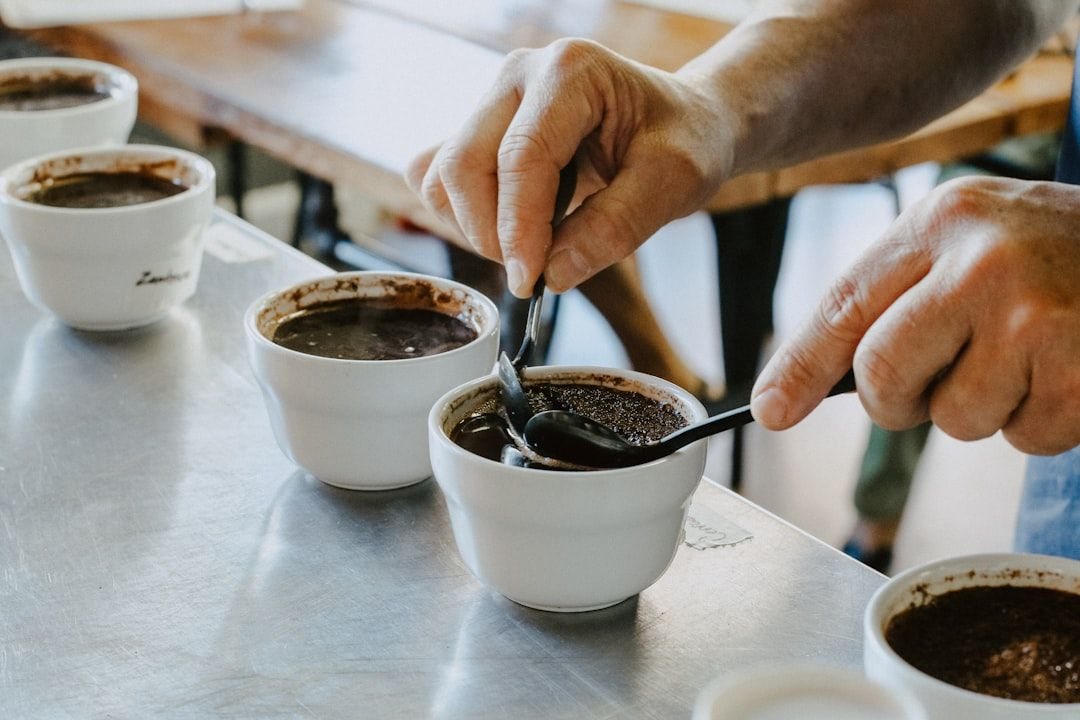
Cupping is the universal sensory evaluation protocol used to assess coffee quality, compare origins, and calibrate tasters. The SCA cupping protocol provides a rigorously standardized procedure—covering roast degree, grind, water temperature, brew ratio, and a structured sequence of fragrance, aroma, and flavor assessment—so that results can be compared across laboratories, farms, and competitions worldwide.
Coffee Defects
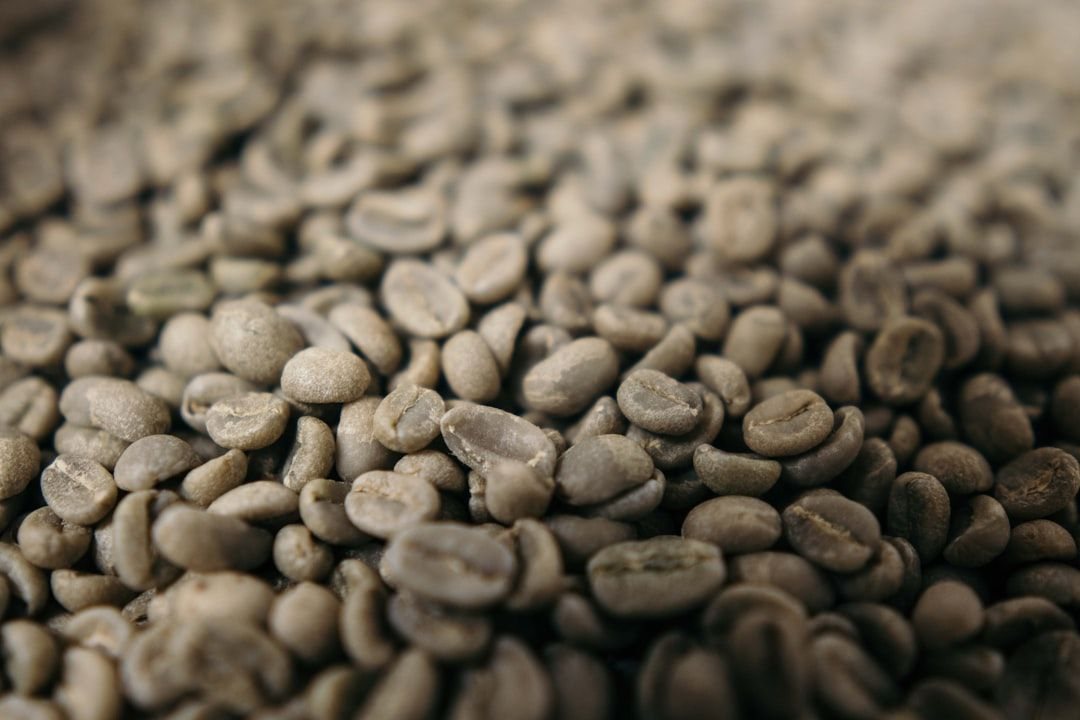
Coffee defects are physical or chemical flaws in green coffee beans or brewed cup quality that reduce commercial value and sensory score. The Specialty Coffee Association (SCA) classifies them into primary and secondary categories for green grading, while a parallel set of cup taints—from ferment to potato defect—guides sensory evaluation and rejection decisions.
Tasting Descriptors
A practical and authoritative guide to the core sensory descriptors used in specialty coffee evaluation — from acidity and body to balance, finish, and complexity — and how origin, processing, and roast shape each quality.
The Coffee Taster's Flavor Wheel
The Coffee Taster's Flavor Wheel is the specialty coffee industry's primary sensory reference tool, jointly developed by the Specialty Coffee Association (SCA) and World Coffee Research (WCR). It organizes the enormous diversity of coffee flavors into a structured, hierarchical vocabulary—from broad primary categories at the center to highly specific descriptors at the outer edge—giving cuppers, roasters, buyers, and consumers a shared language for what's in the cup.
The SCA 100-Point Scale
The SCA 100-point cupping scale is the globally recognised framework for evaluating coffee quality. A score of 80 or above defines a coffee as 'specialty,' while the ten scored attributes—fragrance/aroma, flavor, aftertaste, acidity, body, balance, uniformity, clean cup, sweetness, and overall—give cuppers a rigorous, repeatable language for describing and differentiating coffees at every point in the supply chain.
Frequently asked questions
- What does it mean for a coffee to score 80 points on the SCA scale?
- A score of 80 or above on the SCA's 100-point cupping form is the threshold for specialty grade. Coffees scoring 80–84.99 are graded Very Good, 85–89.99 as Excellent, and 90–100 as Outstanding. Coffees below 80 are considered below specialty grade, regardless of their origin or marketing.
- What is the difference between acidity and sourness in coffee?
- Acidity, in a positive sensory context, refers to a bright, lively quality that adds complexity and perceived sweetness to the cup — think citrus or apple notes. Sourness, by contrast, is generally considered a defect fault: an unpleasant, sharp sensation caused by under-development during roasting or fermentation defects during processing. Evaluators assess both the intensity and the quality of perceived acidity when scoring.
- How many defects can a coffee have and still be classified as specialty?
- According to SCA standards, a specialty green coffee must have no more than 0 to 5 defects per 350 g (12 oz) of milled beans, and zero Category 1 (primary) defects are permitted. Even one full black or full sour bean can disqualify a lot from specialty classification.
- What is the Coffee Taster's Flavor Wheel used for?
- The flavor wheel provides a shared, hierarchical vocabulary for describing coffee aromas and flavors — from broad categories like 'fruity' or 'roasted' at the center, to specific descriptors like 'blueberry' or 'tobacco' at the outer edge. It allows tasters from different backgrounds and languages to communicate precise sensory impressions consistently, and underpins calibrated panel training.
- What is a Q Grader?
- A Q Grader is a professional certified by the Coffee Quality Institute who has demonstrated proficiency in evaluating coffee using the SCA cupping protocol. Certification requires passing a rigorous battery of sensory tests, including olfactory identification, triangulation, and blind cupping. Q Graders are recognized internationally as authoritative coffee quality evaluators.
- Is cupping the only method for evaluating coffee quality?
- Cupping is the dominant standard for green coffee evaluation and trade, but trained evaluators also assess coffee through other brewing methods in competition and quality-control contexts. However, cupping is preferred for comparative analysis because its standardized preparation minimizes brewing variables, isolating the intrinsic character of the coffee itself.
See also