Knowledge · sensory
The SCA 100-Point Scale
How the Specialty Coffee Association's cupping form works, what each of its ten attributes measures, and how the 80-point threshold, Q-grading, and Cup of Excellence scoring fit into the broader quality-assessment landscape.
Key facts
- Scoring System
- 100-point standardized sensory evaluation form
- Specialty Threshold
- 80 points or above on SCA scale
- Developed By
- Specialty Coffee Association
- Evaluated Attributes
- Ten discrete sensory attributes per sample
- Term Coined
- Erna Knutsen in 1974
- Used By
- Buyers, judges, exporters, and roasters worldwide
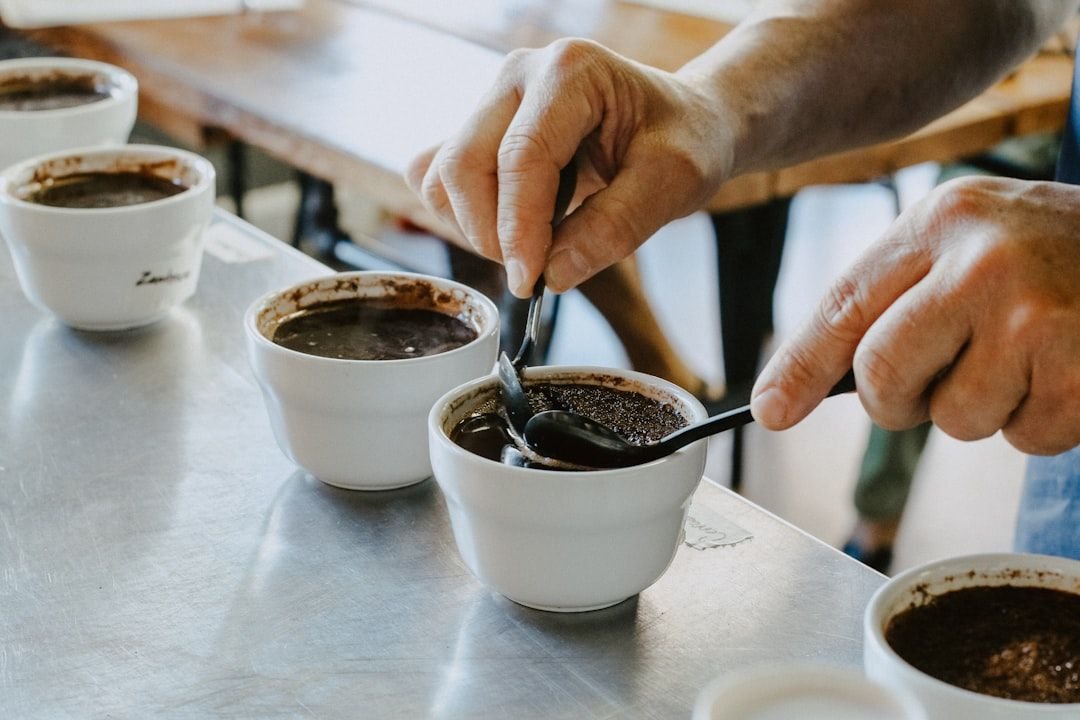
What the SCA Cupping Scale Is
The SCA cupping scale is a standardised sensory-evaluation instrument developed and maintained by the Specialty Coffee Association. It assigns a numeric score out of 100 to a brewed coffee sample based on ten discrete sensory attributes, each evaluated by a trained taster following the SCA cupping protocol. The resulting total score is used throughout the global coffee trade—by green-coffee buyers, competition judges, exporters, and roasters—to classify, compare, and communicate quality.
The scale did not emerge in isolation. It is the product of decades of sensory science and industry consensus-building, and it underpins what the SCA defines as specialty coffee: a coffee that scores 80 points or above on the 100-point form. Below that threshold, a coffee is considered commercial or substandard grade, regardless of its origin or processing method.
The SCA itself describes specialty coffee as something that "can consistently exist through the dedication of the people who have made it their life's work to continually make quality their highest priority," emphasising that quality is a whole-chain concern, not merely a cupping result. The score, however, remains the most widely cited single indicator of specialty status.
The 80-Point Specialty Threshold
The widely accepted definition of specialty coffee is a coffee scoring 80 points or above on the SCA cupping form. Within the specialty band, the SCA and the broader industry recognise three quality tiers:
- 80–84.99 — Very Good: Meets the specialty threshold; clean, well-structured, clearly distinguishable from commercial grade.
- 85–89.99 — Excellent: Noticeably complex; typically represents high-quality single-origin lots with distinctive terroir character.
- 90–100 — Outstanding: Exceptional; coffees at this level are rare and command significant premiums at auction and in direct trade.
The 80-point floor has a practical corollary in green-coffee grading: to be considered specialty, a coffee must also have zero to five defects per 350 g (12 oz) of milled beans. Sensory score and physical defect count therefore work together; a cup can fail to qualify as specialty even if its cupped score crosses 80 if the green sample carries excessive defects.
The term "specialty coffee" itself predates the modern scale—it was coined by Erna Knutsen in 1974 in Tea & Coffee Trade Journal to describe beans of the best flavour produced in special micro-climates—but the 80-point numeric anchor has become the operational definition accepted across the industry.
The Ten Scored Attributes
The SCA cupping form evaluates ten attributes. Each contributes to the final score, and together they guide the cupper's attention through the full sensory arc of a coffee, from the moment grounds are first smelled dry to the long finish in the cup. The Coffee Taster's Flavor Wheel is a complementary tool that helps cuppers find precise tasting descriptors while working through these attributes.
1. Fragrance / Aroma
Fragrance refers to the smell of the dry, ground coffee before hot water is added; aroma is the smell that rises from the wet grounds and the brewed cup. They are scored together as a single attribute because they represent two time-points of the same olfactory dimension. Cuppers assess intensity and quality—asking not just how strong the smell is but whether it is complex, pleasant, and indicative of a well-processed, well-roasted coffee.
2. Flavor
Flavor is the central, integrating attribute. It captures the combined impression of all taste sensations—sweetness, acidity, bitterness, saltiness—and retro-nasal aroma perceived when the coffee is slurped and drawn across the palate. Intensity, quality, and complexity are all considered. Because flavor integrates so many signals, it carries significant weight in distinguishing coffees from different origins, varieties, and processing methods.
3. Aftertaste
Aftertaste is the length and quality of positive flavor attributes that linger after the coffee is swallowed or expectorated. A long, clean, pleasant finish is considered a positive quality indicator. Unpleasant or harsh lingering sensations—astringency, bitterness that outlasts sweetness—will reduce the aftertaste score.
4. Acidity
Acidity in cupping terminology describes the bright, lively, sometimes fruit-like quality associated with organic acids naturally present in coffee—citric, malic, tartaric, and others. It is scored for both quality (is it pleasant and appropriate to the coffee's character?) and intensity (is it at the right level for the style?). High-grown washed coffees from East Africa, for example, are often characterised by pronounced, positively scored acidity. Acidity that reads as sour, harsh, or fermented is scored down. Cuppers are also expected to note whether the acidity is appropriate given the coffee's expected profile.
5. Body
Body refers to the tactile weight or mouthfeel of the brewed coffee—the sensation of thickness, viscosity, and presence on the palate. It is evaluated both for intensity (light to heavy) and quality (does the body enhance the overall experience?). A heavy body is not intrinsically superior; the score reflects whether the body is appropriate, clean, and pleasurable. Natural-processed and Indonesian coffees, for instance, often exhibit heavier body than washed Central Americans.
6. Balance
Balance assesses how well the preceding attributes—flavor, aftertaste, acidity, and body—complement and enhance each other without one dimension overwhelming the rest. A coffee where acidity, sweetness, and body are in harmony will score higher on balance than one in which a single trait dominates uncomfortably. Balance is not synonymous with neutrality; a complex, high-acidity coffee can be perfectly balanced if its sweetness and body provide counterpoint.
7. Uniformity
Uniformity is evaluated across the five cups that represent a single sample under the SCA protocol. Each of the five cups is worth two points; if all five cups taste identical, the full ten points are awarded. Any cup that deviates noticeably from the others—suggesting inconsistency in roasting, processing, or green preparation—results in a two-point deduction per divergent cup. Uniformity penalises inconsistency at origin and processing rather than flavour character per se.
8. Clean Cup
Clean cup similarly scores all five cups, with each cup worth two points (maximum ten). It penalises the presence of any interfering negative impressions—off-flavours, taints, or defects—from first impression to finish. A "clean" cup is one free from coffee defects that mask or corrupt the coffee's intrinsic character. Common culprits include ferment taints, mustiness, phenolic notes, and other process or storage faults. A single tainted cup in the flight costs two points.
9. Sweetness
Sweetness is also scored across the five cups (two points per cup, maximum ten). It reflects the presence of a naturally sweet sensation—derived from sucrose and other sugars surviving the roasting process—that contributes to overall pleasantness and roundness. Coffees lacking sweetness often register as harsh, thin, or unripe. Like uniformity and clean cup, sweetness scoring is binary per cup: it is either present in a meaningful way or it is not, and a cup where sweetness is absent or very deficient loses its two points.
10. Overall
The overall score is a holistic impression that allows the cupper to reward or note qualities not fully captured by the nine preceding attributes. It is an integrating judgment: does this coffee, taken as a whole, exceed or fall short of what the sum of its parts suggests? Exceptional complexity, a striking terroir character, or a remarkable finish might push the overall score up; an inexplicable sense of imbalance or disappointment might pull it down. The overall attribute gives experienced cuppers discretionary space to reflect genuine sensory impact.
How the Score Is Calculated
The six quality attributes—fragrance/aroma, flavor, aftertaste, acidity, body, and balance—are each scored on a six-to-ten-point scale (in 0.25-point increments), anchored as follows: 6 = Good, 7 = Very Good, 8 = Excellent, 9 = Outstanding. The three consistency attributes—uniformity, clean cup, and sweetness—each have a maximum of ten points, deducted in two-point increments per failing cup. The overall attribute is likewise scored on the six-to-ten-point quality scale.
A taint or fault score is subtracted separately: a taint (mild defect) subtracts two points per occurrence; a fault (strong defect) subtracts four points per occurrence, multiplied by the number of cups in which it appears.
The final score formula is therefore:
Total Score = Sum of ten attribute scores − Defect deductions
Because uniformity, clean cup, and sweetness each start at a full ten and can only be reduced, a coffee with no defects and perfect consistency begins with 30 points already "banked." The quality attributes together can contribute a maximum of roughly 70 points (six attributes × ~10 possible points each, plus overall), meaning a perfect coffee would require near-maximum scores across all quality dimensions in addition to flawless consistency.
Q-Grading and the Q Grader Credential
The Q Grader program, administered by the Coffee Quality Institute (CQI), is the professional credentialing system built around the SCA cupping form. A Q Grader is a licensed sensory professional who has passed a battery of examinations—including triangulation tests, olfactory identification, green-coffee grading, and calibrated cupping—demonstrating the ability to apply the SCA scale reliably and consistently.
Q Graders are used widely across the supply chain: at origin, to evaluate and certify lots for export; by importers and roasters, to assess incoming green coffee; and in competitions, to ensure scoring integrity. The credential must be renewed every three years through re-calibration, reflecting the understanding that sensory acuity and calibration require ongoing maintenance.
The Q Grading system applies specifically to Arabica coffee. A parallel credential—the R Grader—was developed for Coffea canephora (Robusta), using a separate form adapted to that species' different sensory profile.
A coffee that receives a Q Grader-verified score of 80 or above is formally documented as specialty grade, a certification that carries significant commercial weight in green-coffee trading, direct-trade relationships, and export documentation.
Cup of Excellence Scoring
The Cup of Excellence (CoE) competition series, run by the Alliance for Coffee Excellence (ACE), uses its own scoring system that is related to but distinct from the standard SCA cupping form. CoE competitions are held annually in producing countries and represent one of the most rigorous quality-competition frameworks in the industry.
In the CoE system, coffees must pass multiple rounds of evaluation—national pre-selection, national jury cupping, and international jury cupping—before being eligible for the final auction. The CoE form shares many structural similarities with the SCA form, assessing attributes including aroma, flavor, aftertaste, acidity, mouthfeel (body), balance, and overall; however, the weighting and scoring mechanics differ in specific ways designed for competition rather than trade documentation.
The Cup of Excellence threshold is a score of 87 points on the CoE scale to qualify as a CoE winner lot. Coffees that score between 84 and 86.99 on the national jury round may receive a National Winner designation. These thresholds are higher than the basic specialty threshold, reflecting that CoE is explicitly a competition for exceptional lots rather than a pass/fail specialty qualifier.
CoE auction prices are often cited as benchmarks for the upper end of the specialty market. The most expensive lots—frequently Panama Geisha varieties—have reached extraordinary per-pound prices at CoE and similar auctions, illustrating how the scoring framework directly drives economic value at the top of the market.
Limitations and Evolution of the Scale
The SCA scale, for all its influence, is not without critique. Several limitations are worth noting for a complete understanding:
- Cultural calibration bias: The scale was developed primarily within a Western specialty-coffee context. Attributes such as acidity are scored positively based on preferences that are not universal across all coffee-consuming cultures.
- Roast-profile interaction: The form evaluates the cup as presented; a coffee that would score very highly with a light roast may score quite differently when roasted darker, yet the green-coffee lot receives only one commercial score.
- Subjectivity of the overall attribute: The discretionary nature of the overall score can introduce inter-rater variance even among calibrated Q Graders.
- SCA Coffee Value Assessment work: The SCA has undertaken ongoing research to develop more nuanced frameworks for coffee value assessment, recognising that a single number cannot fully capture the multidimensional nature of coffee quality or the expectations of all stakeholders in the value chain.
Despite these limitations, the 100-point scale remains the most widely adopted, internationally recognised, and operationally useful single tool for communicating coffee quality across language, culture, and supply-chain context. Its influence on pricing, sourcing, competition, and consumer education has been profound, and it continues to be refined as the specialty coffee industry matures.
Frequently asked questions
- What score does a coffee need to be called 'specialty'?
- A coffee must score 80 points or above on the SCA 100-point cupping form to qualify as specialty. It must also have no more than five defects per 350 g of milled green beans. Scores of 80–84.99 are graded Very Good, 85–89.99 Excellent, and 90–100 Outstanding.
- What are the ten attributes on the SCA cupping form?
- The ten attributes are: fragrance/aroma, flavor, aftertaste, acidity, body, balance, uniformity, clean cup, sweetness, and overall. The first six and the overall attribute measure quality on a scale of roughly 6–10; uniformity, clean cup, and sweetness each score a maximum of ten points across five cups, with two points deducted per failing cup.
- What is a Q Grader?
- A Q Grader is a licensed sensory professional credentialed by the Coffee Quality Institute (CQI). They are trained and tested to apply the SCA cupping form reliably, and their verified scores carry official commercial weight in specialty coffee trade. The credential must be renewed every three years.
- How does the Cup of Excellence scoring differ from the standard SCA form?
- The Cup of Excellence uses its own form with similar attributes but different weighting and mechanics designed for competition use. CoE winner lots must score 87 or above on the CoE scale; National Winners score in the 84–86.99 range. These thresholds are higher than the basic 80-point specialty qualifier.
- Can a coffee score above 80 but still not be considered specialty?
- Yes. If the green-coffee sample carries more than five defects per 350 g of milled beans, it may not qualify as specialty under SCA standards even if the cupped score exceeds 80. Both the physical grading and the sensory score must meet minimum requirements.
- What do uniformity, clean cup, and sweetness actually measure?
- These three attributes assess consistency and freedom from defects across all five cups in a cupping flight. Uniformity checks that all five cups taste alike; clean cup penalises off-flavours or taints in any cup; sweetness checks for the presence of natural sweetness in each cup. Each is worth a maximum of ten points, with two points deducted per failing cup.
See also