Knowledge · sensory
Cupping: The SCA Protocol
A step-by-step guide to the Specialty Coffee Association's standardized cupping procedure, from sample preparation through scored evaluation and calibration.
Key facts
- Definition
- Standardized method of brewing and evaluating coffee in open vessel
- Governing body
- Specialty Coffee Association (SCA)
- Key purpose
- Enables consistent comparison across origins and buyers
- Bowl capacity
- 207–266 ml tempered glass or ceramic
- Roast level
- Light-to-medium, Agtron 55–65 whole bean
- Brew ratio
- 8.25 grams coffee per 150 ml water
- Cups per sample
- Five cups to identify defects or inconsistencies
What Is Cupping and Why It Matters
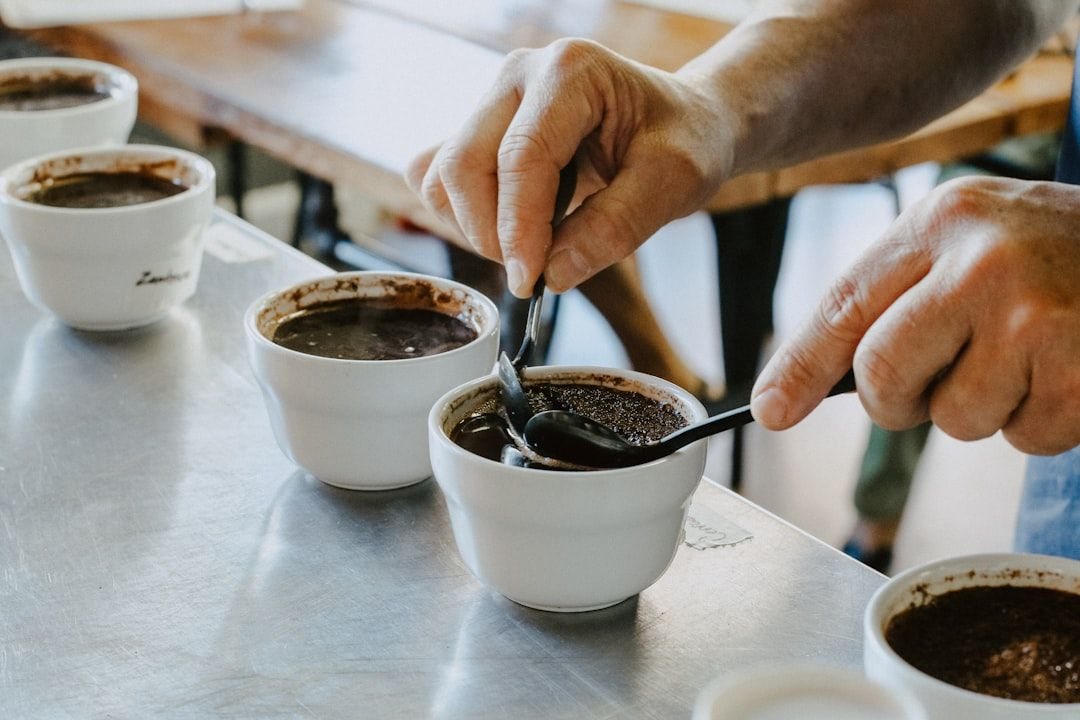
Cupping is the standardized method of brewing and evaluating coffee by steeping ground coffee in hot water in an open vessel, then assessing the resulting infusion through a structured sensory sequence. Unlike brewing for consumption, cupping is designed for evaluation: every variable is controlled so that differences in the cup reflect differences in the coffee itself, not differences in preparation.
The Specialty Coffee Association (SCA) maintains the most widely adopted cupping protocol in the specialty trade. Because the protocol is public, precise, and taught through a global network of licensed instructors and Q-graders, it allows a coffee evaluated in a farm lab in Ethiopia to be compared meaningfully with the same lot evaluated by a buyer in Tokyo or a roaster in Chicago. This reproducibility is what gives cupping its authority in grading, purchasing, and quality control.
Cupping underpins the SCA 100-Point Scale, the instrument by which specialty coffee is formally defined. According to that scale, a coffee scoring 80 points or above qualifies as specialty grade; scores of 85–89.99 are graded Excellent, and 90–100 are graded Outstanding. None of those scores are meaningful unless the cupping procedure that generates them is consistent.
Equipment and Environment
Before any coffee touches water, the cupping environment and equipment must meet protocol requirements.
Cupping bowls/glasses: The SCA specifies tempered glass or ceramic vessels of 207–266 ml capacity, with a wide mouth to allow free nose access.
Spoons: Cupping spoons should be deep-bowled (approximately 4–5 ml volume) to allow a full slurp. Silver-plated or stainless spoons are standard; the spoon material should not impart flavor.
Water: Fresh, clean water is essential. The SCA's water standards—part of its broader set of quality specifications—call for water that is free from off-odors and within recommended mineral content ranges. Water quality that would affect espresso or brewed coffee equally compromises cupping accuracy.
Room conditions: The cupping room should be free from competing aromas (perfume, food, cleaning agents) and well lit for visual assessment of the brewed cup. Tasters should refrain from wearing scented products.
Rinse cups and spittoons: Palate-cleansing between samples is standard practice. Neutral, room-temperature water is used for rinsing spoons between cups.
Sample Preparation: Roast, Rest, and Grind
Sample preparation is where many potential errors occur. The SCA protocol is precise:
Roast Level
Samples must be roasted to a light-to-medium roast level—specifically, the SCA targets a roast that falls within the range of Agtron 55–65 on whole bean and 63–73 on ground coffee (using the Agtron/SCA Roast Classification system). This light roast window preserves the origin character of the coffee without introducing heavy roast-derived flavors that would mask inherent qualities. Samples intended to represent an origin or lot should be roasted no darker than this range.
Roasted samples should be allowed to rest for a minimum of 8 hours after roasting before cupping, allowing outgassing to stabilize. Samples should also be cupped within 24 hours of roasting to ensure freshness; the SCA protocol notes that samples older than 24 hours post-roast may produce unreliable results.
Grind
Coffee is ground immediately before cupping—never pre-ground and stored. The SCA specifies a coarse grind slightly coarser than typical drip coffee, calibrated so that 70–75% of the grounds pass through a US #20 sieve (850 microns). This grind size produces a relatively slow extraction in the steep, balancing solubles yield against clarity of assessment.
Grinders must be cleaned between different samples to prevent cross-contamination of flavors.
Brew Ratio
The SCA protocol specifies a ratio of 8.25 grams of coffee per 150 ml of water (commonly expressed as approximately 55 g/L). Multiple cups of the same sample are prepared—typically five cups per sample—to allow identification of defects or inconsistencies within a lot. If any single cup from a sample deviates noticeably from the others, this is noted as a potential quaker or contamination issue, which factors into the coffee defects assessment.
The Cupping Sequence
The SCA protocol follows a strict temporal sequence. Each stage in the sequence targets a different sensory window as the coffee evolves from dry grounds through cooling.
Step 1 — Fragrance (Dry)
Immediately after grinding, the evaluator leans over the bowl and inhales the dry fragrance of the grounds. This is the volatile aromatic profile before any water contact. Notes here may include floral, fruity, nutty, spice, or caramel characteristics, and they often preview what will appear in the wet aroma.
Fragrance is scored as part of the combined Fragrance/Aroma attribute on the SCA cupping form. Tasters should evaluate dry fragrance within a few minutes of grinding, as volatiles dissipate quickly.
Step 2 — Adding Water and Evaluating Aroma (Wet)
Water heated to 93°C ± 1°C (200°F ± 2°F) is poured directly onto the grounds, saturating them fully and filling the vessel to the brim. The crust—a floating layer of swollen grounds—forms immediately.
Over the next 3–5 minutes, the wet aroma is evaluated by hovering the nose close to the surface of each cup. Aromas intensify as water begins extracting volatile compounds from the coffee. This wet aroma assessment is the second half of the Fragrance/Aroma score and is often the most expressive sensory moment in the entire session.
The Coffee Taster's Flavor Wheel is a useful reference during this stage, as the wheel's outer descriptors align closely with the volatile aromatic compounds most detectable at this point.
Step 3 — Breaking the Crust
At the 4-minute mark (±30 seconds), the evaluator uses a cupping spoon to break the crust by pushing it gently forward through the surface of each cup, releasing a concentrated burst of aromatics. The evaluator's nose should be directly over the cup as the crust breaks to capture the most intense aromatic expression.
Three strokes of the spoon are the convention: breaking the crust, then two gentle stirs to fully integrate the grounds. Aroma is evaluated at the moment of breaking and should be scored before moving to the next cup.
After all crusts are broken and aromas recorded, grounds and foam are skimmed from the surface using two spoons in a scooping motion, clearing the cup for liquid tasting.
Step 4 — Tasting Across Cooling Temperatures
The SCA protocol requires tasting at multiple temperature stages to capture how a coffee's sensory profile evolves as it cools. This is one of the most distinctive features of the protocol.
First tasting (approximately 70°C / 160°F): Beginning approximately 8–10 minutes after water addition, when the liquid has cooled enough to taste safely, the evaluator uses a deep, vigorous slurp to aerosolize the coffee across the entire palate and retro-nasal passages. The slurp is not affectation—it is functionally important for dispersing the liquid uniformly across all taste receptor zones and maximizing olfactory input.
At this temperature, evaluators assess:
- Flavor — the overall impression of taste and aroma in combination
- Aftertaste — the length and quality of flavor that lingers after swallowing or expectorating
- Acidity — the brightness, type (malic, citric, phosphoric), and quality of perceived acidity
- Body — the tactile weight and mouthfeel of the liquid
- Balance — how well flavor, aftertaste, acidity, and body complement each other
Second tasting (approximately 50–55°C / 122–131°F): As the cup continues to cool, sweetness and uniformity become more reliably perceptible. Defects that may have been masked by heat often emerge at this stage.
Third tasting (room temperature, approximately 35°C / 95°F): The final assessment captures the full expression of the coffee's character. Subtle off-flavors, fermentation taints, or astringency often reveal themselves only at lower temperatures. The Overall score—a holistic, impressionistic rating—is typically assigned at this stage, once the taster has a complete picture.
Scoring on the SCA Cupping Form
The SCA Cupping Form divides evaluation into 10 scored attributes, each scored on a scale that contributes to the final 100-point score:
- Fragrance/Aroma
- Flavor
- Aftertaste
- Acidity (with a descriptor for quality: e.g., bright, delicate, harsh)
- Body (with a descriptor for level: e.g., full, thin)
- Balance
- Sweetness (assessed across all five cups; scored per cup)
- Clean Cup (assessed across all five cups; scored per cup)
- Uniformity (assessed across all five cups; scored per cup)
- Overall (holistic impression)
A Defects deduction is subtracted from the raw total. Defects are classified as either taints (off-flavors that are noticeable but not overwhelming) or faults (dominant off-flavors that render the cup unpleasant). Taints carry a penalty of 2 points per cup; faults carry a penalty of 4 points per cup, multiplied by the number of cups affected.
The final Total Score is the sum of all attributes minus defect deductions. Coffees achieving 80 points or above are considered specialty grade, consistent with the definition used across the specialty coffee industry.
For guidance on the language used to describe what is tasted and smelled, see Tasting Descriptors.
Calibration and Panel Alignment
A single cupper's scores are only as useful as their calibration with a broader community of evaluators. The SCA protocol emphasizes panel calibration—the process by which a group of tasters aligns their individual scores and descriptors against a shared reference.
Why calibration matters: Two tasters with different personal thresholds for acidity or different flavor reference libraries may score the same cup differently. Calibration does not erase individual perception; it creates a shared baseline so that deviations can be interpreted meaningfully.
Calibration methods include:
- Reference samples: Cupping known coffees with established scores at the start of a session, then comparing individual scores against the group mean.
- Blind cupping: Tasters cup without knowing origin, variety, or roast batch, preventing confirmation bias.
- Cross-table discussion: After all tasters have scored independently, the group discusses outlier scores and agrees on descriptors. Scores are not averaged; rather, outliers review their reasoning and may revise.
- Certified Q-Grader panels: For formal lot assessment, the SCA's Q-grader certification system (administered by the Coffee Quality Institute) creates a credentialed network of trained evaluators who have demonstrated calibrated performance across standardized tests.
Regular calibration sessions—ideally weekly in active trading or roasting environments—are essential for maintaining accuracy. Even experienced tasters drift over time without recalibration.
Common Errors and Protocol Deviations
Understanding the most frequent departures from protocol helps practitioners maintain rigor:
- Grinding in advance: Pre-ground samples lose volatile aromatics rapidly, compressing the fragrance/aroma scores and skewing results.
- Water too hot or too cold: Temperatures above 94°C can produce harsh, over-extracted cups; temperatures below 91°C may under-extract, producing flat, thin results.
- Incorrect ratio: A slightly lower dose artificially reduces body scores; a higher dose compresses acidity and balance distinctions.
- Tasting too early: Slurping at temperatures above 70–71°C risks burning the palate and numbing receptors for subsequent cups.
- Insufficient cups per sample: Cupping fewer than five cups per sample reduces the ability to detect lot-level uniformity issues.
- Contaminated environment: Even residual scent from a nearby espresso machine or air freshener can influence retro-nasal aroma scores.
Cupping in Context: From Farm to Roastery
The SCA cupping protocol is used at multiple points in the coffee supply chain, each with a slightly different purpose:
- At origin (farm or mill level): Producers cup to assess harvest quality, monitor processing consistency, and prepare samples for export. The same protocol applied by a buyer gives producer and buyer a common reference language.
- At import/green trading: Importers and exporters cup arrival samples against contracts, confirming that a lot delivered matches the sample approved at purchase. Deviations—even minor ones—are detected through the uniformity and clean cup attributes.
- At the roastery: Roasters cup to profile new lots, validate roast development, and perform ongoing quality control on production batches. Batch-to-batch consistency in cupping scores is one of the primary indicators of roast quality management.
- In education and competition: The World Coffee Championships and the SCA's own certification programs use cupping as both a teaching tool and a competitive format. The Q-grader examination is built entirely around the SCA cupping protocol.
For a broader orientation to sensory evaluation in specialty coffee, see Coffee Sensory & Grading.
Frequently asked questions
- What ratio of coffee to water does the SCA cupping protocol specify?
- The SCA protocol specifies 8.25 grams of ground coffee per 150 ml of water, which is approximately 55 grams per liter. Multiple cups—typically five—are prepared per sample to assess uniformity across the lot.
- At what water temperature should cupping water be added?
- The SCA protocol specifies water at 93°C ± 1°C (approximately 200°F ± 2°F) when poured onto the grounds.
- Why are five cups prepared per sample?
- Five cups per sample allows evaluators to identify inconsistencies within a lot—such as a fermented or quaker-affected bean present in one cup but not others. Uniformity and clean cup attributes are scored individually across all five cups.
- How long should a roasted sample rest before cupping?
- The SCA protocol requires a minimum rest of 8 hours after roasting to allow outgassing to stabilize, and the sample should be cupped within 24 hours of roasting for reliable results.
- What score qualifies a coffee as specialty grade on the SCA cupping form?
- A coffee must achieve a Total Score of 80 points or above on the 100-point SCA cupping form to qualify as specialty grade. Scores of 85–89.99 are graded Excellent; scores of 90–100 are graded Outstanding.
- What is the purpose of breaking the crust?
- Breaking the crust at approximately 4 minutes releases a concentrated burst of volatile aromatics that have been trapped beneath the floating layer of grounds. The nose is held directly over the cup during the break to evaluate the most intense aromatic expression of the sample.
- Why is tasting done at multiple temperatures?
- A coffee's sensory profile changes significantly as it cools. Acidity and body are most perceptible at higher temperatures; sweetness and subtle defects often emerge at lower temperatures. The SCA protocol requires evaluation across the full cooling curve to capture a complete sensory picture.
- What is the difference between a taint and a fault in SCA cupping?
- A taint is an off-flavor that is noticeable but not dominant, carrying a 2-point deduction per affected cup. A fault is a dominant off-flavor that substantially diminishes cup quality, carrying a 4-point deduction per affected cup. Both are multiplied by the number of cups in which they appear.
See also