Knowledge · process
Experimental Processing
Inoculated fermentations, koji, thermal shock, extended and double fermentation, and the ongoing controversy over flavour artifice versus innovation
Key facts
- Definition
- Post-harvest interventions beyond washed, natural, and honey processing
- Key Techniques
- Inoculated fermentation, koji, thermal shock, extended fermentation
- Primary Goal
- Steer sensory profile toward specific flavor outcomes
- Common Inoculant
- Saccharomyces cerevisiae wine and brewing yeasts
- Koji Organism
- Aspergillus oryzae mold from East Asian fermented foods
- Main Criticism
- Flavor artifice versus innovation in coffee processing
What Counts as Experimental Processing
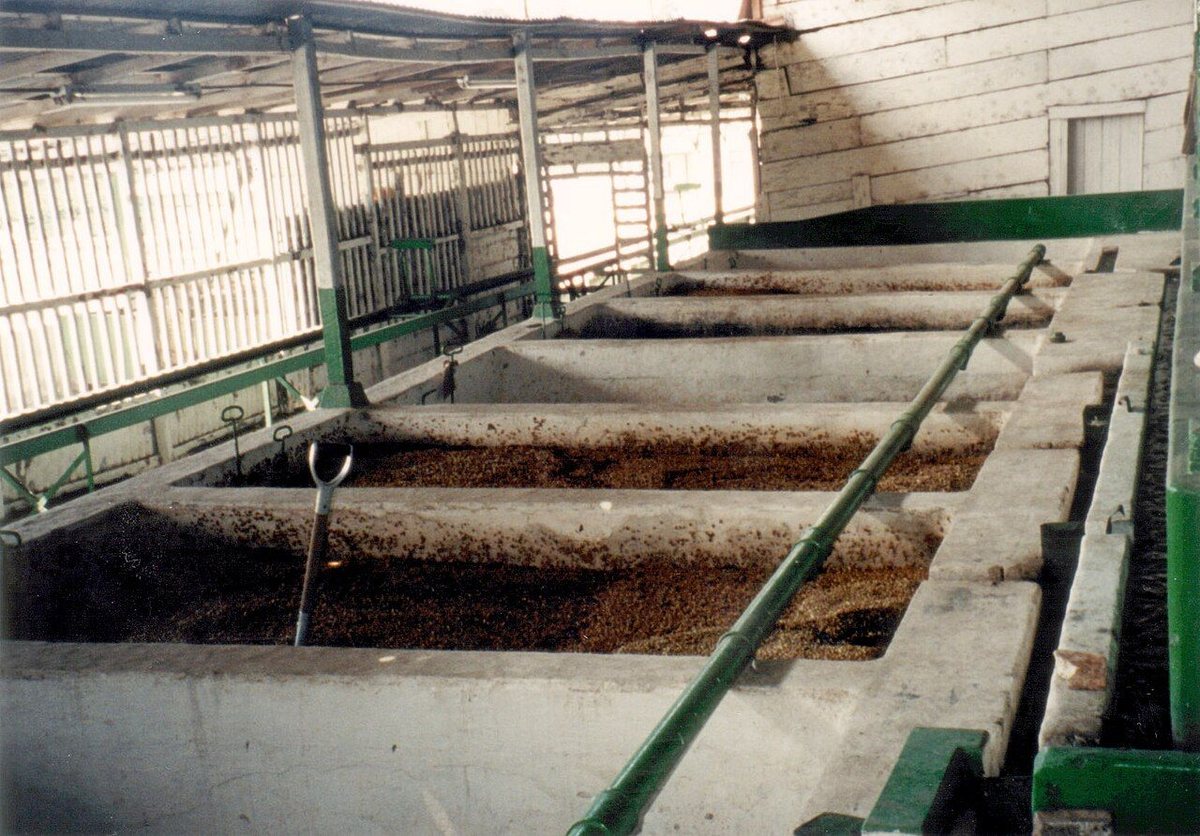
Experimental processing is an umbrella term for post-harvest interventions that go beyond the three classical methods — washed, natural, and honey — by actively manipulating the microbial, chemical, or physical environment in which coffee ferments and dries. While all wet-process coffee undergoes fermentation to some degree — the classic ferment-and-wash method relies on naturally occurring microbes to break down mucilage over roughly 8–36 hours depending on temperature and mucilage thickness — experimental approaches treat fermentation as a precision instrument rather than a by-product of mucilage removal.
The category is loosely defined in the industry, and no single certifying body has established a universal taxonomy. What unites these techniques is intent: producers are not merely removing pulp or mucilage but are attempting to steer the sensory profile of the finished cup toward specific flavor outcomes. That ambition is both their commercial appeal and the source of significant criticism.
Inoculated Fermentation: Yeasts and Bacteria
In conventional washed processing, fermentation is driven by ambient microorganisms — wild yeasts, acetic acid bacteria, and lactic acid bacteria that colonise the fruit and parchment naturally. Inoculated fermentation replaces or supplements this wild population with selected microbial strains.
Commercial wine and brewing yeasts — most commonly Saccharomyces cerevisiae strains — are the most widely used inoculants in specialty coffee. Producers dissolve the yeast in water, add it to fermentation tanks alongside depulped or whole coffee cherries, and allow it to metabolise the sugars in the mucilage. Because S. cerevisiae is well characterised from the wine and beer industries, producers can predict, to a degree, which esters and alcohols it will generate. Strains optimised for fruity ester production in wine have been shown to impart similarly floral and tropical-fruit notes to coffee when the metabolites are absorbed into the seed during fermentation and persist through roasting.
Lactic acid bacteria (LAB) fermentation is another significant branch. In lactic fermentation, producers create anaerobic conditions — typically by sealing tanks and purging oxygen with CO₂ — and rely on LAB such as Lactobacillus species to convert sugars primarily to lactic acid rather than acetic acid or ethanol. The result is commonly described as a clean, creamy acidity reminiscent of yoghurt or stone fruit, distinct from the sharper vinegar-adjacent notes that can emerge when acetic acid bacteria dominate. This technique overlaps substantially with anaerobic fermentation, though lactic fermentation specifically implies the dominance of LAB rather than anaerobic conditions alone.
Mixed inoculants — combining selected yeasts with specific bacterial strains — are used by some producers to build layered flavour profiles, mimicking the precision of craft brewing. Temperature, inoculant concentration, pH monitoring, and tank size all interact to determine outcomes, and small deviations can produce inconsistent results. This sensitivity is one reason inoculated fermentations remain more common among producers with laboratory infrastructure or university partnerships than among smallholders.
Koji: Aspergillus-Driven Processing
Perhaps the most conceptually radical technique to enter specialty coffee processing is the application of koji (Aspergillus oryzae), the mold that underpins fermented foods including miso, sake, and soy sauce in East Asian culinary traditions. Koji processing in coffee typically involves inoculating green coffee beans or parchment-covered seeds with A. oryzae spores and holding them in a controlled humid environment for a defined period.
Aspergillus oryzae secretes a suite of enzymes — notably amylases, proteases, and lipases — that break down complex carbohydrates, proteins, and fats into simpler compounds. In the context of coffee, proponents argue that these enzymatic transformations create new precursors for Maillard reactions during roasting, yielding cups with unusual umami depth, reduced bitterness, and flavors that have been characterised variously as mochi, rice wine, or fermented grain.
Koji coffee remains a genuine frontier. Because A. oryzae acts on the bean itself rather than solely on the surrounding mucilage, the intervention is more invasive than mucilage fermentation, and critics argue it constitutes flavour engineering at the seed level rather than processing in any traditional sense. There are also food-safety considerations: controlling Aspergillus growth to prevent the proliferation of undesirable species (including toxin-producing relatives) requires careful environmental management.
Thermal Shock Washing
Thermal shock washing is a technique in which harvested coffee cherries are subjected to rapid temperature changes — typically alternating between hot and cold water — before or during pulping and fermentation. The principle, borrowed loosely from food processing science, is that thermal stress disrupts cell walls in the fruit, potentially accelerating mucilage breakdown and altering the permeability of the coffee seed's protective layers, which may facilitate the uptake of fermentation metabolites.
Proponents claim thermal shock washing can shorten fermentation times while enhancing the clarity and brightness of the resulting cup. Sceptics note that the mechanism by which temperature cycling affects final cup quality is not yet well documented in peer-reviewed literature specific to coffee, and that the technique's effects are difficult to isolate from other concurrent processing variables. As with many experimental methods, anecdotal producer and competition-judge reports currently outpace scientific characterisation.
Extended and Double Fermentation
Extended fermentation prolongs the fermentation window well beyond the conventional 8–36 hours cited for standard washed processing. Depending on temperature and environmental conditions, extended fermentations can run from 48 hours to several days or even weeks, particularly in controlled anaerobic environments where microbial activity is slowed by CO₂ saturation and cooler temperatures.
Longer fermentation allows a more complete breakdown of mucilage compounds and increases the concentration of fermentation by-products — organic acids, alcohols, esters — that can migrate into the seed. The result is often a more pronounced and complex cup, with heightened fruit character, wine-like acidity, or tropical notes depending on the dominant microorganisms. However, extended fermentation also raises the risk of over-fermentation, which produces defective, sour, or putrid flavors that are considered serious faults in green coffee evaluation.
Double fermentation refers to a two-stage process in which coffee undergoes separate, sequential fermentation steps — for example, a first aerobic fermentation in cherry form followed by a second anaerobic fermentation after depulping, or a fermentation in water followed by a dry fermentation in mucilage. The intent is to layer distinct microbial contributions: the first stage might develop one class of flavor precursors while the second stage, with different oxygen levels or microorganism populations, builds upon or modifies them. Anaerobic fermentation techniques frequently feature in double-fermentation protocols as one of the two stages.
Both extended and double fermentation require rigorous monitoring. As coffee production literature notes, fermentation must be carefully observed to prevent the development of undesirable sour flavors — a constraint that becomes more demanding as timelines lengthen and interventions multiply.
The Infusion Controversy
The most contested practice within experimental processing is direct infusion or flavour infusion, in which coffee is exposed to exogenous flavoring agents — fruit juices, essential oils, spirits, botanical extracts, cinnamon, lavender, and a wide variety of others — during or after fermentation. Unlike inoculated fermentation, which modifies flavour through microbial metabolite production, infusion introduces flavour compounds externally.
Some producers immerse green coffee in fruit macerations or add aromatic compounds to fermentation tanks. Others spray or soak dried or semi-dried beans with spirits or juices. The resulting cups can be striking: a coffee that tastes of passion fruit, whisky, or rum is commercially attractive in certain market segments, and competition circuits have seen infused coffees placing at high levels when the rules do not explicitly prohibit them.
However, infusion occupies deeply ambiguous territory in the specialty coffee world. Critics argue that:
- It is indistinguishable from flavoured coffee at the cup level, collapsing a critical distinction between coffees that taste of fruit because their terroir and processing produced fruit-flavoured compounds, and coffees that taste of fruit because fruit was added.
- It masks terroir entirely. The origin signals — the mineral, floral, or earthy notes of a specific soil, microclimate, and variety — can be overwhelmed or erased by a sufficiently strong infusion.
- Transparency is inconsistent. Without mandatory disclosure on green coffee invoices, competition score sheets, or retail bags, consumers cannot distinguish an infused coffee from one whose flavor emerged organically from processing.
- It sets unrepeatable baselines. If a competition lot is infused and scores highly, producers who cannot replicate the specific infusion process are disadvantaged, and the result reflects the infusate rather than the producer's agricultural and processing skill.
Proponents respond that flavour infusion is simply an extension of a long tradition of adding complexity — that coffee has always been a processed product, and that consumers who enjoy the cup are not harmed by the method. Some also argue that well-executed infusions at low concentrations genuinely complement rather than replace origin character.
The specialty coffee industry has not reached consensus. Some competitions have moved toward requiring disclosure of all post-harvest interventions; others have not. World Coffee Research and the Specialty Coffee Association have emphasised the need for greater supply-chain transparency but have not issued prohibitions.
Benefits: New Flavors and Commercial Value
Experimental processing offers genuine benefits that explain its rapid adoption among forward-thinking producers:
- Flavour diversity. By controlling fermentation variables precisely, producers can create cups that express flavor profiles — lactic acidity, tropical esters, umami depth from koji — that no terroir alone reliably produces, expanding the sensory vocabulary of specialty coffee.
- Premium pricing. Experimental lots routinely command significant premiums at auction and in direct-trade relationships. For producers in competitive origins, differentiating through process innovation can be economically transformative.
- Scientific literacy. Engaging with fermentation science pushes producers toward better record-keeping, temperature monitoring, and understanding of microbiology — skills that improve quality even in conventional processing.
- Utilising lower-quality cherry. Some techniques, used judiciously, can elevate lots that might otherwise not achieve specialty grade, reducing waste and improving farm economics. This mirrors the observation that the dry process, once considered suitable only for lower-quality beans, now commands premiums when executed carefully.
Criticism: Terroir, Transparency, and Gimmickry
The critiques of experimental processing are substantive and widely voiced within the specialty sector:
- Masking terroir. If the flavour of a cup is determined primarily by which yeast strain or which infusate was used rather than the origin's soil, altitude, variety, and climate, the geographic and agricultural story of the coffee is obscured. Critics argue that specialty coffee's core value proposition — traceability and place-based distinction — is undermined when processing overrides origin.
- Lack of reproducibility. Many experimental lots are one-time or small-batch experiments that cannot be reliably replicated season to season. This makes it difficult to build producer identities around consistent flavor profiles, and can leave roasters and consumers without a stable reference point.
- Gimmickry and market fatigue. There is concern that the competition circuit has incentivised extreme processing as a shortcut to high scores, leading to cups that are spectacular but not pleasurable to drink regularly, or whose complexity owes more to process novelty than to quality.
- Transparency deficits. The absence of standardised labelling requirements means consumers cannot easily know what they are buying. The specialty coffee community has broadly agreed that transparency is a core value; many practitioners argue that experimental processing, especially infusion, is being sold under misleading frames.
- Accessibility and equity. Laboratory-grade fermentation control is capital-intensive. Experimental processing risks further concentrating quality premiums among well-resourced producers, widening rather than narrowing equity gaps in coffee-producing communities.
Standards, Disclosure, and the Path Forward
The conversation around experimental processing is ultimately a conversation about what specialty coffee is for. The processing methods that underpin quality — careful cherry selection, controlled drying, precise fermentation monitoring — are all forms of human intervention, and the line between skilled intervention and artificial manipulation is not drawn in a fixed place.
What the specialty sector broadly agrees on is that disclosure is essential. Roasters, competition judges, and consumers cannot make informed evaluations without knowing whether a coffee was inoculated with specific yeasts, subjected to koji, double-fermented, or infused. Several forward-thinking producers already publish fermentation protocols on their green-coffee data sheets. Industry bodies are increasingly discussing whether mandatory process disclosure should become a condition of specialty certification or competition entry.
Scientific research into the mechanisms of microbial fermentation in coffee is ongoing, and a clearer evidence base will eventually allow the field to distinguish between techniques that genuinely improve quality and traceability and those that primarily add market differentiation without commensurate cup-quality gains. Until then, experimental processing remains one of the most dynamic, contested, and consequential frontiers in specialty coffee production.
Frequently asked questions
- What is experimental processing in coffee?
- Experimental processing refers to post-harvest techniques that go beyond conventional washed, natural, and honey methods by deliberately manipulating the microbial, chemical, or physical environment during fermentation and drying. Examples include inoculated yeast or bacterial fermentations, koji (Aspergillus oryzae) application, thermal shock washing, extended and double fermentation, and flavour infusion.
- How does inoculated yeast fermentation differ from standard fermentation?
- Standard fermentation relies on wild, ambient microorganisms that colonise the coffee cherry and parchment naturally, breaking down mucilage over roughly 8–36 hours. Inoculated fermentation introduces selected microbial strains — commonly Saccharomyces cerevisiae wine yeasts or specific lactic acid bacteria — to steer the production of particular esters, acids, and alcohols toward desired flavour outcomes.
- What is koji coffee?
- Koji coffee involves inoculating green coffee beans or parchment-covered seeds with Aspergillus oryzae spores — the mold used in miso, sake, and soy sauce production. The mold's enzymes break down proteins, carbohydrates, and fats in the seed, potentially creating new flavour precursors and yielding cups with umami depth and reduced bitterness. It remains one of the most experimental and debated techniques in specialty coffee.
- Is infused coffee the same as flavoured coffee?
- This is contested. Critics argue that directly infusing coffee with fruit juices, spirits, or botanical extracts is functionally equivalent to flavoured coffee and misleading if not disclosed. Proponents contend that low-concentration infusions complement rather than replace origin character. The specialty coffee sector has not reached a consensus, but the debate has intensified calls for mandatory processing disclosure.
- Does experimental processing mask terroir?
- This is one of the central criticisms. When fermentation-derived or infused flavour compounds dominate the cup, the origin signals produced by a specific soil, altitude, variety, and microclimate can be obscured or overwhelmed. Critics argue this undermines specialty coffee's core value proposition of geographic traceability, while proponents maintain that processing has always shaped flavour and that experimental methods simply extend this continuum.
- Are there transparency or labelling requirements for experimentally processed coffees?
- Currently there is no universal mandatory labelling standard. Some forward-thinking producers voluntarily publish detailed fermentation protocols on green-coffee data sheets, and some competition bodies are moving toward requiring disclosure of post-harvest interventions. Industry organisations including the SCA have emphasised transparency as a core value, but formal certification requirements around experimental processing disclosure do not yet exist across the industry.
See also