Knowledge · roasting
Medium Roast
Balanced, versatile, and nuanced — understanding the roast level that defines the center of the spectrum
Key facts
- Roast Window
- After first crack, before second crack
- Key Characteristics
- Balanced acidity, body, and sweetness
- Primary Chemicals
- Maillard reaction and caramelization
- Bean Color
- Tan to warm brown
- Flavor Notes
- Caramel, chocolate, hazelnut, brown sugar
- Common Styles
- American roast and Full City roast
What Is a Medium Roast?
A medium roast is a coffee that has been taken through the roasting process past the end of first crack but stopped before the onset of second crack. Within the broader arc of coffee roasting, this window represents a careful equilibrium: enough heat application to fully develop the sugars, acids, and aromatic compounds inside the bean, yet not so much that roast-derived flavors begin to overshadow the coffee's inherent character.
The transformation from green bean to medium roast is driven by the Maillard reaction and caramelization, the same fundamental chemical processes that govern browning in any dry-heat cooking context. As the Wikipedia article on coffee roasting notes, unroasted beans already contain acids, proteins, sugars, and caffeine comparable to roasted beans — what they lack is the developed flavor that only heat-induced chemical reactions can produce. Medium roasting strikes a balance where those reactions are advanced enough to create complexity without pushing the bean into the bitter, oily territory associated with dark roasts.
Roast Development and the Crack Stages
Understanding medium roast requires a working knowledge of the two major audible and physical milestones in the roasting chamber. See Roast Development & Crack for a deeper treatment; the essentials are summarized here.
- First crack is an exothermic event — the bean expands, internal pressure ruptures the cell structure, and moisture and CO₂ escape in an audible pop. The bean has now become technically drinkable, though flavors at this stage tend toward grain, bright fruit, and high perceived acidity — territory covered by light roasts.
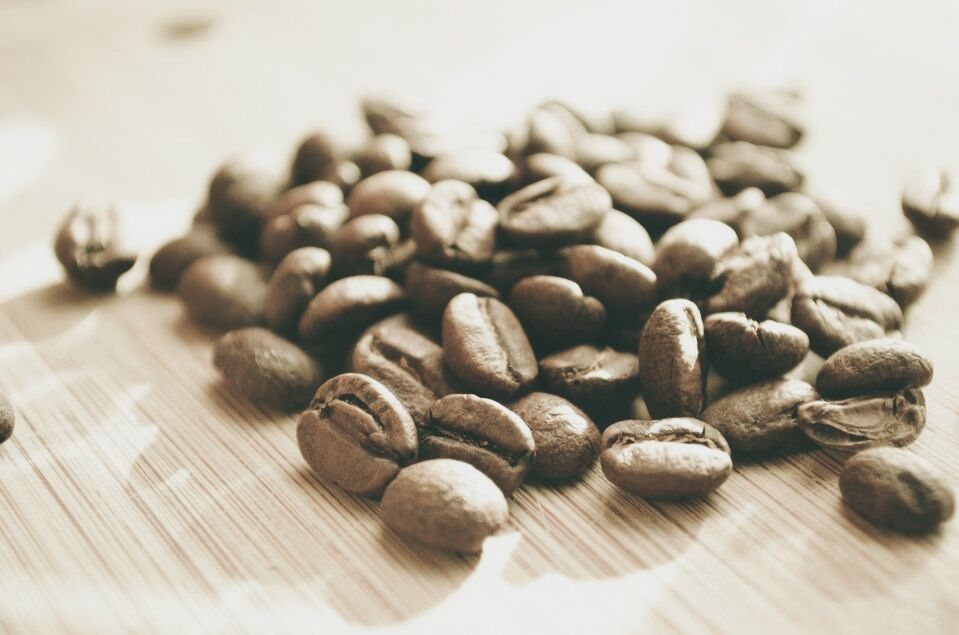
- The medium-roast zone begins after first crack subsides and continues until the earliest sounds of second crack are detected. The bean surface transitions from tan to a warm brown; the characteristic medium-roast sheen is absent or only barely present because cell oils have not yet migrated to the surface.
- Second crack, when it begins, signals significant structural breakdown and the emergence of roast-dominant, lower-acidity profiles — the realm of dark roasts.
Because the window between first and second crack can span only a few minutes at typical drum roaster temperatures, precision in time and heat management is essential. Small differences in when the roaster pulls the batch — measured in seconds and fractions of a degree — produce meaningfully different cups.
Flavor Profile: Acidity, Body, and Sweetness in Balance
The defining sensory characteristic of a medium roast is balance. No single attribute dominates:
- Acidity is present and perceivable — brighter than a dark roast — but has been softened and rounded compared to a light roast. Citric and malic acids that remain from the green bean are joined by acetic and other organic acids produced during roasting.
- Body (perceived viscosity and weight) is medium to medium-full. The breakdown of proteins and carbohydrates during extended heat application contributes mouthfeel compounds that a light roast has not fully developed.
- Sweetness is often at its peak expression in a medium roast. Caramelization of sucrose and other sugars is well advanced, yielding notes commonly described as caramel, chocolate, hazelnut, or brown sugar, depending on the origin.
- Aromatics are complex, drawing from both origin-forward characteristics — the varietal and terroir notes of the green bean — and roast-forward characteristics like toffee or toasted grain.
This three-way balance is why sensory professionals and roast-level reference guides frequently position medium roast as the most representative expression of a coffee's complete flavor potential.
American and Full City Styles
The vocabulary around medium roasting varies by tradition and geography, but two terms appear consistently in North American specialty coffee practice.
American roast (sometimes called Regular roast or City roast) refers to the lighter end of the medium-roast spectrum — beans pulled shortly after first crack fully subsides. The cup is relatively bright, with noticeable acidity and lighter body. This style dominated commercial U.S. coffee for much of the 20th century.
Full City roast pushes further into the medium zone, approaching — but not entering — second crack. Body increases, acidity softens, and caramel-to-chocolate sweetness becomes more pronounced. Full City is a common target for specialty roasters seeking maximum sweetness development without sacrificing origin character.
Between and around these anchors sit a continuum of informal designations (City+, Medium-Dark, and so on) that different roasters use to communicate relative development within the medium band. There is no universal industry standard mandating exact bean temperatures or color values for these labels, though roasters commonly use colorimetry tools (such as Agtron or similar spectrophotometric devices) to measure roast color and ensure batch consistency.
The Chemistry Behind the Color and Character
The chemistry of roasting is rich and complex, but a few processes are particularly salient for medium roasts:
- Maillard reactions between amino acids and reducing sugars are responsible for hundreds of aromatic compounds and for the characteristic brown color of the bean. These reactions accelerate through the medium-roast zone.
- Caramelization of sucrose begins in earnest and contributes sweetness and body-building melanoidins.
- Chlorogenic acid degradation: Green coffee is high in chlorogenic acids (CGAs). As roasting progresses through the medium zone, CGAs break down, reducing perceived bitterness and astringency relative to an under-developed roast, while also generating quinic acid and other flavor-active compounds.
- CO₂ degassing: Medium-roasted beans retain a significant charge of carbon dioxide produced during roasting. This degassing continues after roasting and is a key reason specialty roasters recommend a rest period (often cited as several days to two weeks, depending on brew method) before use.
The Omni-Roast Concept
One of the most influential ideas to emerge from the specialty coffee movement in recent years is the omni-roast — a single roast profile designed to perform well across multiple brew methods, from espresso to pour-over to immersion brewing.
Medium roast is the natural home of the omni-roast concept. Here is why:
- Espresso typically demands a roast with reduced acidity and sufficient body to sustain emulsification under pressure. A true light roast can produce sour, underdeveloped espresso; a dark roast can become bitter and one-dimensional. A well-executed medium roast sits squarely in the workable range for both.
- Filter brewing (pour-over, drip, batch brew) rewards clarity of flavor and pleasant acidity — attributes a medium roast provides without the aggressive brightness of a very light roast.
- Immersion methods (French press, AeroPress, cold brew) benefit from the body and sweetness that medium development contributes.
For small roasting operations and direct-to-consumer subscription businesses, the omni-roast approach offers practical efficiency: one SKU, one roast date, one profile that a customer can use in their espresso machine on Monday and their drip brewer on Friday. The medium-roast window makes this feasibility possible in a way that the extremes of the roast spectrum do not.
Brew Method Pairing and Extraction Considerations
Medium roast's chemical properties influence how it should be brewed for best results:
- Grind size: Medium roasts are moderately dense — denser than dark roasts, which have undergone more cell-wall degradation, but less dense than light roasts. This affects grind particle distribution and extraction rate. Roasters and baristas typically find that medium roasts extract well across a range of grind settings but require slightly finer grinding than dark roasts for equivalent extraction at the same brew time.
- Brew temperature: The SCA suggests brew temperatures in the range of approximately 90–96 °C (195–205 °F) for filter coffee. Medium roasts are generally comfortable across this range; lighter development within the medium zone may benefit from temperatures toward the higher end to drive full extraction of denser beans.
- Extraction yield: The SCA defines the target extraction yield for brewed coffee as commonly cited at 18–22%, with a preferred TDS range for filter coffee frequently cited around 1.15–1.35%. Medium roasts tend to be more forgiving within these windows than the extremes of the spectrum.
- Espresso: Commonly cited starting parameters for medium-roast espresso include a brew ratio of approximately 1:2 (dose to yield) and a shot time in the 25–35 second range, though these are starting points, not absolute rules.
Sourcing and Green Coffee Considerations
Not every coffee shines at medium roast. The style tends to reward certain origin and processing profiles:
- Washed (wet-processed) coffees from high-altitude origins — such as those from East Africa or Central America — often display their most nuanced acidity and floral or fruit complexity at medium roast, where brightness is retained but not amplified to the point of imbalance.
- Natural and honey-processed coffees carry inherent fruit sweetness and body from the processing stage. At medium roast, these qualities are preserved and complemented by caramel and chocolate notes from roast development.
- Lower-grown or commodity-grade coffees may reveal defects or roughness at medium roast that would be masked by the heavier roast character of a darker profile — which is partly why commercial blends have historically been roasted darker.
The specialty coffee emphasis on single-origin presentation, noted in historical accounts of the 1970s specialty coffeehouse movement, has reinforced medium roasting as a preferred style, since it keeps origin character legible while ensuring cup approachability.
Freshness, Storage, and Shelf Life
Medium-roasted beans are more stable than dark-roasted beans (which degas rapidly and oxidize faster due to surface oils) but less stable than green coffee (which, as noted in historical coffee roasting literature, was traditionally shipped green precisely because of its superior shelf stability compared to roasted beans).
Best practices for medium roast storage:
- Airtight container with a one-way degassing valve, away from light and heat
- Avoid refrigeration unless the bag is hermetically sealed and will not be repeatedly opened
- Optimal use window: commonly recommended as within 2–4 weeks of roast date for filter brewing; espresso preparation may benefit from a slightly longer rest (7–14 days post-roast) to allow CO₂ to dissipate enough for stable extraction
- Whole bean over pre-ground: medium roast ground coffee stales noticeably within hours of grinding due to the large increase in surface area exposed to oxygen
Frequently asked questions
- What temperature or bean color defines a medium roast?
- There is no single universally mandated temperature or Agtron number that defines medium roast across all systems, but it is broadly understood as the roast stage occurring after first crack has fully subsided and before the onset of second crack. Many specialty roasters use colorimetry tools to target a consistent roast color within this window and ensure batch-to-batch repeatability.
- Is medium roast higher in caffeine than dark roast?
- By mass, medium and dark roasts contain similar caffeine levels — caffeine is thermally stable and not significantly degraded by roasting temperatures. By volume, medium-roasted beans are slightly denser than dark-roasted beans (which expand more and lose more mass), so a scoop of medium roast grounds by volume may contain marginally more caffeine, but the difference is small in practical brewing.
- Can medium roast coffee be used for espresso?
- Yes — medium roast is central to the omni-roast concept and is widely used for espresso, particularly in specialty coffee settings. It offers sufficient body and sweetness for espresso extraction while retaining enough origin character to make single-origin espresso interesting. Baristas may need to adjust grind, dose, and yield compared to parameters optimized for dark roast.
- What is the difference between City roast and Full City roast?
- Both fall within the medium-roast spectrum. City roast (sometimes called American roast) is pulled earlier — shortly after first crack subsides — and tends toward brighter acidity and lighter body. Full City roast is taken further into the medium zone, closer to second crack, yielding more caramel and chocolate sweetness, fuller body, and softer acidity, without yet entering dark-roast territory.
- Why does medium roast need a rest period after roasting?
- During roasting, significant carbon dioxide is produced and trapped inside the bean. After roasting, this CO₂ degasses over days to weeks. Brewing too soon after roasting — especially for espresso — can result in unstable, over-gassy extraction. Most specialty roasters recommend waiting several days for filter brewing and up to one to two weeks for espresso before using freshly roasted medium-roast coffee.
See also