Knowledge · roasting
The Chemistry of Roasting
A deep dive into the heat-driven reactions that transform green coffee into a complex aromatic beverage
Key facts
- Primary reaction
- Maillard reaction between amino acids and reducing sugars
- Maillard temperature range
- 140 to 165 °C (280 to 330 °F)
- Key products
- Melanoidins, hundreds of volatile aroma compounds
- Also involves
- Caramelization and pyrolysis at higher temperatures
- Discoverer
- Louis Camille Maillard in 1912
- First stage
- Endothermic drying of free water
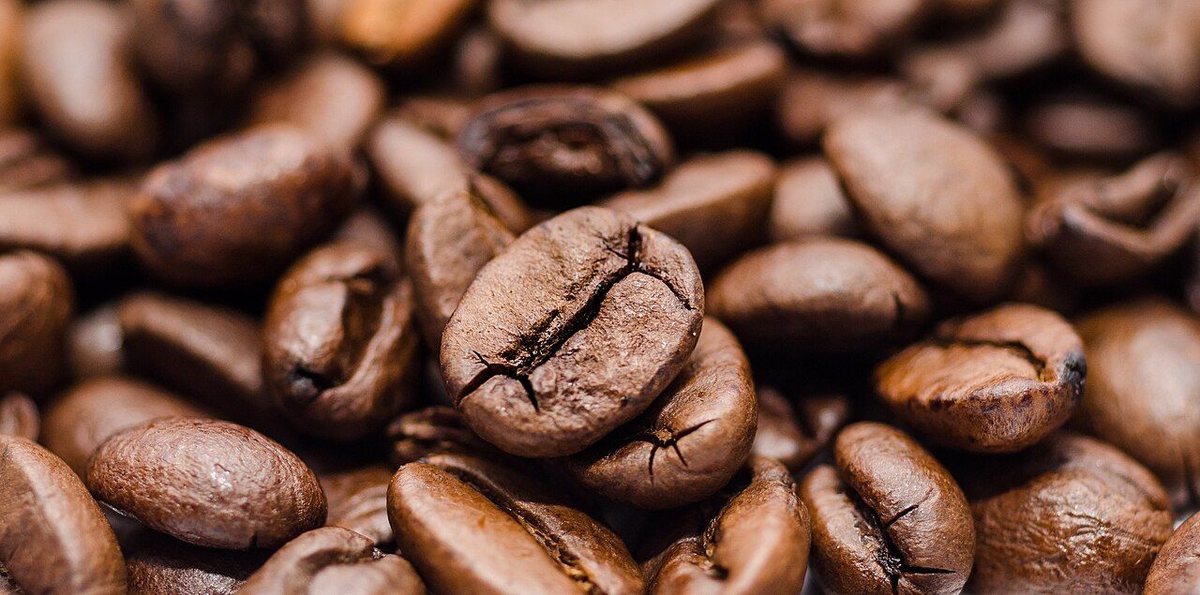
Free-Water Evaporation and Early Drying
The first stage of any roast is purely physical: the removal of free moisture from the green bean. Green coffee typically carries significant bound and free water, and the early minutes of roasting are dominated by endothermic drying. The drum or roasting chamber absorbs energy that is spent almost entirely on phase-change evaporation rather than on raising bean temperature, which is why the rate-of-rise (ROR) curve seen on modern roast loggers often flattens or drops during this phase.
As surface and then internal water is driven off, the bean temperature climbs into the range where chemical reactions can begin to proceed meaningfully. This transition from a wet, endothermic drying phase to an exothermic reaction phase is one of the key inflection points a roaster monitors. See Roast Development & Crack for how this inflection relates to first crack and overall development time.
- Free moisture is removed before meaningful browning chemistry begins.
- The bean must reach sufficient internal temperature before Maillard and caramelization reactions accelerate.
- Drying rate affects how evenly subsequent reactions proceed through the bean's cross-section.
The Maillard Reaction
No single reaction is more responsible for coffee's aromatic complexity than the Maillard reaction. First described by French chemist Louis Camille Maillard in 1912, and mechanistically characterized by John E. Hodge in 1953, it is a form of non-enzymatic browning that occurs between amino acids and reducing sugars, producing melanoidins—the high-molecular-weight brown polymers that give roasted coffee much of its color and body—along with hundreds of volatile aroma compounds.
The reaction typically proceeds rapidly from around 140 to 165 °C (280 to 330 °F), though in the complex, water-containing matrix of a coffee bean it unfolds across a wide temperature window. The core mechanism proceeds in stages:
- Glycosylamine formation: The carbonyl group of a reducing sugar reacts with the nucleophilic amino group of an amino acid, producing an N-substituted glycosylamine and releasing water.
- Amadori rearrangement: The unstable glycosylamine rearranges into more stable ketosamines.
- Further degradation: Ketosamines degrade via multiple pathways—producing reductones, short-chain dicarbonyls such as diacetyl and pyruvaldehyde, and ultimately brown nitrogenous polymers and melanoidins.
- Strecker degradation: Dicarbonyls react with amino acids to yield Strecker aldehydes, a major source of roasty, malty, and nutty aroma notes.
Because the Maillard reaction can produce hundreds of different flavor compounds depending on the specific amino acids, sugars, temperature, time, and presence of air, it is the primary driver of why different coffee origins, processed differently and roasted to different profiles, taste so distinct. As chemistry Nobel laureate Jean-Marie Lehn has noted, the Maillard reaction is, by a wide margin, the most widely practiced chemical reaction in the world.
Melanoidins formed during coffee roasting are not merely colorants—they contribute to the viscosity and mouthfeel of the brew, and evidence suggests they also function as antioxidants in the cup. Green coffee contains similar levels of amino acids and reducing sugars to roasted coffee, but the Maillard products are entirely absent before heat is applied, explaining why raw coffee extract tastes so different from a roasted brew.
For a practical look at how Maillard browning manifests across the roast spectrum, see Roast Levels Explained.
Caramelization of Sugars
Caramelization is often conflated with the Maillard reaction, but it is a distinct process. Unlike the Maillard reaction, caramelization does not involve amino acids—it is the pyrolysis of sugars themselves when heated above their individual caramelization temperatures. Like the Maillard reaction it is a form of non-enzymatic browning, but the mechanism is purely thermal degradation of sugar molecules.
The sucrose abundant in green coffee is first hydrolyzed (inverted) into its constituent monosaccharides, fructose and glucose, before those monosaccharides undergo the complex suite of caramelization reactions: dehydration, fragmentation, condensation, isomerization of aldoses to ketoses, and unsaturated polymer formation. The process generates three broad groups of brown polymers—caramelans, caramelens, and caramelins—and releases volatile compounds including diacetyl, responsible for the characteristic buttery note associated with caramel flavor.
Caramelization produces the sweet, toffee-like, and bittersweet notes that are particularly prominent in medium roasts, where temperatures are high enough to advance caramelization substantially but not so high that the resulting flavor compounds are further degraded by pyrolysis. The rate of caramelization is sensitive to pH, accelerating under both acidic and basic conditions and proceeding most slowly near neutral pH.
In the coffee context, caramelization and Maillard browning overlap temporally—both are active during the development phase after first crack—but the relative contribution of each pathway shifts with roast level, bean origin (and therefore sugar content), and roasting speed. See Medium Roast for a profile where caramelization contributions are often most legible in the cup.
Pyrolysis and High-Temperature Breakdown
At higher roast temperatures, beyond the regimes in which Maillard and caramelization reactions dominate, pyrolysis becomes increasingly significant. Pyrolysis refers to the thermal decomposition of organic molecules in the absence of oxidation—breaking chemical bonds through heat alone. The Wikipedia description of the Maillard reaction explicitly notes that at higher temperatures, caramelization and subsequently pyrolysis become more pronounced, with pyrolysis leading to burning and the development of acrid flavors.
In coffee roasting, pyrolytic breakdown of melanoidins, polysaccharides, proteins, and lipids generates a distinct class of compounds:
- Furans and pyrazines at moderate pyrolysis temperatures contribute roasty, nutty, and caramel notes.
- At more aggressive temperatures, phenolic compounds and guaiacols arise from the breakdown of chlorogenic acid degradation products and cell-wall polysaccharides, imparting smoky and spicy characters.
- Further pyrolysis generates bitter, acrid, and astringent compounds that dominate in very dark roasts.
The practical implication is that dark roasts (Dark Roast) are characterized by a convergence of flavor profiles across origins—the pyrolytic compounds become dominant, masking the origin-specific Maillard and acid-derived notes that distinguish a Light Roast. This is why roasters pursuing terroir expression generally aim to halt the roast before aggressive pyrolysis takes over.
Acid Formation and Degradation
Coffee's perceived acidity is one of its most prized and contested attributes, and the chemistry of acids during roasting is complex: some acids increase during roasting while others degrade, making roast level a powerful lever for acidity management.
Chlorogenic acids (CGAs) are the most abundant phenolic compounds in green coffee and a key starting material for acid chemistry. During roasting, CGAs degrade progressively—at light-to-medium roast temperatures they hydrolyze into caffeic acid and quinic acid. As roasting continues, these degradation products themselves undergo further transformation: quinic acid can lactomize to form quinides, which contribute bittersweet and complex flavors, and caffeic acid undergoes additional breakdown. At very dark roast temperatures, the majority of the original CGA pool is destroyed.
The practical consequence is a characteristic acidity curve: perceived brightness and the contribution of organic acids tends to peak at light-to-medium roast levels and then decline as roasting progresses and both CGAs and their degradation products are further broken down.
Other acids behave differently:
- Acetic acid and other volatile acids can increase in the early stages of roasting as fermentation-related precursors are volatilized and as pyrolytic reactions generate short-chain organic acids.
- Citric and malic acids from the green bean also degrade with increasing roast temperature.
- The net acid profile of the cup is thus a function of both the green coffee's starting chemistry and the roast profile applied.
For roasters, the implication is that lighter profiles tend to preserve and sometimes amplify the bright fruit and floral acid characters present in the green bean, while darker profiles mute acidity and shift the perceived flavor toward bittersweet and roasty dimensions.
CO₂ Generation
One of the less visually obvious but practically consequential products of coffee roasting is carbon dioxide (CO₂). The Maillard reaction, caramelization, and pyrolytic breakdown of organic compounds all generate CO₂ as a byproduct, and the gas is produced in substantial quantities during the roast—particularly during and after first crack, as the exothermic decomposition reactions accelerate.
CO₂ generated during roasting is largely trapped within the porous cellular matrix of the roasted bean. This internal pressurization is one factor contributing to the physical expansion (bean volume increase) seen during roasting. After roasting, trapped CO₂ slowly off-gasses from the bean in a process called degassing, which continues for days to weeks depending on roast level, grind particle size, and storage conditions.
Degassing has significant practical implications:
- Packaging: Roasted coffee bags are almost universally fitted with one-way degassing valves to allow CO₂ to escape without admitting oxygen.
- Brewing: Excessive CO₂ in very freshly roasted coffee can interfere with extraction, particularly in espresso, where it creates channeling and uneven saturation. Many espresso roasters recommend a rest period of several days to a few weeks post-roast.
- Bloom: The vigorous bubbling seen when hot water first contacts freshly ground coffee (the "bloom" in pour-over brewing) is primarily CO₂ release from the grounds.
- Darker roasts tend to have higher initial CO₂ content because the more extensive pyrolytic reactions produce more gas, but they also degas faster because the more porous, brittle cell structure of dark-roasted beans retains gas less efficiently.
Oil Migration in Dark Roasts
One of the most visually striking changes associated with dark roasting is the appearance of oil on the surface of the bean. In green and lightly roasted coffee, lipids—primarily coffee oil (a complex mixture of triglycerides, diterpenes including cafestol and kahweol, and waxes) representing roughly 10–17% of the dry weight of the green bean—are contained within the cellular structure of the endosperm.
As roasting progresses, two physical changes make oil migration possible:
- Cell wall degradation: The polysaccharide-rich cell walls of the coffee endosperm become increasingly brittle and porous as roasting proceeds, particularly during and after second crack. Pyrolytic breakdown of cell wall polymers opens pathways for oil to move.
- CO₂ pressure: The build-up and subsequent release of internal CO₂ pressure physically drives lipid-rich material toward the bean surface and through micro-fractures in the cell wall.
The result is the characteristic oily sheen visible on dark-roasted beans. This surface oil is susceptible to oxidative rancidity when exposed to air, which is one reason that very dark roasts have a shorter shelf life than lighter roasts—the lipids on the surface oxidize more readily than those protected within the bean's cellular matrix.
Oil migration also has brewing implications. Surface oils dissolve readily into hot water during extraction, contributing to the full body and mouthfeel associated with dark-roasted espresso. However, oils can also coat grinder burrs and clog certain brewing equipment, and the oxidized lipids in stale dark-roast coffee are a common source of off-flavors.
How the Reactions Interact
A critical insight for both roasters and coffee scientists is that these reactions do not occur in neat sequential stages—they overlap, compete, and modulate one another throughout the roast. The Coffee Roasting process is a dynamic system:
- Early drying suppresses Maillard onset by keeping the bean matrix wet and heat-absorbing.
- Maillard and caramelization reactions overlap in the development phase, with their relative rates governed by temperature trajectory and available substrate.
- Chlorogenic acid degradation products feed into further browning reactions and contribute to the pool of quinic acid derivatives that affect perceived bitterness and body.
- CO₂ generation peaks during exothermic phases and its pressure physically drives oil migration at higher roast levels.
- Pyrolysis progressively destroys the volatile compounds generated by Maillard and caramelization reactions, which is why extending roast time at high temperatures tends to flatten and homogenize flavor.
The roaster's craft lies in manipulating time and temperature—the roast profile—to favor or suppress specific reactions, thereby shaping the final cup character. A fast, high-temperature profile will accelerate Maillard reactions relative to drying time; a slow, extended profile may allow more complete caramelization but risks baking flavors if the bean spends too long at intermediate temperatures. Understanding the underlying chemistry is the foundation for making those choices deliberately rather than empirically.
Frequently asked questions
- What is the Maillard reaction and why does it matter in coffee roasting?
- The Maillard reaction is a non-enzymatic browning reaction between amino acids and reducing sugars that produces melanoidins—brown polymers responsible for color—and hundreds of volatile aroma compounds that define roasted coffee's flavor. It typically proceeds rapidly from around 140 to 165 °C and is the single most important chemical reaction in coffee roasting.
- Is caramelization the same as the Maillard reaction?
- No. Although both are forms of non-enzymatic browning promoted by heat, they are distinct processes. Caramelization is the pyrolysis of sugars alone, while the Maillard reaction specifically requires amino acids reacting with reducing sugars. Both occur during coffee roasting and their contributions overlap, but they produce different compounds and flavor characters.
- Why do dark-roasted beans have an oily surface?
- As roasting progresses, the polysaccharide cell walls of the coffee bean become brittle and porous through pyrolytic degradation, and CO₂ pressure builds up internally. Together these forces drive lipid-rich coffee oil from within the bean's cellular matrix to the surface, producing the oily sheen characteristic of dark roasts.
- How does roasting affect coffee's acidity?
- Roasting has a complex effect on acidity. Chlorogenic acids—the most abundant phenolic acids in green coffee—degrade during roasting into caffeic and quinic acids, which in turn undergo further transformation at higher temperatures. Perceived brightness tends to peak at light-to-medium roast levels and decline as roasting advances and both chlorogenic acids and their degradation products are destroyed.
- Why do you need to let freshly roasted coffee rest before brewing?
- During roasting, substantial CO₂ is generated by Maillard, caramelization, and pyrolytic reactions and becomes trapped within the bean. After roasting, this CO₂ slowly off-gasses. If coffee is brewed too soon, the escaping CO₂ can interfere with even extraction—particularly in espresso—producing channeling and inconsistent results. A rest period allows CO₂ to dissipate to levels that support more even extraction.
- At what temperature does pyrolysis become dominant in coffee roasting?
- Pyrolysis—the thermal breakdown of organic molecules through heat—becomes increasingly pronounced above the temperature ranges at which Maillard browning and caramelization dominate, typically associated with second crack and beyond in practical roasting terms. At these temperatures, acrid and bitter compounds begin to dominate and the distinctive origin-driven flavor compounds generated earlier in the roast are progressively destroyed.
See also