Knowledge · industry
Second Wave Coffee
From Peet's to Starbucks: how darker roasts, espresso menus, and the café experience transformed coffee culture from the 1960s onward
Key facts
- Time period
- Late 1960s through early 2000s
- Key focus
- Freshness, roast character, geographic origin
- Founded by
- Peet's Coffee & Tea in Berkeley, California
- Signature roast style
- Dark roast with full-bodied profile
- Major innovation
- Espresso-based beverages and café social experience
- Origin labeling
- Coffee labeled by country of origin
What Is the Second Wave?
The second wave of coffee is a broadly used industry term describing a period of transformation in coffee culture — primarily in the United States — that began in the late 1960s and extended through the early 2000s. Where the first wave had prioritized consistency, low price, and convenience in the form of vacuum-packed canned coffee and instant preparations from brands such as Folgers and Maxwell House, the second wave shifted the conversation toward freshness, roast character, geographic origin, and — crucially — the social ritual of visiting a dedicated coffee shop.
As food critic Jonathan Gold wrote in 2008, the second wave encompassed "the proliferation, starting in the 1960s at Peet's and moving smartly through the Starbucks grande decaf latte, of espresso drinks and regionally labeled coffee." That description captures the two defining pillars of the era: origin awareness and espresso culture.
The second wave did not appear in a vacuum. It emerged partly from market competition between coffee-producing nations — notably Colombia and Brazil — throughout the 1960s, which prompted roasters to begin highlighting the flavor characteristics associated with different producing countries. Arabica coffees grown at high altitude within the tropical zone came to be sought after for the distinct profiles each origin was believed to offer.
Peet's Coffee & Tea and the Origins of the Movement
The clearest origin point for the second wave is Peet's Coffee & Tea, founded in Berkeley, California. In the late 1960s, Peet's began sourcing from artisanal producers and roasting with a deliberate focus on two things that set it apart from the commodity trade: countries of origin and a signature dark roast profile. Rather than blending coffees into anonymous, undifferentiated products, Peet's drew consumer attention to where beans came from and crafted a distinctive, full-bodied roast style that became the template for a generation of American specialty roasters.
This approach was genuinely novel in the American market. For decades, coffee had been sold and consumed as a generic commodity — flavor was beside the point, and origin was invisible. Peet's demonstrated that consumers would pay attention to, and pay more for, coffee when given a story and a sensory reason to care.
Peet's influence extended far beyond Berkeley. According to the historical record, the founders of Starbucks were directly inspired by Peet's Coffee — making it the intellectual and commercial progenitor of the most consequential coffee chain of the twentieth century.
Starbucks and the Scaling of the Second Wave
If Peet's planted the seed, Starbucks — founded in Seattle, Washington — industrialized the harvest. Starbucks took the core ideas of the second wave (origin-labeled coffee, darker artisan-style roasting, espresso-based beverages) and deployed them at a scale that had no precedent in the coffee industry.
The Starbucks model demonstrated that consumers were willing to trade the diner coffee counter for a café environment — a place with its own vocabulary, its own menu architecture, and its own rhythms of consumption. The café as a social destination became a defining feature of American urban life, a notion borrowed in part from Italian espresso bar culture.
The international reach of this model was significant. In the United Kingdom, for example, the Seattle Coffee Company opened in London in 1995, establishing over 50 stores before being acquired by Starbucks in 1998 — a direct transplant of the second-wave café concept into a market that had been dominated by instant coffee.
Espresso Drinks and the New Coffee Menu
One of the most durable contributions of the second wave was the mainstreaming of Italian espresso-based beverages. Drinks such as the caffè latte, cappuccino, and Americano — traditional to Italy and long available in immigrant communities — entered the broader American consumer vocabulary through second-wave café menus.
This was a categorical shift. The first wave offered essentially one format: brewed coffee, served black or with additions of cream and sugar. The second wave introduced a layered menu of milk-based espresso drinks in multiple sizes and configurations, establishing a new consumer language around coffee ordering that persists to the present day.
The barista emerged as a recognizable role, and the espresso machine moved from the back of an Italian restaurant to the front-of-house centerpiece of a designed café environment. For most American consumers, the second wave was their first direct encounter with espresso as a routine, accessible beverage rather than an exotic curiosity.
Origin Labeling and the Beginnings of Terroir Thinking
Alongside espresso culture, the second wave introduced a nascent form of origin consciousness to mainstream coffee consumption. Where first-wave coffee carried no meaningful indication of provenance, second-wave retailers began labeling coffee by country — Ethiopian, Guatemalan, Sumatran, Colombian — and attaching broad flavor descriptors to each.
This was a commercially driven development as much as an educational one, shaped in part by the competition between producing nations for market share and prestige. Nevertheless, it had a lasting effect: consumers began to understand that coffee, like wine, reflected its geographic origins. The idea that high-altitude arabica coffee from tropical growing regions could carry distinct and desirable flavor profiles entered popular consciousness for the first time.
It is important to note that second-wave origin labeling operated primarily at the country level. The finer granularity of later specialty thinking — specific farms, processing methods, varietals — was largely absent. But the conceptual bridge had been built: origin was now a relevant and marketable attribute of coffee.
The term "specialty coffee" itself was coined in 1974 by Erna Knutsen, writing in Tea & Coffee Trade Journal, to describe beans of the best flavor produced in special microclimates. Though the specialty infrastructure — including the SCA's 100-point grading scale, which defines specialty as coffee scoring 80 points or above — would develop more fully in the third wave era, its conceptual roots are contemporaneous with the second wave's rise. The coffee supply chain was beginning, however tentatively, to be made visible to end consumers.
The Café as Experience and Social Space
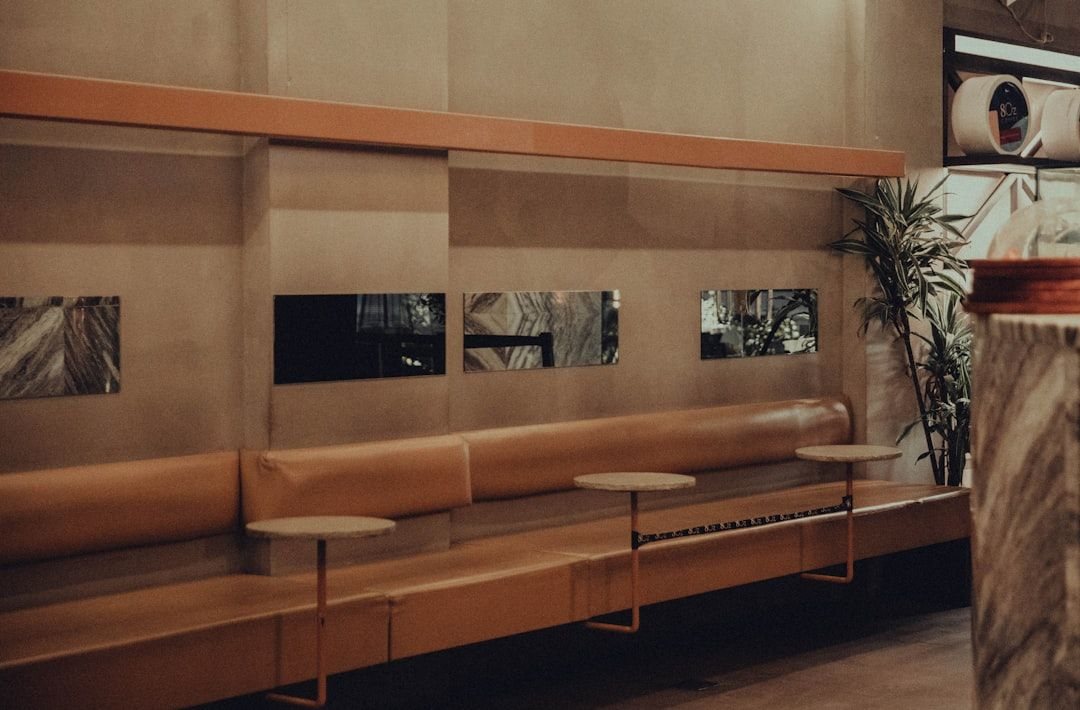
Beyond the cup itself, the second wave transformed the built environment of coffee consumption. The café became a designed space with deliberate aesthetic choices — furniture, lighting, music, nomenclature — intended to create a sense of place and community. This was a decisive break from the transactional model of first-wave coffee service, whether the diner counter or the office percolator.
Consumers were invited to linger, to customize their orders, and to develop a relationship with a particular location and its staff. The café became a "third place" — neither home nor workplace — a concept that second-wave operators cultivated as a core part of their value proposition. This experiential dimension of coffee retail, now taken for granted, was essentially invented and normalized during the second wave.
At-home consumption did not disappear, but its character changed: the second wave offered consumers fresh-roasted, bagged coffee purchased at a coffee shop, replacing the pre-ground, vacuum-packed can of the first wave era.
How the Second Wave Primed Consumers for Specialty
The second wave's ultimate historical significance may lie less in what it accomplished than in what it made possible. By the time the third wave began to coalesce in the early 2000s — the term itself is generally attributed to coffee professional Trish Rothgeb, who used it in a 2003 article, though Timothy J. Castle had used it as early as December 1999 — there was already a large population of coffee consumers who:
- Understood that origin mattered and had an existing mental map of producing countries
- Were comfortable in café environments and familiar with espresso-based drink formats
- Expected freshness and were accustomed to paying more than commodity prices for coffee
- Had a vocabulary for discussing coffee quality, even if that vocabulary was still rudimentary
The third wave's ambitions — single-origin sourcing down to the farm level, light roasting to reveal rather than obscure bean character, direct trade relationships, and rigorous cupping protocols — required a consumer base capable of engaging with those ideas. The second wave built that base.
As the history of coffee makes clear, each wave has been additive rather than simply replacive. The mass-market infrastructure of the first wave did not vanish when Peet's opened; nor did second-wave chains disappear when Intelligentsia and Stumptown began redefining quality standards. The second wave's café model, its espresso menus, and its origin-labeling practices remain ubiquitous features of the global coffee landscape — a testament to how thoroughly it reshaped consumer expectations in the span of roughly four decades.
Frequently asked questions
- When did the second wave of coffee begin?
- The second wave is generally traced to the late 1960s, when Peet's Coffee & Tea of Berkeley, California began sourcing from artisanal producers and roasting with a focus on country of origin and a distinctive dark roast profile.
- What makes the second wave different from the first wave?
- The first wave prioritized low price, convenience, and consistency — typified by pre-ground, vacuum-packed canned coffees like Folgers and Maxwell House, as well as instant coffee and diner coffee. The second wave introduced fresh-roasted bagged coffee purchased at dedicated cafés, country-of-origin labeling, and a full menu of Italian-style espresso-based beverages.
- Did Starbucks start the second wave?
- Starbucks was a product and a major driver of the second wave, but not its originator. Peet's Coffee & Tea predated Starbucks and directly inspired its founders. Together, the two companies defined and scaled the second wave's core ideas across the United States and internationally.
- What is origin labeling in the context of the second wave?
- Second-wave origin labeling meant identifying coffee by producing country — for example, Ethiopian or Guatemalan — and associating each country with broad flavor characteristics. This was a significant departure from first-wave practice, where coffee was sold as an undifferentiated commodity, though it remained less granular than the farm- and varietal-level sourcing that characterizes the third wave.
- How did the second wave lead to specialty coffee?
- The second wave built a consumer base that was already familiar with café culture, espresso drinks, and the idea that origin affects flavor. This created the conditions in which third-wave pioneers could introduce higher-quality, more transparently sourced coffee and find an audience willing to engage with it. The term 'specialty coffee' itself was coined in 1974 — contemporaneous with the second wave's rise — by Erna Knutsen, to describe beans of the best flavor produced in special microclimates.
- What role did espresso play in the second wave?
- Espresso-based beverages — lattes, cappuccinos, Americanos — moved from niche or immigrant-community contexts into mainstream American café menus during the second wave. This gave consumers their first routine exposure to espresso as an everyday drink and established the multi-format, milk-based coffee menu that remains standard in cafés worldwide.
See also