Guides · Comparisons
Light vs Dark Roast: What's the Difference?
From green bean chemistry to your morning cup — how heat transforms flavor, caffeine, and body across the roast spectrum
Key facts
- Key Chemical Reactions
- Maillard reaction and caramelization transform flavor compounds
- Light Roast Characteristic
- More acidic; preserves bright, fruity notes
- Dark Roast Characteristic
- Less acidic; produces bittersweet, smoky complexity
- Body Difference
- Dark roasts feel heavier due to oils and melanoidins
- Sweetness Peak
- Medium to medium-dark roasts are typically sweetest
- Caffeine Levels
- Similar across roast levels; varies by measurement method
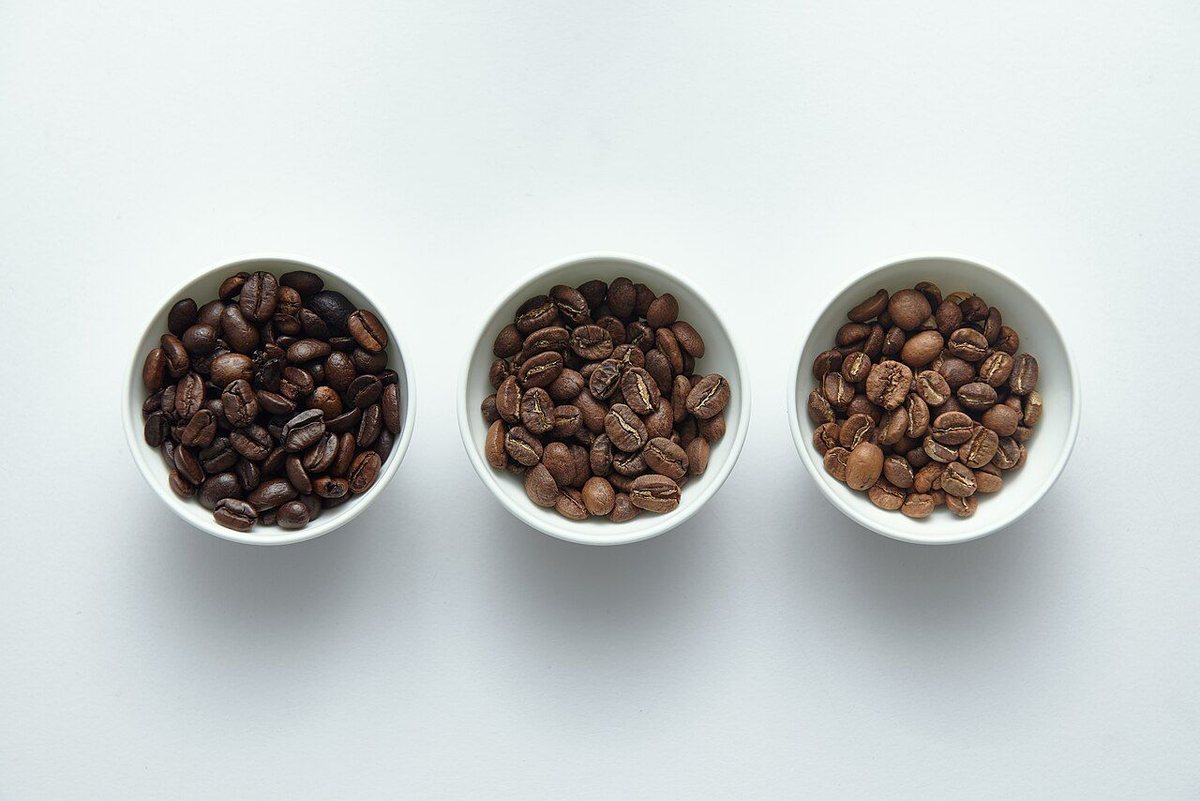
Light and dark roast coffee differ fundamentally in acidity, body, sweetness, and how much origin character survives the roasting process.
| What's the Difference? | Light Roast | Dark Roast |
|---|---|---|
| Acidity | High; bright, fruit-forward, complex | Low; organic acids degraded, more astringent |
| Body | Clean, tea-like, lighter mouthfeel | Heavy, coating, oil-rich mouthfeel |
| Sweetness | Delicate; raw honey or fruit notes | Bittersweet; caramel consumed by pyrolysis |
| Origin character | Preserved; terroir flavors shine through | Dominated or obscured by roast character |
| Caffeine (by weight) | Fractionally higher caffeine per gram | Fractionally lower; mass burned off in roasting |
| Best for | Drinkers wanting fruity, nuanced complexity | Drinkers wanting bold, smoky, heavier coffee |
| Flavor profile | Jasmine, lemon, blackcurrant, stone fruit | Dark chocolate, smoke, bittersweet, roasty |
| Brew pairing | Paper filter methods; showcases terroir | French press or espresso; amplifies body |
What Roasting Actually Does to a Coffee Bean
Before you can appreciate why a light and a dark roast taste so different, it helps to understand what roasting is actually doing at a molecular level. According to Wikipedia's coffee roasting entry, roasting transforms the chemical and physical properties of green coffee beans — converting proteins, sugars, and acids into hundreds of new flavor compounds through a cascade of heat-driven reactions.
The two most important reactions are the Maillard reaction and caramelization. The Maillard reaction — named after French chemist Louis Camille Maillard, who first described it in 1912 — is a chemical interaction between amino acids and reducing sugars that produces melanoidins, the compounds responsible for browned, roasty flavors. As the Wikipedia entry on the Maillard reaction notes, the reaction typically proceeds rapidly from around 140 to 165 °C (280 to 330 °F), and at higher temperatures caramelization and eventually pyrolysis — the final breakdown that creates acrid, ashy flavors — become more pronounced.
In practical terms: a light roast stops the process early, before pyrolysis sets in. A dark roast pushes well past it. Everything about the flavor difference flows from that single fact.
For a deeper dive into how roasters calibrate these reactions, see our Roast Levels Explained guide.
Acidity: The Sharpest Difference
Acidity is the most immediately noticeable difference between roast levels, and it is also the most misunderstood. Many drinkers assume that acidity is a flaw — something to be roasted away. In specialty coffee, however, acidity is a desirable attribute that carries fruit notes, brightness, and complexity.
Light roasts are more acidic. The organic acids present in green coffee — citric, malic, tartaric, and others — are largely preserved at lower roast temperatures. This is why a well-roasted light roast from a naturally high-grown Ethiopian or Kenyan coffee can taste unmistakably like black tea, lemon curd, or ripe stone fruit.
Dark roasts are less acidic, but they are not neutral. Prolonged heat degrades most of the pleasant organic acids while simultaneously generating quinic and chlorogenic acid degradation products, which contribute a different kind of astringency that many people experience as bitterness rather than brightness. The perceived smoothness of a dark roast is largely the absence of bright acids, not the addition of anything inherently gentle.
If you find light roasts uncomfortably sharp, the issue may be under-extraction rather than the roast itself — worth experimenting with grind, water temperature, and brew ratio before writing off lighter coffees entirely.
Body: Why Dark Roasts Feel Heavier
Body — the tactile weight and texture of coffee on your palate — does generally increase with roast level, though brew method plays an equally large role.
As roasting progresses, cell walls in the bean break down and oils migrate toward the surface. Those oils contribute to mouthfeel, particularly in unfiltered brew methods like French press or espresso. Dark roasts also produce more melanoidins (the Maillard end-products), which add viscosity and a coating sensation on the tongue.
Light roasts, by contrast, tend toward a cleaner, tea-like texture — especially through a paper filter, which traps most of the oils. This is not a deficiency; it is a feature that lets delicate origin flavors come forward without interference.
Trade-off summary:
- Light roast + paper filter = lightest, cleanest body; best for showcasing terroir
- Dark roast + French press or espresso = heaviest, most coating body; best for drinkers who want that satisfying heft
Sweetness: Caramelization vs. Burned Sugar
Sweetness in roasted coffee comes primarily from caramelization of the bean's natural sugars. At medium roast levels, this process hits a kind of sweet spot — literally — producing flavors reminiscent of brown sugar, caramel, milk chocolate, and dried fruit.
At light roast levels, sugars are less fully caramelized, and sweetness can read as more delicate — think raw honey or fruit rather than caramel. At very dark roast levels, those same sugars are largely consumed by pyrolysis, leaving behind bittersweet, smoky, or even slightly acrid notes. This is why specialty roasters who target dark profiles have to walk a precise line: push too far and sweetness collapses entirely into char.
The takeaway: the sweetest coffees are often medium to medium-dark, not the darkest roasts available. True darkness, when executed well, offers bittersweet complexity — think 85% dark chocolate rather than milk chocolate.
The Caffeine Myth
Ask most people which roast has more caffeine, and the majority will say dark. They are almost certainly wrong — and the truth is more nuanced than either side of the debate usually acknowledges.
As [S1] makes clear, unroasted green beans contain similar if not higher levels of caffeine as those that have been roasted. Caffeine is relatively stable across roast levels — it does not significantly degrade at normal roasting temperatures.
Where the confusion arises is in how you measure your coffee:
- By weight: Light roasts retain more moisture and are denser. A gram of light roast and a gram of dark roast contain roughly similar caffeine. If anything, light roast beans have a fractionally higher caffeine content by mass because dark roasting burns off more total bean mass while caffeine holds steady.
- By volume (scoops): A scoop of dark roast beans, which are larger and less dense due to cell structure expansion, holds fewer grams of coffee than the same scoop of light roast. So by volume, dark roast coffee may actually deliver less caffeine per cup.
For practical purposes, the difference is small enough to be irrelevant for most drinkers. Choose your roast level for flavor, not for a caffeine edge.
Origin Character: What Gets Preserved and What Gets Lost
This is perhaps the most important consideration for serious coffee drinkers, and it is the central argument of the specialty coffee movement's preference for lighter roasts.
Every coffee grows in a specific terroir — altitude, soil composition, rainfall, processing method — and those factors express themselves in the green bean's acid and sugar profile. Light roasting is designed to preserve and amplify those origin characteristics. A washed Yirgacheffe roasted light can taste genuinely of jasmine and lemon verbena. A Kenyan AA roasted light can be unmistakably of blackcurrant and tomato. You cannot get that from a dark roast of the same beans — those volatile aromatics are driven off by heat.
Dark roasting, by contrast, imposes a roast character that can dominate or entirely obscure origin flavors. The coffee tastes primarily of the roasting process — of smoke, dark chocolate, caramel char — rather than of its source. This is not inherently inferior; many drinkers actively prefer that consistency. It also makes blending more forgiving, which is why most commercial espresso blends are roasted darker.
Specialty roasters like Tim Wendelboe and Counter Culture Coffee are widely known for their emphasis on lighter roast profiles specifically to let origin character shine. Their approach is grounded in sourcing high-quality green coffee and roasting it just enough to develop sweetness without sacrificing the fruit and floral notes inherent to the bean.
For more on how specific roast profiles are designed, our Light Roast and Dark Roast knowledge pages break down the temperature ranges and development times in detail.
Which Roast Level Suits Which Brew Method?
Roast level and brew method interact significantly, and getting this pairing right can transform a cup.
Espresso
Espresso's high pressure and short contact time amplify acidity and bitterness. Traditionally, espresso blends have been roasted dark to soften acidity and produce the thick, sweet crema that most drinkers expect. However, the third-wave shift toward light and medium-light espresso — popularized by Scandinavian roasters — produces a very different, more tea-like shot with intense fruit character. This style rewards precise technique and well-dialed equipment. If you are new to espresso or pulling shots on an entry-level machine, a medium roast is more forgiving.
Pour-Over and Filter (V60, Chemex, Kalita)
Filter brewing through paper is the natural home of light and medium-light roasts. The clean separation, extended contact time, and temperature control of pour-over methods reveal every nuance of a bright, complex light roast. Dark roasts can work here but tend toward flat, one-dimensional bitterness without the fat of unfiltered brewing to balance.
French Press and AeroPress (unfiltered)
Unfiltered methods preserve oils and allow more body-building compounds into the cup, which suits medium to dark roasts well. The added mouthfeel complements the bittersweet flavor profile. Light roasts in a French press are by no means wrong, but they may come across as thin if the coffee is not dosed generously.
Cold Brew
Cold brew's long, cold-water extraction naturally suppresses acidity. Medium to dark roasts are the traditional choice here, as they produce a smooth, chocolatey concentrate. That said, cold-brewing a quality light roast produces a surprisingly bright, fruit-forward cold coffee — increasingly popular in specialty shops.
Moka Pot
The moka pot produces a concentrated, slightly bitter brew under modest steam pressure. Medium-dark to dark roasts have classically been used here because they hold up to the heat stress without becoming sour. A very light roast in a moka pot often tastes under-developed.
Practical Buying Guide: How to Choose
Use this decision framework when selecting a bag:
Choose a light roast if you:
- Enjoy tea, white wine, or fruit-forward flavors
- Drink coffee black and want to taste origin character
- Use pour-over, Chemex, or AeroPress (with paper filter)
- Are curious about single-origin coffees and want to understand terroir
- Don't mind (or enjoy) brightness/acidity
Choose a medium roast if you:
- Want a balance of origin character and roast sweetness
- Use espresso machines at home and want some forgiveness in dialing in
- Add milk or cream but still want some complexity underneath
- Are transitioning from dark to lighter roasts
Choose a dark roast if you:
- Prefer bold, bittersweet, smoky flavors
- Drink heavily milk-based drinks (lattes, flat whites) where roast flavor needs to cut through
- Use a moka pot or French press and want a traditional, robust cup
- Prioritize consistency and body over origin nuance
Neither choice is objectively better. Roast level is a matter of flavor preference, brew context, and how much you want the coffee to taste of its origin versus its roasting. The best approach is to try the same single origin at different roast levels — the contrast is revelatory.
Roasters featured
Frequently asked questions
- Does dark roast really have more caffeine than light roast?
- No — this is one of coffee's most persistent myths. Caffeine is largely stable across roast temperatures. Unroasted green beans contain similar if not higher levels of caffeine as roasted beans, and that caffeine content changes little during roasting. Measured by weight, light and dark roasts are roughly equivalent. Measured by volume (scoops), light roast may actually deliver slightly more caffeine per cup because the denser beans pack more mass into the same scoop.
- Why does my light roast taste sour?
- Sourness in light roast coffee almost always points to under-extraction — the water hasn't dissolved enough of the coffee's soluble compounds to balance the acids. Try a slightly finer grind, hotter water (closer to 94–96 °C), longer brew time, or a higher coffee-to-water ratio. The roast level itself isn't the culprit; a well-extracted light roast should taste bright and fruity, not sharply sour.
- Is light roast better quality than dark roast?
- Not inherently. Light roasting has become associated with specialty coffee because it preserves origin character, which rewards high-quality, carefully sourced green beans. But dark roasting done well — by a skilled roaster using good beans — produces its own legitimate pleasures: bittersweet depth, consistency, and body. The quality lives in the sourcing and technique, not the color of the bean.
- Which roast is best for espresso?
- It depends on the style you want. Traditional espresso culture uses medium-dark to dark roasts for thick body, low acidity, and easy dialing. Specialty third-wave espresso frequently uses light to medium-light roasts for fruit-forward, tea-like shots — but these require precise technique and well-calibrated equipment. For home baristas starting out, a medium roast is the most forgiving choice.
- Does roast level affect how long coffee stays fresh?
- Yes. Dark roasts off-gas CO₂ rapidly after roasting and tend to go stale faster than light roasts. The oils that migrate to the surface of dark roast beans oxidize quickly once exposed to air. Light roasts, being denser and less porous, typically have a longer peak flavor window. Both benefit from airtight storage and whole-bean grinding just before brewing.
See also