Discover · Spotlights
Specialty vs Commodity Coffee: What's the Difference?
From the SCA's 80-point threshold to C-market pricing, here's the definitive guide to understanding what 'specialty coffee' actually means — and which famous brands make the cut.
Key facts
- SCA Definition
- Scores 80 points or above on 100-point cupping form
- Term Originated
- 1974, coined by Erna Knutsen
- Key Characteristic
- Beans from special micro-climates with exceptional flavor
- Defect Standard
- No more than 5 defects per 350g of milled beans
- Vs. Commodity Pricing
- Trades at differential above C-price through direct negotiations
- Most Expensive Lot
- Panama Geisha sold for over US$13,700 per pound
What Is Specialty Coffee?
The term specialty coffee has a precise, industry-accepted definition — and it's not just marketing language. The Specialty Coffee Association (SCA) defines specialty coffee as any coffee that scores 80 points or above on its 100-point cupping form. Coffee scoring 90–100 is graded Outstanding, 85–89.99 is Excellent, and 80–84.99 is Very Good. Anything below 80 is, by the SCA's definition, not specialty at all.
The concept itself dates to 1974, when Erna Knutsen first used the phrase in Tea & Coffee Trade Journal, describing beans of exceptional flavour produced in special micro-climates. That origin story is important: specialty coffee was always about the intersection of place, craft, and flavour — not volume or convenience.
Beyond the score, the SCA sets minimum physical standards: a green coffee sample must have no more than 5 defects per 350 g (12 oz) of milled beans. It must be selectively hand-picked — meaning only ripe cherries are harvested — which is inherently more labour-intensive and costly than strip-picking. Water quality, brew strength, and storage conditions all fall under the SCA's framework as well. You can explore how the SCA's 100-point scale works in full in our sensory knowledge base.
The Supply Chain Difference: Traceability and the Third Wave
Specialty coffee isn't defined solely at the roastery or the café counter. It's a supply-chain concept — which is why the Third Wave Coffee movement made traceability one of its central pillars.
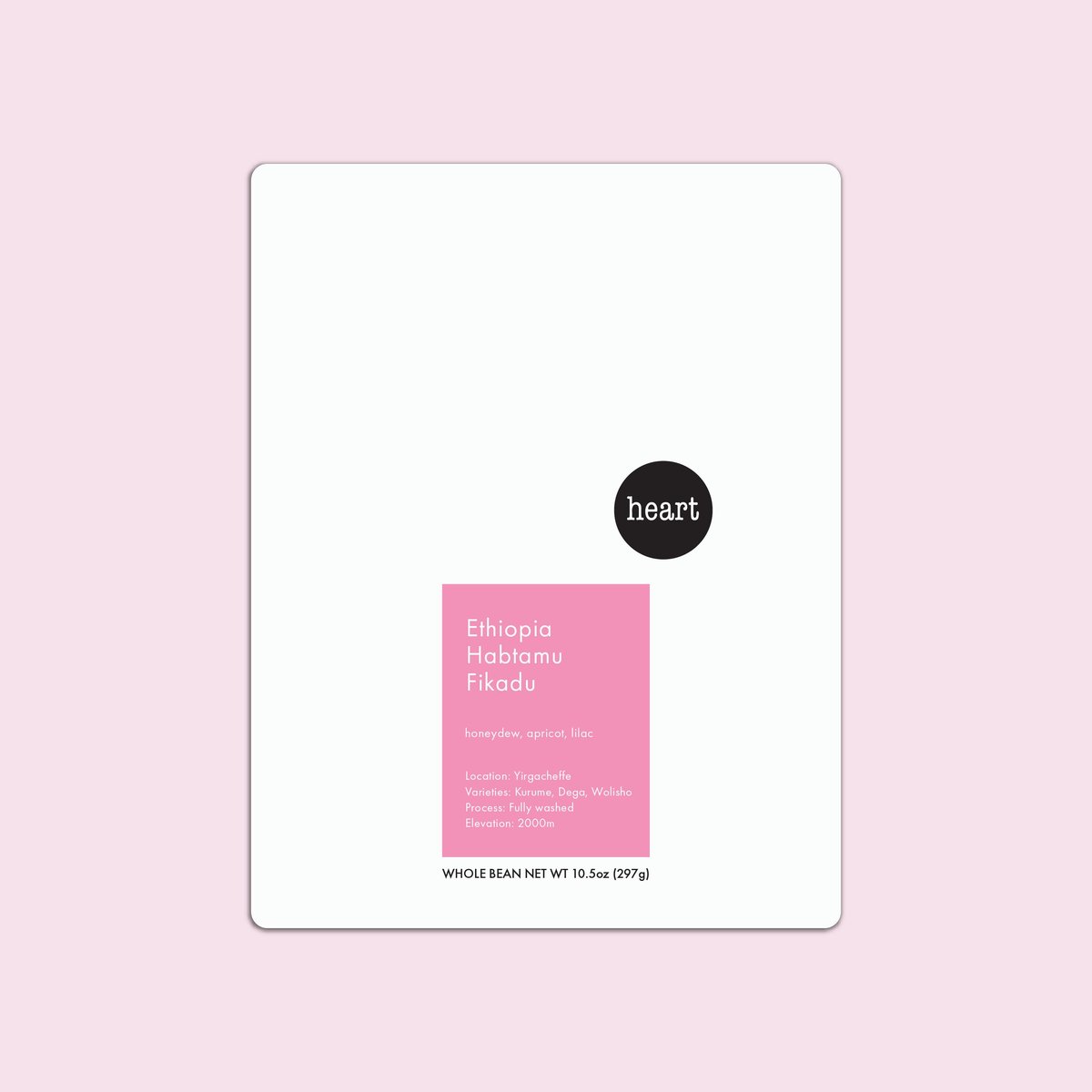
In practice, traceability means you can follow a bag of coffee back to a specific farm, cooperative, or even a named producer lot. The Ethiopia Habtamu Fikadu from Heart Coffee Roasters, for example, is the kind of offering that exemplifies this: a single-origin coffee tied to a specific grower and micro-lot, where flavour is shaped by the altitude, rainfall, and processing choices of that particular harvest. As the SCA's framework acknowledges, specialty coffee's flavour can vary noticeably from harvest to harvest, reflecting each year's environmental conditions — and that variability is a feature, not a bug.
This stands in fundamental contrast to commodity blending, which deliberately smooths out variation to achieve year-on-year consistency. Understanding this trade-off is key to understanding why these two categories exist at all.
The C-Price vs. the Specialty Differential
One of the starkest differences between commodity and specialty coffee is how it's priced. Commodity coffee is traded on the futures market — specifically on exchanges like the New York Intercontinental Exchange — as what the industry calls the "C-price", a global benchmark for green Arabica. This price is set by global supply and demand dynamics, not by quality. During the late 1990s, the C-price collapsed catastrophically, hitting a nadir of just 417 US cents per pound in September 2001 — well below the cost of production for many growers.
Tens of millions of small producers in developing countries depend on coffee for their livelihoods. When the C-price crashes, those households bear the brunt. The economics of coffee are deeply tied to these market forces, which is why understanding the commodity vs. specialty divide has real human stakes.
Specialty coffee trades at a differential above the C-price — negotiated directly between roasters and producers (or through importers focused on quality), and intended to reflect the additional labour, selectivity, and craft involved. At the extreme high end of specialty, prices can be extraordinary: the most expensive specialty lot ever sold — a Panama Geisha — fetched over US$13,700 per pound at auction. That's an outlier, but it illustrates the premium ceiling that the specialty market can sustain. Everyday specialty coffees trade at far more modest differentials, but still meaningfully above commodity floor pricing.
Case Studies: Where Do the Big Brands Really Fall?
This is the question most readers arrive with: Is Starbucks specialty coffee? What about Tim Hortons? Illy? The honest answer requires looking at each brand on its own terms.
Folgers and Maxwell House
Folgers and Maxwell House are the textbook examples of first-wave coffee — commodity-grade blends designed for maximum consistency, shelf stability, and affordability. Both are primarily composed of Robusta and lower-grade Arabica beans, blended and roasted at industrial scale. Neither brand publishes SCA cupping scores, and neither makes claims about farm-level traceability or selective picking. They are priced to track commodity markets, not quality differentials. For the definition we're using here, these are commodity coffees — and they don't pretend otherwise.
Tim Hortons
Tim Hortons is Canada's largest coffee chain and one of the most culturally embedded coffee brands in North America. Its core blend is a medium-roast commodity product — consistent, accessible, and optimised for speed of service and broad palatability. Tim Hortons does participate in some sustainability certification programs, but sustainability certification and specialty-grade scoring are not the same thing. The brand does not market its coffee on SCA scores, single-origin traceability, or producer relationships of the kind that define specialty. Tim Hortons is a commodity coffee brand by the industry's standard definition, and there's nothing wrong with being honest about that.
Starbucks
Starbucks occupies a genuinely complicated middle ground, and it's where the question gets most frequently debated. Starbucks was a significant force in popularising higher-quality Arabica coffee during the Second Wave, moving American consumers away from purely commodity blends. The company does source 100% Arabica, publishes some farmer-support initiatives, and operates a premium tier — Starbucks Reserve — that sources single-origin and micro-lot coffees with the kind of traceability language associated with specialty.
However, the vast majority of Starbucks volume is large-scale commodity Arabica, roasted dark to achieve brand consistency. Dark roasting can mask the origin-specific flavour characteristics that specialty scoring depends on. Starbucks' core range is best described as premium commodity coffee — a step above Folgers in sourcing intent and Arabica percentage, but not meeting the traceability, scoring, and producer-relationship standards of the specialty sector. Its Reserve tier is a different conversation, though even there, the SCA scoring of specific lots is not publicly disclosed.
illy
illy is an Italian espresso institution and one of the more creditable large-scale brands to examine here. The company sources 100% Arabica, maintains long-term relationships with growers across producing countries, and has invested in agricultural training programs for producers. illy's sourcing practices are meaningfully more transparent than typical commodity brands, and the company targets the higher end of the Arabica quality spectrum.
That said, illy's core product is a blended espresso — nine Arabica origins blended for a consistent, house-style profile. Blending for consistency is, by nature, the opposite of what makes a coffee traceable and terroir-driven in the specialty sense. illy sits in what many in the industry call the "premium commercial" tier: above commodity, below specialty as the SCA defines it. Worth noting: illy does not publish SCA cupping scores for its blends.
Lavazza
Lavazza, Italy's largest coffee company by volume, is another premium commercial brand. Like illy, it sources Arabica and positions itself on quality and heritage. Like illy, its core business is consistent blends — including significant Robusta content in several lines — aimed at the espresso market. Lavazza has made moves toward sustainability sourcing, but again, sustainability certification and SCA specialty-grade scoring are not interchangeable concepts. Lavazza is a commodity-to-premium-commercial brand depending on the product line.
Kicking Horse Coffee
Kicking Horse is a Canadian roaster that markets itself aggressively on quality language — "certified organic," "fair trade," "Fairtrade" — and sits in a different position from the above commodity giants. Organic and Fairtrade certification do correlate with somewhat more careful sourcing, and Kicking Horse's coffees are generally composed of higher-grade Arabica than a Folgers or Tim Hortons blend.
However, certification is not the same as specialty-grade scoring. Kicking Horse does not publish SCA cupping scores or named-producer lot information across its range. The brand occupies a premium commercial / ethical commodity space — meaningfully better sourcing intent than pure commodity, but not operating with the single-origin traceability and SCA-scored quality framework that defines genuine specialty.
What Does Genuine Specialty Look Like in Practice?
If the brands above represent the commodity and premium-commercial spectrum, what does the genuine specialty end look like? A few markers to watch for:
- Named producer or cooperative on the bag (not just a country of origin)
- Process and variety disclosed (e.g., washed Yirgacheffe, natural Gesha)
- Harvest year or crop season noted
- Cupping score or tasting notes grounded in specific sensory descriptors — not just "smooth" or "bold"
- Direct or relationship trade — where the roaster can speak to the producer's name and farming practices
- Selective hand-picking confirmed as part of the sourcing narrative
Roasters like Onyx Coffee Lab exemplify this approach: publishing detailed producer information, processing method, and flavour transparency on every offering. This is the operational reality of the specialty model — coffee as an agricultural product with provenance, not an anonymous industrial input.
Environmental and Social Dimensions
It's worth noting that some voices in the specialty community argue the SCA's current definition doesn't go far enough. Advocates like biologist Giorgio Piracci, president of the Peruvian NGO 7Elements Peru, argue that environmental and socio-economic quality should be embedded in the definition of excellence itself — that coffee produced with harmful pesticides or under exploitative labour conditions cannot genuinely be called "excellent," regardless of its cup score.
This debate is ongoing, and it reflects a broader tension in the specialty world: whether quality is purely sensory or whether it must encompass the conditions of production. For consumers thinking about this question, it's worth engaging with both dimensions — and asking not just "what does this coffee taste like?" but "who grew it, and under what conditions?"
Where to Go From Here
If you've been drinking Starbucks or Tim Hortons and wondering what you're missing, the honest answer is: a great deal of flavour complexity, producer transparency, and the kind of year-to-year variation that makes coffee genuinely interesting. Specialty coffee isn't a snobbery exercise — it's a different category of agricultural product, one that asks more of everyone in the supply chain and rewards the drinker with something meaningfully different in the cup.
Start with a single-origin offering from a roaster who publishes producer information and process details. The Ethiopia Habtamu Fikadu from Heart Coffee Roasters is an excellent entry point if you're curious what traceable, producer-named specialty coffee tastes like. Browse roasters like Onyx Coffee Lab for a range of origins across the quality spectrum.
And if you want to understand the broader industry context — how pricing, supply chains, and waves of coffee culture shaped the world you're tasting today — our coffee economics and climate guide and Third Wave Coffee explainer are good next stops.
Coffees demonstrating this
From our catalog of in-stock beans.
Roasters featured
Frequently asked questions
- Is Starbucks considered specialty coffee?
- Starbucks' core range is best described as premium commodity coffee. It sources 100% Arabica and is a step above pure commodity blends, but does not meet the SCA's specialty standards of traceable single-origin lots with disclosed cupping scores of 80+. The Starbucks Reserve tier uses more traceable sourcing language, but does not publicly publish SCA scores for its lots.
- What score does a coffee need to be called specialty?
- According to the Specialty Coffee Association (SCA), a coffee must score 80 points or above on the SCA's 100-point cupping form to be classified as specialty. Scores of 90–100 are Outstanding, 85–89.99 are Excellent, and 80–84.99 are Very Good. Below 80 is not specialty grade.
- Is Tim Hortons a specialty coffee brand?
- No. Tim Hortons is a commodity coffee brand. Its core blend is optimised for consistency, affordability, and speed of service, and does not involve the single-origin traceability, selective picking standards, or SCA cupping scores associated with specialty coffee.
- What is the C-price and how does it affect coffee quality?
- The C-price is the global commodity benchmark price for green Arabica coffee, traded on futures exchanges. It's set by supply and demand, not quality. Specialty coffee trades at a differential above the C-price, negotiated based on the quality and traceability of the lot. When the C-price is low — as it was in 2001, hitting 417 US cents per pound — producers of commodity coffee suffer, while specialty producers are somewhat insulated by their direct-trade premiums.
- Are Fairtrade and organic certifications the same as specialty?
- No. Fairtrade and organic certifications relate to labour conditions, pricing floors, and farming practices — all important, but separate from the SCA's quality-based scoring system. A coffee can be Fairtrade certified and still score below 80 on the SCA scale, and vice versa. Brands like Kicking Horse carry ethical certifications without publishing SCA specialty-grade scores.
- What is the most expensive specialty coffee ever sold?
- According to Wikipedia's specialty coffee entry, a Panama Geisha lot holds the record, having sold for over US$13,700 per pound (over US$30,204 per kilogram) as of the time of publication. This is an extreme auction outlier; everyday specialty coffees trade at far more modest premiums above the commodity C-price.
- How is specialty coffee different from regular coffee in terms of picking?
- Specialty coffee requires selective hand-picking — harvesters return to trees every 8–10 days and pick only ripe cherries at peak maturity. Commodity coffee is often strip-picked, removing all fruit regardless of ripeness, which results in a mix of ripe and unripe beans that produces harsher, more astringent flavours in the cup.
See also