Knowledge · plant
Coffee Species: Arabica, Robusta & Liberica
A comparative reference to the genetics, chemistry, climate tolerance, and flavor of Arabica, Robusta, and Liberica — the three commercially grown Coffea species.
Key facts
- Commercial species
- Arabica, Robusta (Canephora), Liberica
- Global production share
- Arabica 60%, Robusta 40-46%
- Arabica origin
- Ethiopia, South Sudan, Yemen highlands
- Arabica elevation range
- 1,200–1,500 m typical, sea level to 2,800 m
- Caffeine content
- Arabica 1.5% by dry weight
- Arabica genetics
- Allotetraploid with 44 chromosomes
- Arabica flavor profile
- Higher acidity, complex aromatics, greater sweetness
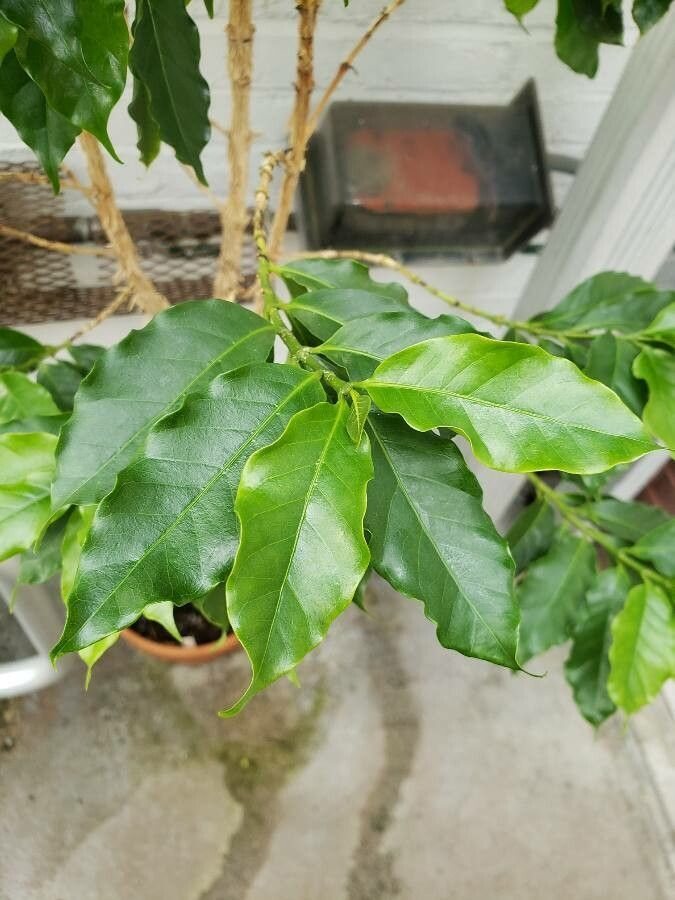
The Genus Coffea
The coffee plant belongs to the genus Coffea, a member of the family Rubiaceae. As of 2026, Plants of the World Online recognizes 133 accepted species plus one hybrid, yet the overwhelming majority of the world's traded coffee is derived from just two species. The genus is native to tropical and southern Africa and tropical Asia, with most wild diversity concentrated in the forests of sub-Saharan Africa and the Western Indian Ocean Islands.
Caffeine — the alkaloid that defines coffee economically and culturally — is not a universal feature of the genus. The earliest Coffea lineages had little or no caffeine, and the compound appears to have evolved independently in multiple African lineages, likely as a defense against herbivory and, intriguingly, as a signal that attracts pollinators such as honeybees. The caffeine biosynthesis pathway in Coffea is genetically distinct from that used by tea (Camellia) and cacao (Theobroma), a striking example of convergent evolution confirmed when the coffee genome — containing more than 25,000 genes — was published in 2014.
For the plant scientist and the specialty buyer alike, the distinctions that matter most are captured in three species: Coffea arabica, Coffea canephora, and Coffea liberica.
Coffea arabica: The Dominant Species
Arabica coffee accounts for approximately 60% of global coffee production — the single most commercially important crop species in the genus. Its natural populations are restricted to the montane forests of southwestern Ethiopia, the Boma Plateau of South Sudan, and the highlands of Yemen, where it grows as an understory shrub at elevations suited to moderate temperatures and consistent rainfall.
Botany and Growth
Wild C. arabica trees reach 9–12 m in height, though commercial plantations typically trim plants to around 5 m, or as low as 2 m, to facilitate harvesting. The leaves are glossy dark green, elliptic-ovate to oblong, 6–12 cm long, with wavy margins and prominent veins. Three to four years after planting, the plant produces small white flowers, 10–15 mm in diameter, growing in axillary clusters of 2 to 9. The fruit is a drupe — universally called a coffee cherry — 10–15 mm in diameter, maturing to bright red or purple and typically containing two seeds (the coffee beans).
Full maturity takes approximately seven years. The species requires 1.2–1.8 m of rainfall annually, evenly distributed, and performs best at average temperatures between 15 and 24 °C. Commercial cultivation is most common at elevations of 1,200–1,500 m, though plantations exist anywhere from sea level to approximately 2,800 m. Unlike C. canephora, arabica prefers to grow in light shade — a reflection of its forest-understory origins. It cannot tolerate frost.
Genetics: A Polyploid Hybrid
Perhaps the most consequential genetic fact about C. arabica is that it is not a diploid species. It carries four copies of eleven chromosomes (44 chromosomes total), making it an allotetraploid — the product of a natural hybridization between two diploid ancestors: Coffea canephora and Coffea eugenioides. This hybridization event is estimated to have occurred between approximately 1.08 million and 543,000 years ago, linked to changing environmental conditions in East Africa.
Tetraploidy has profound practical consequences. Because C. arabica is self-pollinating (a rarity in the genus), it breeds true from seed far more readily than its diploid relatives, allowing the development of stable named varieties. It also means that arabica has reduced genetic diversity compared to wild diploid species — a factor that influences both its flavor consistency and its vulnerability to disease. See Coffee Genetics & Breeding for a deeper treatment of ploidy and breeding programs.
Flavor, Chemistry, and Cup Quality
C. arabica is prized for a flavor profile characterized by higher acidity, more complex aromatics, and greater sweetness compared to other commercial species. The bean contains approximately 1.5% caffeine by dry weight and relatively high sugars — 6–9% — both figures that contribute to the cleaner, more nuanced cups associated with specialty coffee. The higher sugar content supports the Maillard reactions and caramelization during roasting that generate fruity, floral, and chocolatey aromatics.
Acidity — in the sensory rather than pH sense — is a hallmark of high-grown arabica, often described as brightness or liveliness. Chlorogenic acids are present in significant quantities, though at lower concentrations than in C. canephora, contributing both to perceived bitterness (especially at dark roast levels) and to the cup's antioxidant profile.
Major Growing Regions
C. arabica is grown across the tropics, from Ethiopia and Kenya in East Africa to Colombia, Brazil, and Guatemala in the Americas, as well as Indonesia and Papua New Guinea. Indonesian coffees — including those from Sumatra and Java — are noted for heavy body and low acidity, qualities that make them well-suited to blending with the brighter coffees of Central America and East Africa. See Growing Coffee: Altitude, Shade & Soil for the environmental variables that shape these regional expressions.
Coffea canephora: Robusta
Robusta coffee — more precisely Coffea canephora — is the second major commercial species and represents approximately 40–46% of global production. The name "Robusta" formally refers to the dominant commercial variety (C. canephora var. robusta); a second variety, C. canephora var. nganda, also exists but is less widely cultivated. The species was not formally recognized as distinct from C. arabica until 1897.
Botany and Growth
C. canephora grows as a robust shrub or small tree reaching about 10 m in height. It has a shallow root system and flowers irregularly, with berries taking approximately 10–11 months to ripen and producing characteristically oval-shaped beans. The plant originates in the lowland forests of western and central sub-Saharan Africa, growing indigenously from Liberia east to Tanzania and south to Angola.
Unlike arabica, C. canephora is a diploid species and is largely cross-pollinating, requiring genetic exchange between plants. This outbreeding biology has generated substantial genetic and morphological diversity across its cultivated and wild populations.
Climate Tolerance and Disease Resistance
Robusta's common name is well-earned. It grows at lower elevations than arabica, tolerates higher temperatures, and thrives in humid equatorial conditions where arabica cannot survive. Its root architecture and physiology enable it to grow in a wider range of soil types. Most significantly, C. canephora is far less susceptible to pests and disease than C. arabica, requiring substantially less herbicide and pesticide input. This resilience contributes directly to its lower production cost and greater crop yield.
A 1927 discovery on the island of Timor — a naturally occurring hybrid between robusta and arabica — proved historically important: that Timor Hybrid became the genetic source material for breeding coffee leaf rust resistance into arabica cultivars worldwide, an ongoing priority for coffee breeding programs.
Both arabica and robusta face increasing pressure from climate change, which is expected to shift and contract suitable growing zones in some of the world's most important producing regions.
Chemistry and Flavor
C. canephora beans contain approximately 2.7% caffeine — roughly double the arabica figure — and significantly lower sugars (3–7%) compared to arabica's 6–9%. This chemistry drives its cup character: robusta is typically described as strong, full-bodied, earthy, and more bitter than arabica. The higher bitterness is partly attributed to its elevated pyrazine content, produced during roasting. The lower sugar content means fewer of the complex Maillard-reaction volatiles that give specialty arabica its floral and fruity notes.
Robusta also contains more chlorogenic acids and polyphenols than arabica, giving it a higher antioxidant load but also contributing to astringency in the cup.
Despite its reputation as a commodity-grade ingredient, high-quality robusta commands genuine respect in specific contexts. In Italian espresso culture, good-quality robusta beans are deliberately included in blends to provide fuller body and to improve crema — the dense, persistent foam head prized in traditional espresso. The powerful, unambiguous flavor can also lend perceived "strength" and "finish" to blended products.
Major Growing Regions and Uses
Vietnam, where French colonists introduced the species in the late 19th century, has become the world's largest exporter of robusta coffee, accounting for over 40% of total robusta production globally. Brazil — despite being the world's largest overall coffee producer — grows 69% arabica, with robusta (the conilon variety) making up most of the remainder. Indonesia, India, and Uganda are also significant robusta producers.
The majority of robusta production is destined for instant coffee manufacturing, where its higher soluble-solids yield and lower raw-material cost are advantageous. It is also extensively used in commercial espresso blends and lower-grade filter blends.
Coffea liberica: The Third Commercial Species
Coffea liberica — Liberian coffee — is native to western and central Africa, from Liberia east to Uganda and south to Angola. It accounts for less than 1.5% of commercial coffee grown globally, placing it firmly in the niche category, yet it occupies an outsized role in the histories of the Philippines, Malaysia, and Indonesia.
Botany: Distinctive Size and Shape
Liberica is the largest of the three commercial species by almost every physical measure. Trees reach up to 20 m in height and must be harvested using ladders. The cherries, beans, and leaves are also among the largest of all coffee varieties. The beans themselves are distinctively asymmetric, with one side shorter than the other, creating a characteristic hook at the tip and a more jagged central furrow — features not found in arabica or robusta beans.
Historical Significance
Liberica was first commercially cultivated in the Philippines, introduced to the city of Lipa in the 1740s by Spanish friars, and became the dominant coffee species in the archipelago during the colonial period. Philippine liberica — known locally as kapeng barako — was exported to Western markets at prices reportedly up to five times those of other species. During the global pandemic of coffee leaf rust in the late 19th century, liberica plantations in the Philippines survived longer than arabica or robusta holdings before ultimately succumbing as well. The collapse of the Philippine coffee industry following this event remains one of the most dramatic episodes in coffee history.
Liberica was also introduced to Indonesia and Malaysia as a replacement for arabica trees killed by coffee rust, and it persists today in parts of Central and East Java, West Kalimantan, and the west coast of Johor, Malaysia.
Caffeine and Flavor
The caffeine concentration of liberica beans is the lowest of the three commercial species: approximately 1.23 g per 100 g of bean, compared to approximately 1.61 g/100 g for arabica and 2.26 g/100 g for robusta. The flavor profile is distinct — bold, full-bodied, and often described as smoky, woody, and slightly nutty, with a floral and fruity aroma that has been compared to jackfruit. This unusual aromatic signature sets it apart from both the bright acidity of fine arabica and the earthy intensity of robusta.
Emerging Agricultural Interest: Paludiculture
Liberica has recently gained renewed scientific and agronomic attention for a remarkable ecological characteristic: its ability to grow in waterlogged and acidic peat soils where arabica and robusta typically fail. In the Indonesian provinces of Sumatra (particularly Jambi) and West Kalimantan, C. liberica is increasingly cultivated as a crop for peatland restoration via paludiculture — a practice that allows farmers to maintain high water tables (reducing peat fire risk and carbon emissions) while still generating agricultural income. This positions liberica as a potentially important tool for climate mitigation in Southeast Asia.
A Note on Excelsa
Coffea excelsa — sometimes treated as a distinct species and sometimes marketed as such — was reclassified in 2006 as Coffea liberica var. dewevrei. However, more recent genomic analyses have reopened the question of whether it warrants species-level recognition. For commercial purposes, excelsa is typically grouped under the liberica umbrella.
Side-by-Side Comparison
The following summary draws together the key differentiating characteristics of the three commercial species:
| Characteristic | C. arabica | C. canephora (Robusta) | C. liberica |
|---|---|---|---|
| Global share | ~60% | ~40–46% | <1.5% |
| Ploidy | Allotetraploid (44 chr.) | Diploid (22 chr.) | Diploid |
| Pollination | Self-pollinating | Cross-pollinating | Cross-pollinating |
| Caffeine (approx.) | ~1.5% / ~1.61 g/100 g | ~2.7% / ~2.26 g/100 g | ~1.23 g/100 g |
| Bean sugar content | 6–9% | 3–7% | — |
| Typical elevation | 1,200–2,800 m | Low-to-mid altitude | Low altitude |
| Disease resistance | Lower | Higher | Moderate |
| Flavor character | Bright, fruity, complex | Earthy, bitter, full-bodied | Smoky, woody, floral |
| Primary uses | Specialty, filter, espresso | Instant, espresso blends | Niche specialty, local markets |
| Tree height | 9–12 m (wild) | ~10 m | Up to 20 m |
Genetics, Hybridization, and Future Diversity
Understanding the genetic relationships among Coffea species is critical for the future of coffee breeding. C. arabica's allotetraploid origin — a natural hybrid of C. canephora and C. eugenioides — means that modern arabica effectively carries a robusta genome within it, diluted and rearranged over hundreds of thousands of years. This ancestry is why crosses between arabica and robusta are possible, and why the Timor Hybrid was so useful in transferring disease resistance.
The genus as a whole harbors enormous untapped diversity. In 2008–2009, researchers from the Royal Botanic Gardens, Kew, described seven new species from the mountains of northern Madagascar alone. In 2008, Coffea charrieriana — a naturally caffeine-free species — was discovered in Cameroon, opening the theoretical possibility of breeding caffeine-free traits into cultivated coffee without chemical decaffeination. DNA fingerprinting techniques validated in 2020 now allow genetic authentication of coffee plant material, supporting traceability and informed breeding decisions.
For a full treatment of how breeders are using this diversity to develop disease-resistant, climate-adapted varieties, see Coffee Genetics & Breeding and Coffee Varieties & Cultivars.
In this section
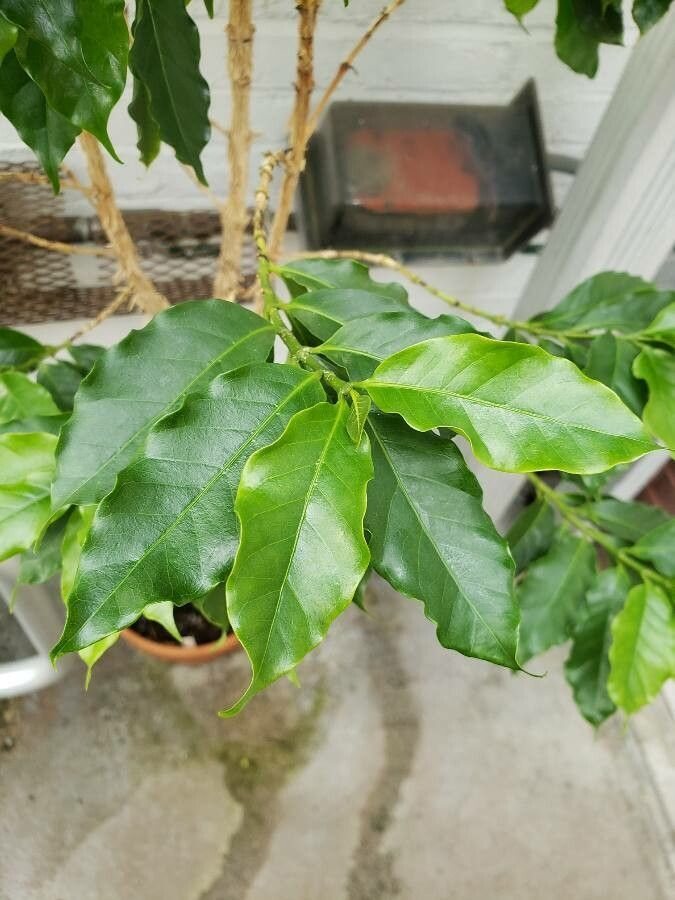
Arabica Coffee
Coffea arabica is the world's dominant coffee species, accounting for roughly 60% of global production. Prized for its nuanced acidity, aromatic complexity, and relatively low bitterness, it underpins the entire specialty coffee movement — yet its narrow genetic base, rooted in a single ancient hybridization event, makes it uniquely vulnerable to disease and climate change.
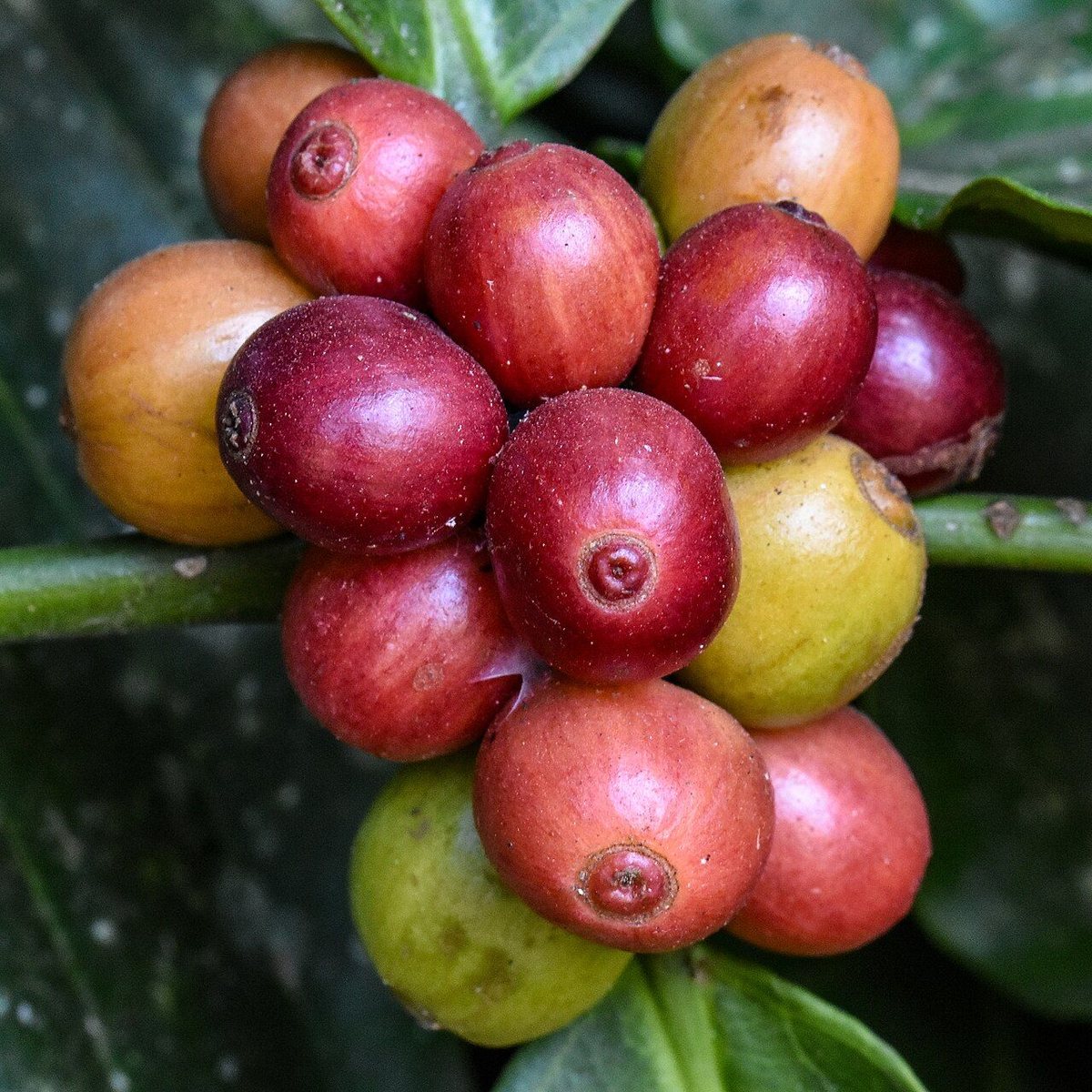
Robusta Coffee
Coffea canephora — commercially known as robusta — is the world's second most-produced coffee species, accounting for roughly 45–46% of global supply. Hardier, higher-yielding, and more caffeine-rich than arabica, it shapes everything from instant coffee granules to the crema on a traditional Italian espresso.
Frequently asked questions
- What percentage of world coffee production comes from Arabica versus Robusta?
- Arabica (Coffea arabica) accounts for approximately 60% of global production, while Robusta (Coffea canephora) makes up most of the remainder — roughly 40–46%, depending on the source. Coffea liberica represents less than 1.5% of commercial production.
- Why does Arabica taste smoother and less bitter than Robusta?
- Several chemical differences explain this. Arabica beans contain approximately 1.5% caffeine and 6–9% sugars, while robusta contains around 2.7% caffeine and only 3–7% sugars. Robusta also has higher pyrazine content, which contributes to its characteristic bitterness and earthy flavor. The higher sugar content in arabica supports more complex aromatic compounds during roasting, producing brighter, fruitier, and more nuanced cups.
- Is Coffea arabica a natural species or a hybrid?
- It is both. Coffea arabica arose from a natural hybridization between two diploid species — Coffea canephora and Coffea eugenioides — estimated to have occurred between approximately 1.08 million and 543,000 years ago. The hybridization produced an allotetraploid with 44 chromosomes (four copies of eleven). While it is a distinct, naturally occurring species, its genome effectively contains ancestral copies of both parent genomes.
- Why is Robusta more disease-resistant than Arabica?
- Coffea canephora (Robusta) evolved in the humid lowland forests of western and central Africa under different pest and pathogen pressures than arabica, and its diploid, outcrossing genetic system maintains greater population-level diversity, which supports adaptive resistance. It is substantially less susceptible to pests and diseases than arabica, requiring much less pesticide and herbicide in cultivation. A naturally occurring arabica-robusta hybrid discovered in Timor in 1927 was subsequently used to breed leaf rust resistance into arabica cultivars.
- What makes Coffea liberica unusual compared to Arabica and Robusta?
- Liberica is physically the largest commercial coffee species, with trees reaching up to 20 m and requiring ladders for harvest. Its beans are asymmetric with a distinctive hook shape. The species has the lowest caffeine content of the three commercial species (approximately 1.23 g per 100 g). Its flavor profile — smoky, woody, and sometimes floral with jackfruit-like notes — differs markedly from both arabica and robusta. It can also grow in waterlogged, acidic peat soils where the other two species fail, making it valuable for peatland agricultural systems in Southeast Asia.
- Can Arabica and Robusta be crossbred?
- Yes. Because Coffea arabica is itself a natural hybrid of Coffea canephora (robusta's species), crosses between the two are possible. A naturally occurring hybrid between robusta and arabica was found on the island of Timor in 1927 and subsequently used as the genetic source for breeding coffee leaf rust resistance into commercial arabica varieties. Deliberate interspecific breeding programs continue to use robusta genetics to improve arabica's disease resistance and climate adaptability.
See also