Knowledge · brewing
Brewing Troubleshooting
Identify what has gone wrong in your cup, understand why it happened, and apply the right fix — one variable at a time.
Key facts
- Root Cause
- Extraction of soluble compounds from ground coffee
- Key Variables
- Grind size, water temperature, brew time, brew ratio
- Golden Rule
- Change one variable at a time
- Under-Extraction Taste
- Sour, sharp, hollow, like unripe fruit
- Over-Extraction Taste
- Bitter, harsh, drying, ashy or rubbery
- Common Brew Ratio
- 15–18:1 water to coffee by mass
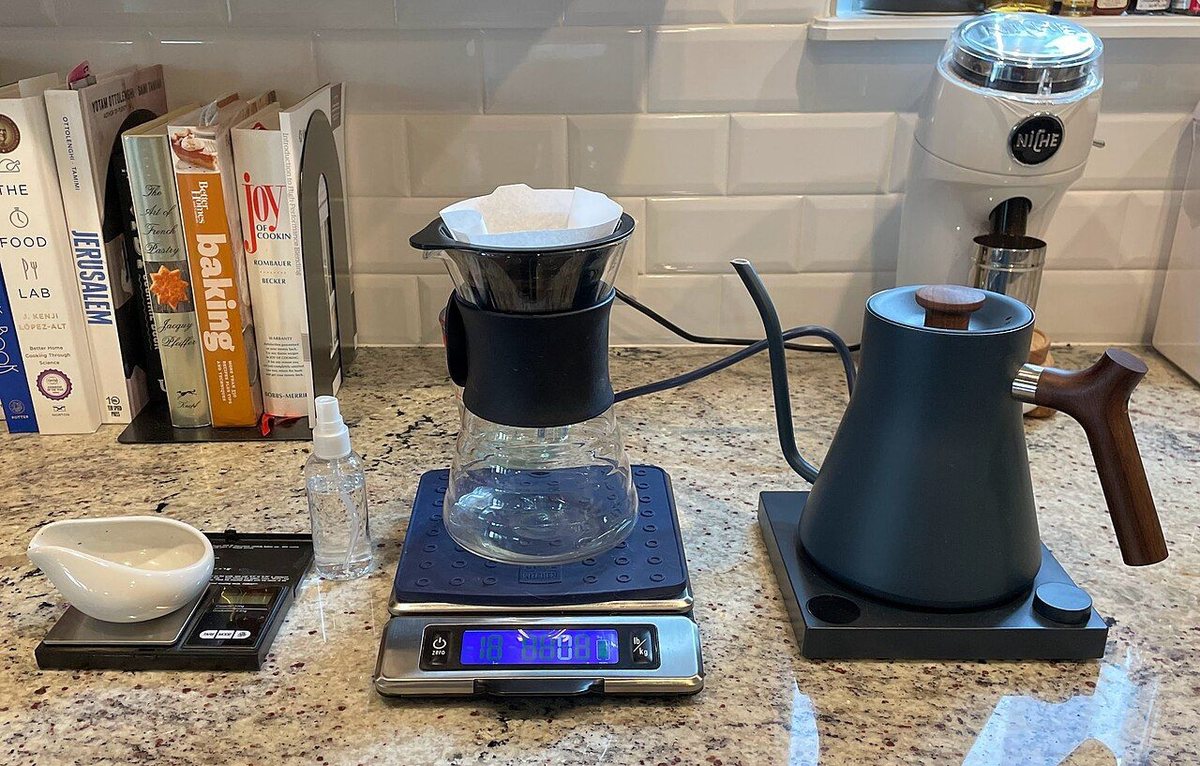
Understanding the Extraction Framework
Almost every brewing fault traces back to the same root cause: extraction — the process by which hot water dissolves soluble compounds out of ground coffee. The key variables that control extraction are grind size, water temperature, brew time, and the brew ratio of coffee to water. As described in the principles of coffee preparation, these four variables interact continuously, and even small shifts within a seemingly narrow range — for example, brew ratios of 15–18:1 by mass — produce differences that are easily perceived by an experienced drinker.
The golden rule of troubleshooting is: change one variable at a time. If you adjust grind size and temperature simultaneously, you cannot know which change produced the improvement. Work methodically through the decision table at the end of this article, and keep brief tasting notes so you can track progress across brews.
For a deeper grounding in the theory behind these variables, see Extraction: Yield & Strength.
Sour or Sharp: The Under-Extracted Cup
What it tastes like
Under-extraction produces a cup that is sour, sharp, or hollow — often described as reminiscent of unripe fruit, vinegar, or green/grassy notes. There may be a thin body and a quick, unsatisfying finish. The brightness you perceive is not the pleasant acidity of a well-extracted coffee; it is the tang of acids extracted early before balancing sweetness and body compounds have had time to dissolve.
Why it happens
Extraction is a sequential process. Acids and some aromatic compounds are among the first things water pulls from the grounds; sugars and body-building compounds follow; bitter compounds come last. When extraction is cut short — whether by too coarse a grind, too low a temperature, or too brief a contact time — the cup is dominated by those early-extracted acids, without the sweetness and weight that would balance them.
According to preparation principles, an overly coarse grind reduces the surface area exposed to water, limiting how efficiently soluble compounds can dissolve into the brew. Similarly, water that is too cool or contact time that is too brief simply does not complete the work of full extraction.
How to fix it — in order of impact
- Grind finer. This is usually the first and highest-impact adjustment. A finer grind increases the surface area of each particle, allowing water to dissolve compounds more efficiently. Move one or two steps finer on your grinder, then re-brew and taste before adjusting further. Note that grinding to a uniform particle size is highly desirable — a burr grinder, which crushes beans between two abrasive elements with little frictional heating, produces a far more consistent grind distribution than a blade chopper.
- Increase water temperature. Brewing coffee is usually performed at close to the boiling point of water. If your water is noticeably below that range, solubility is reduced and extraction suffers. Check your brew temperature and raise it incrementally.
- Extend brew time. For methods where contact time is adjustable — immersion brewers such as a French press or AeroPress, or a pour-over where you can slow your pour rate — allow the grounds to remain in contact with water for longer. Be careful not to over-correct into bitterness.
- Check your brew ratio. If you are using too little coffee for the volume of water, the brew will taste weak and sour simultaneously. See the Brew Ratio article for guidance; commonly cited ratios fall in the 15–18:1 water-to-coffee range by mass.
- Assess water quality. Mineral content affects extraction efficiency. Consult the Water for Coffee article if you suspect your water is contributing to a flat or under-extracted result.
Bitter or Harsh: The Over-Extracted Cup
What it tastes like
Over-extraction produces a cup that is bitter, harsh, or drying — sometimes described as ashy, rubbery, or medicinal. Unlike the clean, pleasant bitterness that can be a positive characteristic of a well-made espresso or dark roast, over-extracted bitterness is aggressive and lingers uncomfortably. It often coincides with a heavy but flat mouthfeel.
Why it happens
As extraction continues beyond an optimal point, the water begins pulling out larger, less desirable compounds — polyphenols and other bitter-tasting molecules — that overpower the sweeter, more complex flavours extracted earlier. As noted in coffee preparation literature, beans that are too finely ground for the brewing method in use expose too much surface area to heated water and produce a bitter, harsh, over-extracted taste.
How to fix it — in order of impact
- Grind coarser. The most direct intervention. A coarser grind reduces surface area and slows the rate of extraction. Move your grinder one or two steps coarser at a time.
- Reduce water temperature. Lower temperatures slow extraction kinetics. Try reducing your brew temperature incrementally. Be careful not to drop so low that you swing into under-extraction territory.
- Shorten brew time. For immersion methods, reduce steeping time. For pour-over, try pouring slightly faster or using a coarser grind to speed drainage.
- Check your brew ratio. Using too much coffee relative to water — or too little water — concentrates extracted compounds. Adjust your ratio within the commonly cited 15–18:1 range.
- Consider the roast. Very dark roasts have a narrower extraction window before bitter compounds dominate. If you are consistently bitter even after adjusting grind and temperature, you may simply be using a roast level better suited to a different brewing method or a shorter extraction.
Weak or Watery: A Strength Problem
What it tastes like
A weak cup lacks body, flavour intensity, and finish. It may taste approximately correct in its balance of sweet and acid, but everything is diluted — there is not enough dissolved coffee material (commonly described as Total Dissolved Solids, or TDS) to produce a satisfying beverage.
Why it happens
Weakness is primarily a brew-ratio problem, not an extraction problem. As the sources note, an overly coarse grind will produce weak coffee unless more coffee is used. However, weakness can also result from simply using too little coffee for the volume of water being brewed.
How to fix it — in order of impact
- Increase the dose. Use more ground coffee per unit of water. Aim to keep your ratio within the 15–18:1 (water-to-coffee by mass) range and adjust from there based on taste.
- Reduce brew water volume. If you consistently find the output too dilute, you may be brewing too large a batch relative to your dose.
- Grind slightly finer. This increases extraction efficiency and can boost perceived strength, though the primary lever for strength is ratio, not extraction yield. The two interact: a well-extracted cup at the right ratio will always taste stronger than a poorly extracted one.
- Use fresher coffee. Ground coffee deteriorates quickly because the greater surface area exposed to oxygen accelerates staling. Many brewers grind immediately before brewing for this reason. A stale grind will extract fewer desirable compounds regardless of technique.
See Brew Ratio and Extraction: Yield & Strength for detailed guidance.
Channeling and Uneven Extraction
What it looks and tastes like
Channeling occurs when water finds preferential pathways through the coffee bed rather than percolating evenly through all the grounds. The result is a cup with conflicting flavour signals — simultaneously sour (from under-extracted patches) and bitter (from over-extracted patches where water passed repeatedly). The flavour is often described as jagged, inconsistent, or "off" in a way that is hard to pin down.
In espresso, channeling is visible as uneven colour in the extraction stream or irregular spurting from the portafilter. In pour-over, it may manifest as one side of the bed draining much faster than the other.
Why it happens
Channeling is caused by uneven particle distribution in the coffee bed, poor tamping (in espresso), or dry clumps that repel water. A uniform grind is described in preparation literature as highly desirable precisely because it promotes even extraction across the entire bed.
How to fix it — step by step
- Distribute grounds evenly before brewing. For pour-over, gently level the bed with a tap or small shake. For espresso, use a distribution tool or the Weiss Distribution Technique (WDT) — stirring grounds with a fine pin — before tamping.
- Use a burr grinder. Burr mills produce a far more uniform particle size distribution than blade-style choppers, which create a mix of fine dust and large chunks that invite uneven flow.
- Bloom or pre-infuse the grounds. Wetting all the grounds with a small amount of water before the main pour (a bloom) allows CO₂ to degas and grounds to swell evenly, reducing dry pockets that cause channeling.
- Check your filter seating. A filter that is not seated correctly in a pour-over dripper can direct flow unevenly.
- For espresso: re-evaluate tamping pressure and technique. An uneven tamp creates a sloped or cracked puck that invites channeling. Aim for a level, firm, consistent tamp.
Astringency: The Drying, Puckering Sensation
What it tastes like
Astringency is a tactile sensation rather than a flavour — a dry, rough, puckering feeling on the palate and gums, similar to the sensation of strong black tea or unripe fruit. It is distinct from bitterness (which is a taste) and can coexist with it. Coffee preparation characteristics that may be emphasized or de-emphasized by different methods include astringency, and sweeteners are noted to mask both astringency and bitterness.
Why it happens
Astringency is associated with the extraction of tannins and other polyphenolic compounds. It tends to worsen with:
- Over-extraction — long brew times or very fine grinds that pull out higher-molecular-weight compounds
- Very high brew temperatures — aggressive extraction conditions
- Fines migration — very fine particles passing through a filter and continuing to extract in the cup
- Stale or low-quality coffee — degraded beans can produce more astringent compounds
How to fix it
- Coarsen the grind slightly to reduce the rate of polyphenol extraction.
- Reduce brew temperature incrementally.
- Shorten contact time — this is particularly relevant for immersion methods like French press, where a very long steep accelerates the extraction of astringent compounds.
- Use a metal filter with caution. Metal filters allow more fine particles into the cup compared to paper filters; if astringency is a persistent problem with a metal-filtered method, consider switching to paper.
- Improve water quality. Hard water or water with imbalanced mineral content can exacerbate astringency. See Water for Coffee.
Quick-Reference Decision Table
Use this table for rapid first-pass diagnosis. Identify the primary symptom in your cup, then apply the indicated fixes in the order listed.
| Symptom | Root Cause | Primary Fixes |
|---|---|---|
| Sour / sharp / thin | Under-extraction | Grind finer → raise temperature → extend time → check ratio |
| Bitter / harsh / ashy | Over-extraction | Grind coarser → lower temperature → shorten time → check ratio |
| Weak / watery / flat | Low strength (ratio) | Increase dose → reduce water volume → grind slightly finer → use fresher coffee |
| Jagged / sour + bitter | Channeling / uneven bed | Distribute evenly → use burr grinder → bloom grounds → check tamp / filter |
| Dry / puckering on palate | Astringency | Grind coarser → lower temperature → shorten time → consider paper filter |
| Muddy / gritty texture | Fines in cup | Use paper filter → grind coarser → check grinder consistency |
General Troubleshooting Principles
Change one variable at a time
This cannot be overstated. Because grind size, temperature, time, and ratio all interact, changing multiple variables simultaneously makes it impossible to identify which change drove an improvement. Adjust one variable, brew, taste, note, then decide whether to adjust further or move to the next variable.
Use a consistent brewing method
A full review of brewing methods reveals that each method has its own optimal grind range and contact time. An espresso machine, a French press, and a pour-over dripper are optimised for fundamentally different grind sizes and brew durations. A grind setting that is ideal for a French press will produce over-extracted, blocked flow in an espresso machine. Always calibrate your troubleshooting to the specific method in use.
Freshness matters
Ground coffee deteriorates faster than roasted whole beans because of the greater surface area exposed to oxygen. Stale coffee produces flat, muted, or papery flavours that no amount of grind or temperature adjustment can fully correct. If you have exhausted the standard troubleshooting steps without improvement, assess the freshness of your beans and grind.
Water is an ingredient
The character of the water itself — its mineral content, pH, and purity — directly affects extraction and perceived flavour. Water for Coffee covers this in detail. If you have moved through all other variables without resolution, water quality deserves serious attention.
Keep tasting notes
A brief log — grind setting, dose, water temperature, brew time, and a one-line tasting note — transforms troubleshooting from guesswork into a systematic process. Even a few sessions of note-taking will reveal the patterns specific to your equipment, your water, and the coffees you buy.
Frequently asked questions
- Why does my coffee taste sour even though I brew it for a long time?
- Sourness in a long brew often points to a grind that is too coarse. If the particles are large, water cannot efficiently dissolve the balancing sweetness and body compounds even with extended contact time. Try grinding finer first, then re-evaluate brew time. Also check that your water temperature is close to the boiling point of water, as low temperatures significantly reduce extraction efficiency.
- My coffee is bitter in the morning but fine in the afternoon — what is happening?
- This is usually a temperature issue. Many home brewers heat water differently at different times, or allow a kettle to cool before pouring. Check that you are brewing at a consistent temperature each time. A thermometer or a temperature-controlled kettle removes this variable entirely.
- Can I fix a weak cup by simply brewing it longer?
- Extending brew time increases extraction yield, which can add some body and flavour intensity, but the primary driver of perceived strength is the brew ratio — how much coffee you use relative to the volume of water. If your ratio is too low (too much water per gram of coffee), brewing longer will push extraction further but the cup will remain dilute. Increase your dose first, then fine-tune extraction with time and grind.
- What causes channeling in a pour-over, and how do I stop it?
- Channeling in a pour-over is usually caused by an uneven coffee bed, dry clumps that repel water, or an improperly seated filter. Gently level the bed before pouring, perform a bloom by wetting all the grounds with a small amount of water first to allow degassing, and make sure your filter is properly seated against the dripper walls. Switching to a burr grinder, which produces a more uniform particle size than a blade-style grinder, also significantly reduces channeling.
- Is astringency the same as bitterness?
- No. Bitterness is a taste perceived on the palate, while astringency is a tactile sensation — a dry, rough, puckering feeling — caused by polyphenolic compounds binding to proteins in saliva. The two often occur together in an over-extracted cup, but they have different causes and can be addressed somewhat independently. Shortening contact time and coarsening the grind typically help both; switching from a metal to a paper filter can specifically reduce astringency by trapping fine particles before they reach the cup.
- Do brew ratios really matter that much within the 15–18:1 range?
- Yes, significantly. As preparation literature notes, even within this fairly narrow range, differences are easily perceived by an experienced coffee drinker. A 15:1 ratio (more coffee per unit of water) will produce a noticeably stronger, fuller-bodied cup than an 18:1 ratio from the same beans on the same equipment. Start at a midpoint and adjust based on your preference and the intensity of the coffee you are using.
See also