Knowledge · brewing
Pour-Over Brewing
A complete reference to cone and flat-bottom drippers, filter media, bloom and pulse pouring, and the variables that produce pour-over's characteristic clarity.
Key facts
- Brewing Method Family
- Percolation brewing
- Primary Variables
- Grind size, water temperature, brew ratio, brew time
- Filter Types
- Paper, metal mesh, cloth, bonded proprietary
- Dripper Designs
- Cone and flat-bottom geometries
- Bloom Duration
- 30-45 seconds after initial water contact
- Cup Characteristic
- Clean, bright, vivid with high clarity
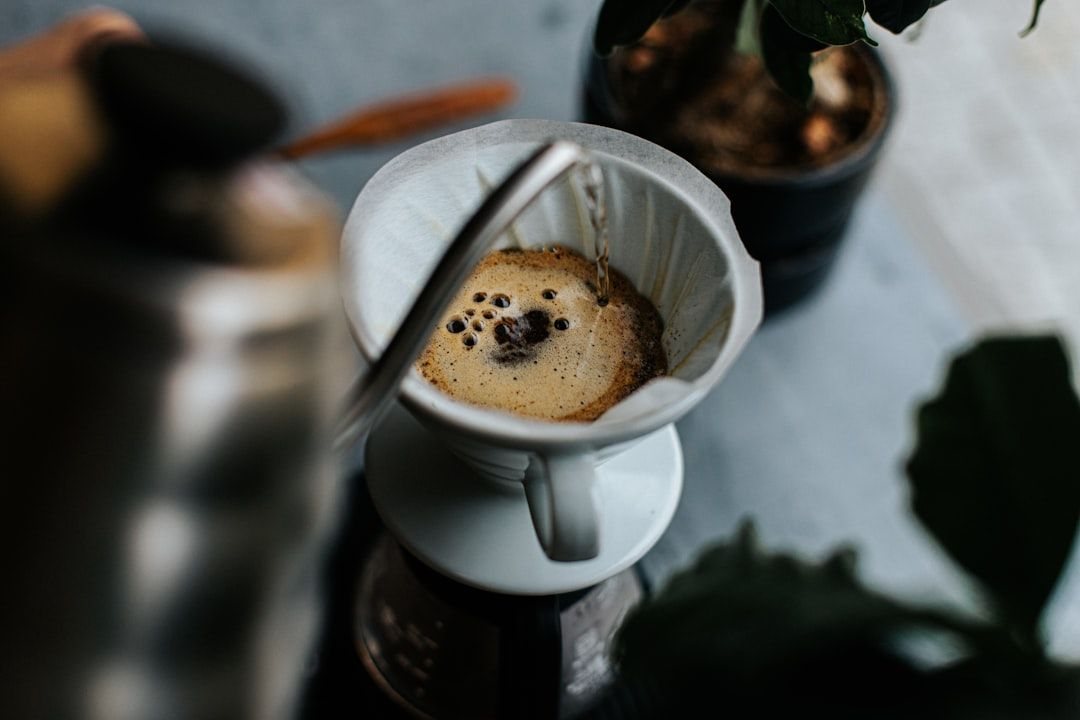
How Pour-Over Brewing Works
Pour-over belongs to the family of percolation brewing methods, in which water passes through a bed of ground coffee rather than steeping in contact with it. Ground coffee is placed in a filter-lined dripper; hot water is added in controlled pours and flows downward through the grounds by gravity, extracting soluble compounds as it goes. The brewed liquid — the filtrate — collects in a carafe or cup below.
Because water is continuously replenished at the top of the bed and spent, solute-laden liquid is continuously drained away, percolation creates a persistent concentration gradient between the water and the grounds. This gradient drives efficient extraction even at relatively short contact times, and it is one reason pour-over is capable of producing a clean, vivid cup. As with all brewing methods, the key variables are grind size, water temperature, brew ratio, and total brew time — each of which shapes both extraction yield and final strength. (See also Extraction: Yield & Strength.)
Cone vs Flat-Bottom Drippers
The geometry of the dripper basket is the single most consequential hardware variable in pour-over brewing. The two dominant designs — cone and flat-bottom — produce meaningfully different flow dynamics.
Cone Drippers
In a cone dripper the bed of grounds narrows toward a central drain point. Water poured anywhere in the cone converges toward that apex, which means the path length through the bed varies: grounds at the centre experience longer contact than those near the upper walls. This geometry tends to produce faster overall drain times and is sensitive to pour placement and flow rate.
- Hario V60 — the archetype of the modern cone dripper. Its large single drain hole, pronounced spiral ribs that hold the filter off the cone wall, and steep 60-degree angle give the brewer maximum control over flow rate through grind size and pouring speed.
- Chemex — combines a bonded, thicker paper filter with a conical flask body. The proprietary filter removes more oils and fine particles than most alternatives, producing a notably light-bodied, clarified brew. Available in several sizes, including the Chemex 6-Cup.
- Origami — a folded-porcelain cone that accepts both cone and flat-bottom filters, offering brewers flexibility to experiment with flow characteristics from a single device.
Flat-Bottom Drippers
Flat-bottom drippers hold the grounds in a cylindrical or near-cylindrical bed with a uniform depth. Water must percolate through an even layer before reaching a ring or grid of small drain holes. The result is a more uniform path length across the bed, which tends to produce more even extraction and a rounder, more forgiving cup.
- Kalita Wave 185 — the best-known flat-bottom dripper. Its corrugated ("wave") filter stands off the dripper walls to encourage even, lateral flow, and three small drain holes at the base slow drainage just enough to allow thorough extraction without stalling. The Wave's design is widely regarded as more forgiving for less-controlled pours.
- Hario Switch — a flat-bottom dripper with an integrated valve that can pause drainage, allowing brewers to toggle between percolation and immersion phases within a single brew.
Filter Types and Their Effect on the Cup
The filter medium sits between the grounds and the cup and has a substantial effect on body, clarity, and aroma.
- Paper filters (bleached or natural/unbleached) trap coffee oils and the finest colloidal particles. The result is a bright, clean cup with lower body but high aromatic clarity. Rinsing a paper filter with hot water before use removes papery taste and pre-heats the dripper.
- Metal filters (stainless mesh) allow oils and fine particles to pass, producing a fuller-bodied cup closer in character to a French press filtrate. Some clarity and brightness is traded for texture.
- Cloth (flannel) filters occupy a middle ground: they pass some oils while trapping very fine sediment, producing a silky, rounded body. Cloth filters require careful cleaning and drying to prevent rancidity.
- Proprietary bonded filters — notably the Chemex filter — are significantly thicker than standard paper, increasing filtration and further reducing body and oils beyond what standard paper achieves.
Filter thickness and pore structure interact with grind size: a very fine grind can blind (clog) a dense filter and stall drainage, while too coarse a grind allows channelling. A uniform grind from a burr grinder is essential to predictable flow. See Grinding & Particle Size.
The Bloom
Freshly roasted coffee grounds contain dissolved CO₂ produced during roasting. When hot water first contacts the grounds, this gas escapes rapidly, causing the bed to swell and bubble — a process called the bloom (or pre-infusion).
If brewing proceeds without a bloom phase, escaping CO₂ can repel water from the grounds, creating uneven saturation and poor extraction. The standard practice is:
- Add a small volume of hot water — commonly twice the mass of the dry grounds (a 2:1 bloom ratio, though this varies by recipe).
- Ensure all grounds are wetted.
- Wait 30–45 seconds until off-gassing slows visibly.
- Proceed with the main pour.
The bloom is most pronounced with very fresh coffee. Beans roasted within the past week or two will bloom vigorously; older coffee produces a subdued bloom, and very stale coffee may show little activity at all.
Pulse Pouring and Pour Technique
After the bloom, water is added in pulses — discrete controlled pours — rather than a single continuous stream. Pulse pouring allows the brewer to manage several variables simultaneously:
- Bed agitation: each pour stirs the grounds gently, promoting contact between fresh water and undepleted coffee particles.
- Water level and turbulence: maintaining a relatively consistent water level above the bed (rather than flooding or allowing it to drop entirely) helps sustain the concentration gradient.
- Total brew time: the number of pulses, the size of each, and the pauses between them collectively determine how long water is in contact with the grounds.
A common structure for a single-cup V60 brew (using approximately 15–18 g of coffee, per the brew ratios commonly cited for pour-over) is three to four pours after the bloom, each adding water in a steady spiral from the centre outward to wet the entire bed. Flat-bottom drippers like the Kalita Wave tolerate less-precise pouring because the geometry distributes water more evenly.
Pour technique — spout angle, flow rate, and height — is more critical with cone drippers and is a primary reason gooseneck kettles are strongly preferred for pour-over work.
Grind Size and Brew Ratio
Because pour-over relies on gravity drainage through the filter, grind size directly controls flow rate and contact time. The sources note clearly that brewing methods using shorter contact times require a finer grind, while longer contact times call for coarser grounds — and that grounds too fine will slow or stall filtration entirely.
For most paper-filtered cone and flat-bottom drippers, a medium to medium-fine grind — finer than drip machine settings, coarser than espresso — is the practical starting range. Adjustments should be made based on observed drain time and cup character: if the brew drains too fast and tastes thin or sour, grind finer; if it stalls or tastes bitter and harsh, grind coarser.
Brew ratio for pour-over typically falls within the range of 15:1 to 18:1 (water to coffee by mass), consistent with the range noted across sources for brewed coffee broadly. Within this range, a 15:1 ratio produces a stronger, heavier cup, while 17:1 or 18:1 yields a lighter, more delicate result. Small differences within this range are perceptible to an experienced taster. See Brew Ratio for a fuller treatment.
Water temperature should be close to boiling; most practitioners brew in the range typically discussed for filter coffee. For guidance on temperature's effect on extraction, see Brew Temperature and Water for Coffee.
Clarity and Cup Character
Pour-over's defining sensory signature is clarity — the ability to resolve fine aromatic and flavour detail that can be obscured in immersion-brewed or unfiltered coffee. The paper filter's removal of oils and colloidal fines reduces body (mouthfeel) but allows acidity, floral notes, and citrus aromatics to register distinctly, characteristics the sources identify as especially susceptible to being muted by body, fats, or particulate matter.
This makes pour-over a particularly well-suited method for showcasing high-quality single-origin coffees from light to medium roasts, where origin character — terroir, variety, and processing — is the intended focus. Darker roasts, which tend to emphasise bitterness and roast flavour over delicate aromatics, are less commonly brewed by pour-over, though personal preference governs.
Pour-over sits within a broader landscape of brewing methods, each making different trade-offs between body, clarity, convenience, and control.
Dial it in
Live recipe for this method — tweak the dose and ratio, then brew along with the timer. Open the full calculator.
18g coffee · 288ml water (1:16)
Pour schedule
- 0:00Bloom: pour to 45g, swirl, wait
- 0:45Pour to 126g
- 1:20Pour to 207g
- 1:55Pour to 288g
- 2:45Drawdown complete — serve
Watch a brew guide
James Hoffmann covers the Pour-Over Brewing in a 10-minute video. Watch the review below, then see the details and where to buy — all without leaving the page.
James Hoffmann takes a hands-on look at the Hario V60-02. We link it for its specs walkthrough and real-world impressions — form your own view by watching.
More videos
Gear for this
Frequently asked questions
- What is the difference between a cone and flat-bottom dripper?
- Cone drippers funnel water toward a central drain point, creating variable path lengths through the coffee bed and fast drain times — giving the brewer high control but less margin for error. Flat-bottom drippers hold grounds in an even layer, producing more uniform path lengths and typically a more forgiving, evenly extracted cup. The Kalita Wave is the most widely used flat-bottom dripper; the Hario V60 is the most common cone.
- Why do you bloom coffee before pouring?
- Freshly roasted coffee contains CO₂ that was produced during roasting. If water is added without a bloom phase, escaping gas can repel water from the grounds and cause uneven extraction. A bloom — wetting the grounds with a small amount of water and waiting 30–45 seconds — allows CO₂ to escape before the main pour begins, promoting more consistent saturation.
- What brew ratio should I use for pour-over?
- A ratio of 15:1 to 18:1 (water to coffee, by mass) covers the practical range for most pour-over methods, consistent with the range commonly cited for filter brewed coffee. A 15:1 ratio produces a stronger cup; 17:1 or 18:1 yields something lighter and more delicate. Small adjustments within this range produce perceptible differences in the cup.
- Does the filter material change the taste of pour-over coffee?
- Yes, significantly. Paper filters trap coffee oils and fine particles, producing a clean, bright cup with lower body. Metal filters allow oils and fines through, adding body and texture. Cloth filters occupy a middle ground. Proprietary thick-paper filters, such as those used with the Chemex, filter more aggressively than standard paper and produce a lighter-bodied, highly clarified result.
- What grind size is best for pour-over?
- Most paper-filtered pour-over methods call for a medium to medium-fine grind — finer than a drip machine but much coarser than espresso. A burr grinder producing a uniform particle distribution is strongly preferred, as an uneven grind leads to simultaneous over- and under-extraction. If your brew drains too quickly and tastes weak or sour, grind finer; if it stalls or tastes bitter, grind coarser.
- Can I use a Hario Switch for both immersion and pour-over brewing?
- Yes. The Hario Switch includes a valve that can pause drainage, allowing brewers to let coffee steep in immersion mode before releasing it through the filter. This toggles the device between percolation and immersion brewing and is useful for experimenting with body and extraction balance.
See also