Guides · Comparisons
Niche Zero vs DF64: Single-Dose Grinders Compared
A head-to-head look at two cult-favourite single-dose grinders — one conical, one flat — across grind quality, retention, build, workflow, and value.
Key facts
- Burr Type
- Niche Zero: 63mm conical; DF64: 64mm flat
- Price Range
- Niche Zero £400-£500; DF64 $200-$250
- Origin
- Niche Zero: British design; DF64: Taiwanese market
- Retention
- Both under 0.1g; DF64 may require RDT technique
- Espresso Profile
- Niche Zero: sweet, full-bodied; DF64: clarity, brightness
- Best For
- Niche Zero: medium-dark roasts; DF64: light roasts with flat burrs
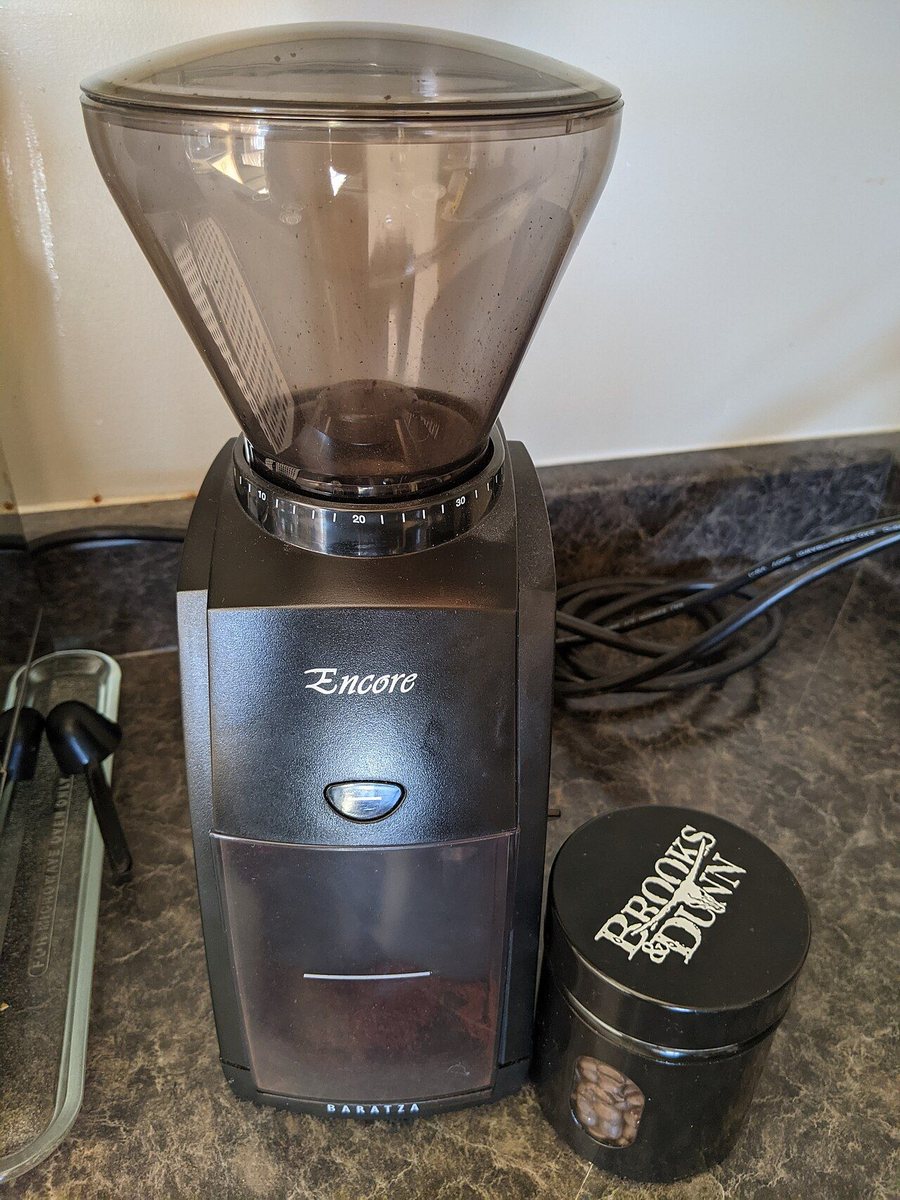
Niche Zero and DF64 are single-dose grinders with different burr philosophies suited to different espresso priorities.
| Single-Dose Grinders Compared | Niche Zero | DF64 |
|---|---|---|
| Best for | Home espresso, medium/dark roasts, simplicity | Tinkerers, light roasts, modding enthusiasts |
| Burr type | 63mm conical steel (Mazzer) | 64mm flat (upgradeable to SSP aftermarket) |
| Flavor profile | Sweet, full-bodied, forgiving | Clear, bright, high clarity |
| Retention | Below 0.1g; near-zero out of box | Low, but static may need RDT management |
| Grind adjustment | Stepless numbered collar; smooth and reliable | Stepless dial; slightly less tactile feel |
| Workflow | Low-friction; portafilter holder included | Clean workflow; static mitigation step advised |
| Modability | Not designed for aftermarket burr swaps | Highly moddable; SSP burrs sold separately |
| Price | Premium ($$$) | Budget-friendly ($$); mods add cost |
| Where to buy | Check price | — |
Overview: Two Philosophies, One Goal
Single-dose grinding has reshaped the home espresso workflow. Rather than keeping a hopper loaded with beans and dealing with days-old grounds, single-dosing means you weigh your beans, grind exactly what you need, and discard almost nothing. Both the Niche Zero and the DF64 were designed with this workflow in mind — but they arrive at it from opposite burr philosophies, and that difference has real consequences for how they feel to use and what they do to your coffee.
The Niche Zero is a British-designed conical burr grinder that has become something of a benchmark in the £400–£500 segment since its crowdfunded launch. The DF64 (also known as the Turin DF64) is a flat burr grinder that originated in the Taiwanese market and found a passionate global following, typically selling in the $200–$250 / £200–£250 range depending on region and retailer. We stock the Niche Zero and can speak to it directly; our coverage of the DF64 draws on publicly available specifications, the manufacturer's documentation, and the extensive hobbyist community research that has grown up around it.
If you're newer to the world of burr grinders and want to understand the underlying mechanics — how burr geometry, particle distribution, and grind size interact with brewing — our Grinding & Particle Size guide is an excellent place to start before diving into this comparison.
Burr Type and Grind Geometry
This is the most fundamental difference between the two grinders, and it's worth understanding before anything else.
The Niche Zero uses a 63 mm conical burr set, made from hardened steel. Conical burrs grind coffee between an inner cone-shaped burr and an outer ring burr. As burr mill research notes, the separation between the two surfaces determines particle size — closer means finer, further apart means coarser. Conical burrs tend to produce a slightly bimodal particle distribution: a dominant population of medium-to-coarse particles alongside a secondary population of very fine particles (sometimes called "fines"). Whether this is a virtue or a flaw depends heavily on your brewing method and your palate.
The DF64 uses a 64 mm flat burr set — stock burrs are typically a generic flat design, though a significant part of the DF64's community appeal is that the burr carrier accepts aftermarket burrs from makers including SSP, which are sold separately and can substantially change the grind profile. Flat burrs cut coffee between two parallel disc-shaped surfaces and are generally understood to produce a more uniform, unimodal particle distribution. This narrower distribution is often associated with clarity and separation of flavour in the cup, particularly valued in filter and light-roast espresso.
Neither geometry is objectively superior. Conical burrs tend to produce more body and sweetness in espresso; flat burrs often yield more clarity and acidity. The right choice depends on the coffees you gravitate toward and the flavour qualities you value most.
Grind Quality and Espresso Performance
Both grinders are well-regarded for espresso — a demanding application where particle consistency, the absence of channeling-causing fines, and the ability to dial in a precise grind size are all critical. As coffee preparation science confirms, grind size, uniformity, and freshness are among the key variables that determine extraction character and flavour.
The Niche Zero produces espresso that is widely described as sweet, full-bodied, and forgiving. Its conical geometry is particularly well-matched to medium and darker roasts, where the added body and the slight fines contribution can enhance perceived richness. It also performs respectably on filter and pourover, though flat-burr grinders are generally considered the gold standard for those methods.
The DF64 with stock burrs performs competently for espresso, and the flat burr geometry gives it an edge in clarity and brightness, particularly with lighter roasts. Many owners upgrade to aftermarket SSP burrs — a modification that meaningfully increases the cost of the complete package but reportedly lifts grind quality to near-commercial levels. It is worth being clear: burr upgrades are sold separately and are not included in the headline price.
For espresso drinkers who prioritise body and ease of dialling in, the Niche Zero has a natural advantage. For those chasing clarity and nuance in light-roast espresso, the DF64 — especially with upgraded burrs — deserves serious attention.
Retention and Single-Dose Workflow
Retention refers to how much ground coffee the grinder holds back after grinding — stale grounds that will contaminate your next dose. Both grinders were explicitly designed to minimise this.
The Niche Zero achieves very low retention through its conical burr geometry and the short, steep path from burrs to the output chute. Most users report retention below 0.1 g in normal use, often less. The grinder ships with a portafilter holder that positions a standard 58 mm portafilter directly under the chute, which is a thoughtful workflow touch.
The DF64 also achieves low retention, with the flat burr design and a relatively short grind path. However, flat burr grinders can accumulate more static charge than conical designs, causing ground coffee to cling to the chute and the catch cup. Many DF64 users adopt the RDT (Ross Droplet Technique) — adding a tiny amount of water to beans before grinding — to mitigate static. This adds a small step to the workflow but is not onerous once it becomes habit.
For a clean, low-friction single-dose workflow out of the box, the Niche Zero edges ahead. The DF64 gets there too, but may require a little more management.
Grind Adjustment: Stepped vs. Stepless
Adjusting grind size is a daily task for espresso drinkers — dial too coarse and your shot runs fast and weak; dial too fine and it chokes or turns bitter. As grinder taxonomy makes clear, grinders are either stepped (fixed adjustment increments) or stepless (near-infinite adjustment).
The Niche Zero uses a stepless adjustment system with a numbered collar. Adjustments are smooth and linear, and the grinder holds its position reliably between uses — an important detail if you switch between coffees or brewing methods. The adjustment range covers everything from Turkish-fine to French press coarse, making it genuinely versatile.
The DF64 also uses a stepless adjustment, typically a dial system. Users generally report smooth adjustment, though some note the dial can be slightly stiffer or less tactile than the Niche. The DF64's adjustment range is similarly wide.
Both grinders are stepless, which is the right choice for serious espresso use. Advantage here is roughly a draw, with a slight tactile edge to the Niche Zero.
Build Quality and Aesthetics
The Niche Zero is manufactured in the UK (assembled in the UK from globally sourced components) and has a distinctive, compact cylindrical form. The build quality is notably high: the body is aluminium with a quality finish, the collar adjustment is satisfying to use, and the overall feel is premium. It is available in black and white colourways. At roughly 23 cm tall and a relatively small footprint, it suits smaller kitchen countertops well.
The DF64 has a taller, more conventional grinder silhouette — it looks more like a scaled-down commercial grinder. Build quality is generally described as solid for the price, though some users note the plastics feel less premium than the Niche's aluminium body. The DF64 is heavier than it looks, which gives it good stability during grinding.
For buyers who care about aesthetics and build feel, the Niche Zero is the clear winner. The DF64 wins on practicality of form — its shape makes it easy to work around with standard portafilters — but it doesn't have the same premium tactility.
Noise and Speed
Neither grinder is particularly fast — both are designed for single-dose use, not volume throughput.
The Niche Zero runs at a relatively low RPM (around 100 RPM per the manufacturer), which contributes to lower heat generation during grinding — important for preserving volatile aromatics. The trade-off is that grinding is slow: expect around 10–15 seconds for a 18 g espresso dose. It is notably quiet for an electric grinder.
The DF64 grinds somewhat faster owing to its flat burr geometry and motor characteristics. It is louder than the Niche Zero, which is typical of flat burr designs at this price point.
For apartment dwellers or early-morning grinding, the Niche Zero's quieter operation is a genuine quality-of-life advantage.
Price and Value
This is where the two grinders diverge most sharply, and where your priorities should drive the decision.
The Niche Zero retails at approximately £495–£550 depending on colourway and region (check our shop for current pricing). It is a considered purchase — but you are buying a finished, premium product that requires no further investment to perform at its best.
The DF64 retails at approximately $200–$250 / £200–£250 in its stock configuration. However, to unlock its full potential — particularly the grind quality that enthusiasts rave about — most serious users add aftermarket burrs (SSP single-dose flat burrs can add $100–$200 or more to the cost). Factor in the full "enthusiast" package and the gap narrows considerably.
Value summary:
- If budget is the primary constraint and you enjoy the tinkering aspect of aftermarket modifications, the DF64 offers a compelling entry point.
- If you want a polished, no-compromise single-dose grinder that works brilliantly out of the box and will last years, the Niche Zero justifies its price premium.
- Neither grinder is bad value. They are aimed at slightly different buyers.
Who Should Buy Each Grinder?
Choose the Niche Zero if:
- You primarily drink espresso with medium to darker roasts and value sweetness and body.
- You want a quieter, lower-maintenance workflow with minimal static.
- Build quality, aesthetics, and out-of-box performance matter to you.
- You have the budget and don't want to think about upgrades.
Choose the DF64 if:
- You're drawn to lighter roast espresso and want more clarity and brightness in the cup.
- You enjoy the hobbyist aspect of grinder modification and aftermarket burr upgrades.
- Budget is a primary consideration and you're comfortable managing static with techniques like RDT.
- You want a grinder that can grow with your palate through burr swaps.
For a deeper understanding of how grind variables interact with your brewing method, see our Grinding & Particle Size guide — it covers particle distribution, extraction dynamics, and why grinder choice matters so much for espresso specifically.
Bottom Line
The Niche Zero remains one of the best single-dose conical grinders you can buy at any price, offering a refined workflow, excellent build quality, and espresso results that satisfy the vast majority of home baristas without requiring further investment. The DF64 is a genuinely impressive flat-burr grinder at its price point, with real upside potential through burr upgrades — but it asks more of its owner in terms of workflow management and optional modification costs.
They are not direct competitors so much as complementary options for different kinds of coffee enthusiast. Know which kind you are, and the decision becomes straightforward.
Gear for this
Frequently asked questions
- What is the main difference between the Niche Zero and the DF64?
- The most fundamental difference is burr type: the Niche Zero uses a 63 mm conical burr set, while the DF64 uses a 64 mm flat burr set. Conical burrs tend to produce sweeter, fuller-bodied espresso; flat burrs typically yield more clarity and brightness, particularly with lighter roasts. They also differ significantly in price and build quality.
- Does the DF64 have high grind retention?
- No — the DF64 was designed for single-dose use and achieves low retention. However, flat burr grinders can generate more static than conical designs, causing some grounds to cling to the chute. Many users mitigate this with the Ross Droplet Technique (RDT), which involves adding a tiny amount of water to beans before grinding.
- Is the Niche Zero worth the higher price compared to the DF64?
- For most home baristas who want an excellent out-of-box experience, minimal workflow friction, and premium build quality, the Niche Zero justifies its price. However, the DF64 with aftermarket burr upgrades can narrow the performance gap — the total cost of a modified DF64 may be closer to the Niche Zero's price than the stock prices suggest.
- Can both grinders be used for filter coffee as well as espresso?
- Yes, both cover a wide grind range. The Niche Zero is stepless and adjusts from Turkish-fine to French press coarse. The DF64 has a similarly wide range. That said, flat burr grinders like the DF64 are generally considered to have an edge for filter and pour-over methods due to their more uniform particle distribution.
- Which grinder is quieter?
- The Niche Zero operates at a notably low RPM and is among the quieter electric grinders in its class. The DF64 is louder, which is typical of flat burr grinders at this price point. If noise is a concern — for example, early morning grinding in an apartment — the Niche Zero has a meaningful advantage.
- Do I need to buy aftermarket burrs for the DF64?
- No — the DF64 performs competently with its stock flat burrs. However, a significant part of its hobbyist appeal is that the burr carrier accepts aftermarket options such as SSP single-dose flat burrs, which are sold separately and can substantially improve grind quality. This is optional but widely recommended in the enthusiast community.
See also