Guides · Comparisons
Breville Bambino Plus vs Gaggia Classic Pro
Thermojet speed and guided steaming versus a legendary boiler, full mod-ability, and a steeper learning curve — the definitive breakdown.
Key facts
- Price Range
- Under $500
- Heat-up Time
- Bambino: 3 seconds; Gaggia: 8-12 minutes
- Portafilter Size
- Bambino: 54mm; Gaggia: 58mm commercial standard
- Heating System
- Bambino: ThermoJet; Gaggia: brass single boiler
- Key Difference
- Bambino prioritizes ease; Gaggia offers modability
- Pressure
- Both brew at approximately nine bar
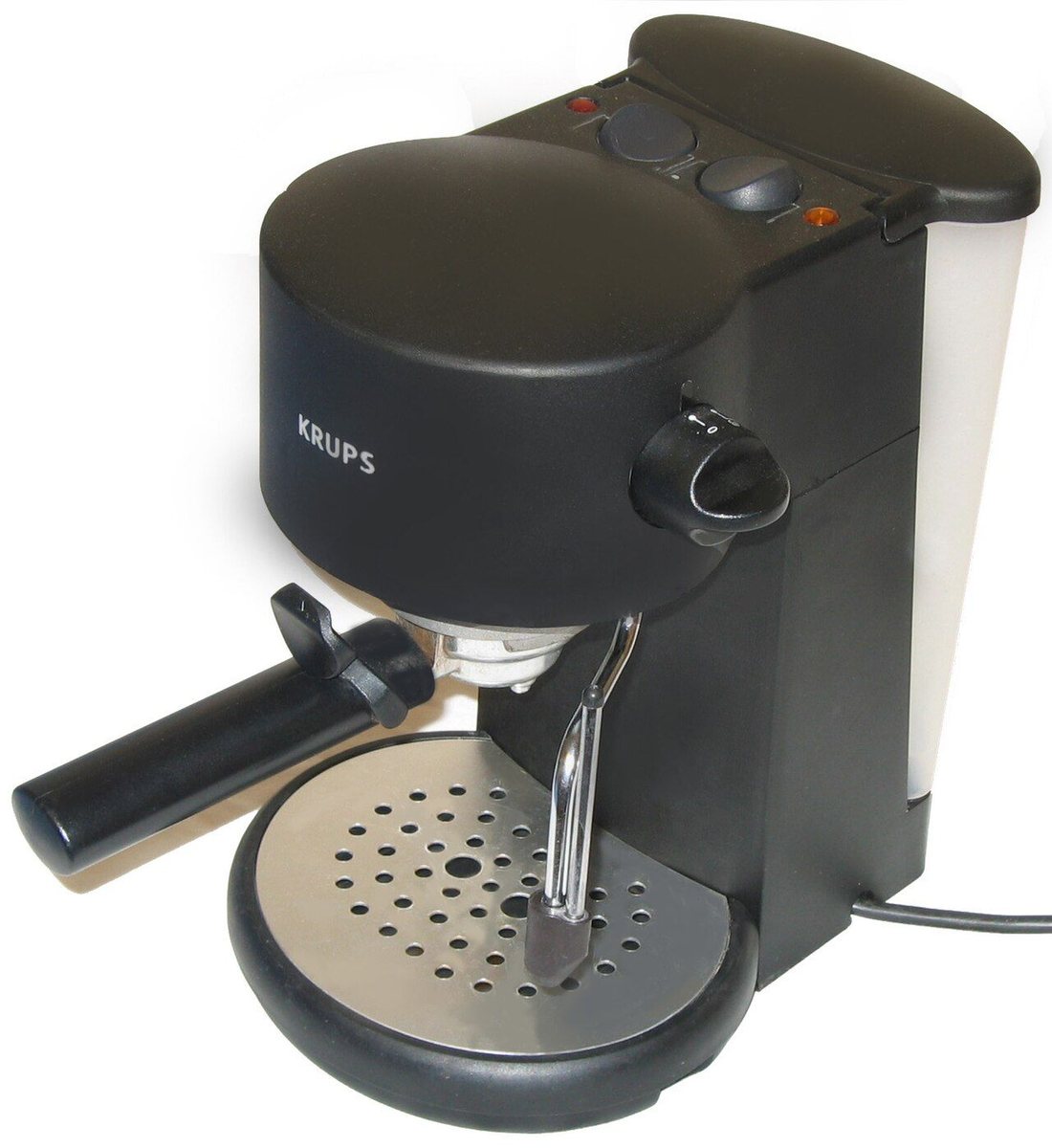
Both under $500, the Bambino Plus prioritizes ease while the Gaggia Classic Pro rewards skill and customization.
| Breville Bambino Plus vs Gaggia Classic Pro | Breville Bambino Plus | Gaggia Classic Pro |
|---|---|---|
| Best for | Beginners, small kitchens, milk drinks | Enthusiasts, modding, learning espresso |
| Heating system | ThermoJet (~3 sec heat-up) | Brass single boiler (8–12 min warm-up) |
| Portafilter | 54mm (proprietary ecosystem) | 58mm commercial standard |
| Steam wand | Auto panarello, preset temp & shutoff | Manual single-hole wand, real pressure |
| Out-of-box shots | Beginner-friendly, pre-infusion included | Needs OPV & temp adjustment first |
| Upgrade path | Limited; closed ecosystem | Extensive; PID, OPV, baskets, more |
| Learning curve | Low; machine handles most variables | High; rewards skill development |
| Price | Budget-friendly ($$) | Budget-friendly ($$) |
| Where to buy | Check price | Check price |
Overview {#overview}
The sub-$500 espresso machine market is genuinely competitive, but two names come up in nearly every forum thread, Reddit rabbit hole, and specialty-coffee shop conversation: the Breville Bambino Plus and the Gaggia Classic Pro. Both are pump-driven, semi-automatic machines — the design lineage that traces back to the Faema E61 of 1961 and remains the dominant format in espresso bars worldwide. Both produce genuine espresso: a concentrated, 25–30 ml beverage extracted under high pressure in roughly 25–30 seconds, topped with crema. That is where the similarities start to blur.
The Bambino Plus is Breville's answer to the question: what if a machine did most of the hard work for you? The Gaggia Classic Pro asks the opposite question: what if a machine gave you total control and the freedom to rebuild it however you like? Neither answer is wrong. They suit different people, different kitchens, and different relationships with the craft.
This guide breaks down every meaningful difference — heating system, steam performance, shot quality, workflow, longevity, and the upgrade paths each machine opens or closes — so you can spend your money with confidence.
Heating Systems: ThermoJet vs. Single Boiler {#heating-systems}
This is the most consequential engineering difference between the two machines, and it shapes every other aspect of the experience.
The Breville Bambino Plus uses Breville's proprietary ThermoJet heating element, a thin, coiled unit with very little thermal mass. The result is a quoted heat-up time of around three seconds. In practice, the machine is ready to pull a shot almost as soon as you walk into the kitchen. There is no ritual of waiting, no temperature-surfing, no need to pull a blank shot to stabilise the group. For anyone who makes one or two drinks before work each morning, that immediacy is not a trivial benefit — it is a genuine quality-of-life feature.
The Gaggia Classic Pro uses a traditional brass single boiler with a 300 ml capacity. Brass is an excellent thermal material — dense, stable, and forgiving — but it takes time to saturate. Expect a warm-up period of at least eight to twelve minutes before the machine is truly thermally stable enough to pull a shot worth drinking. Veteran Gaggia users often run a blank shot through the group to flush residual cool water and equilibrate the portafilter, adding another minute or two to the ritual.
The trade-off is precision. A saturated brass boiler holds temperature with exceptional consistency shot to shot. The ThermoJet, being a small element, is more susceptible to variance if you are pulling multiple shots in rapid succession or if ambient temperature changes. In real-world home use — one or two drinks at a time — most users will not notice the difference. Back-to-back drinks for a household of four is where the Gaggia's thermal mass starts to show its advantage.
Both machines brew at approximately nine bar of pressure, consistent with the pump-driven design standard described by the Faema E61's legacy. Neither has a built-in pressure profiling system, though the Gaggia's modding community has found ways to address that (more on this below).
Espresso Shot Quality {#espresso-shot-quality}
Pulling a great shot of espresso on either machine is entirely achievable. The ceiling is high on both. The floor, however, is very different.
The Bambino Plus ships with a 54 mm portafilter and includes both pressurised (dual-wall) and unpressurised (single-wall) filter baskets. The pressurised baskets are forgiving: they use a restricted second wall to build pressure regardless of grind consistency, meaning a mediocre grind — even pre-ground supermarket coffee — will still produce something with a crema-like appearance. This is helpful for beginners who have not yet invested in a quality grinder. The single-wall baskets are where the machine genuinely performs, but they demand a proper extraction workflow: a consistent grind, accurate dose, and level tamp.
The machine also features a pre-infusion mode — a low-pressure pre-soak before full extraction pressure — which helps wet the puck evenly and reduce channelling. This is a meaningful feature at this price point and one the Gaggia Classic Pro does not offer natively.
The Gaggia Classic Pro uses a 58 mm portafilter — the commercial standard size, the same diameter used on La Marzocco, Synesso, and most professional machines. This matters because the entire ecosystem of third-party filter baskets (IMS, VST, Pullman) is built around 58 mm. The Classic Pro ships with a commercial-style single-wall basket and a pressurised basket. Experienced users almost universally move to a quality aftermarket basket such as an IMS Competition or VST within weeks. The 58 mm group also means a wider puck, which distributes water more evenly across a larger coffee bed — a small but real advantage for shot consistency.
Shot quality on the Classic Pro is ultimately limited by two well-documented quirks: the OPV (over-pressure valve) is factory-set at around 12 bar in some units — higher than the nine bar ideal — and the boiler temperature runs slightly hot for lighter roasts. Both are fixable. Many users adjust the OPV to nine bar with a simple spring swap and dial in temperature via a technique known as temperature surfing, or with a PID controller (see Modifications below). Out of the box, though, the Bambino Plus is more likely to produce a respectable shot on day one.
Steam Performance {#steam-performance}
Steaming milk is where the two machines diverge most dramatically in their day-to-day feel.
The Bambino Plus ships with an auto-steaming wand — a panarello-style attachment that introduces air automatically and produces a consistently textured, microfoam-adjacent result with minimal technique. You submerge the wand, press a button, and the machine hits a preset temperature and shuts off. The steam pressure is moderate. For flat whites, lattes, and cappuccinos at home, this is a genuinely good system: forgiving, repeatable, and fast. The trade-off is a ceiling on skill development. If you want to learn real free-hand steaming technique — the kind that produces true microfoam and latte art — the auto wand is an obstacle. You can remove the panarello tip and use the wand manually, but steam pressure is limited compared to larger boiler machines.
The Gaggia Classic Pro has a traditional single-hole steam wand with real pressure behind it. It demands technique: you must find the right wand angle, tip depth, and speed to achieve silky microfoam rather than a bowl of large bubbles. The learning curve is real and measured in weeks, not days. But for baristas who want to actually develop their craft — to pull off a rosetta or a tulip — the Gaggia's wand is the better teacher and, ultimately, the better tool. It also connects to the machine's single boiler, which means you must switch from brew mode to steam mode and wait for the boiler to climb to steam temperature (roughly 30–60 seconds). This steam-to-shot sequencing is a genuine workflow inconvenience for milk-based drinks.
Summary: If you primarily make milk drinks and want speed and consistency, the Bambino Plus wins. If you want to develop real steaming skill and are prepared to learn, the Gaggia Classic Pro is more rewarding.
Workflow and Ease of Use {#workflow-and-ease-of-use}
The Bambino Plus is designed around one philosophy: reduce friction. The three-second heat-up, auto-steam, single-button operation, and included accessories (a tamper, milk jug, and cleaning tablets) all reflect a machine that wants to get out of your way. The digital display guides you through cleaning cycles and maintenance reminders. If your mornings are chaotic and your interest is in the result of espresso rather than the process, this machine respects your time.
The Gaggia Classic Pro is unashamedly analogue. There are three switches: power, brew, steam. That is the entire interface. The machine does not tell you when it is ready, does not prompt you to clean, and does not stop steaming automatically. You must develop an intuition for temperature readiness through trial, error, and a decent thermometer. This is not a design flaw — it is a design philosophy. Many users find the tactile, deliberate nature of the Classic Pro deeply satisfying. It is the difference between driving a manual car and an automatic: one is objectively easier, the other teaches you more.
Worth noting: both machines require a quality grinder to perform at their best. Neither machine is the bottleneck in a well-assembled setup — the grinder almost always is. Budget accordingly.
Modifications and Longevity {#modifications-and-longevity}
The Gaggia Classic Pro has one of the most active modification communities of any home espresso machine in the world. Common upgrades include:
- OPV adjustment — spring swap to reduce brew pressure to nine bar (~$5–15)
- PID temperature controller — eliminates boiler temperature guesswork, often cited as the single highest-impact upgrade ($30–80 for a kit)
- Bottomless portafilter — exposes the basket's underside for shot diagnostics
- IMS or VST basket — tighter tolerances for more even extraction
- Silicone group gasket — longer-lasting than the stock rubber gasket
- Steam wand tip — single or multi-hole alternatives for different steam textures
With a PID and an OPV adjustment, the Classic Pro competes with machines costing two or three times its price. Its brass boiler and steel chassis are repairable and replaceable; some users have kept machines running for fifteen or twenty years. Gaggia's Italian heritage — the company was founded by Achille Gaggia, who developed the piston-driven espresso machine design in 1945 — gives the Classic Pro a lineage and parts ecosystem that is genuinely reassuring.
The Breville Bambino Plus is not designed to be modified. Its ThermoJet system and proprietary electronics are not friendly to third-party tinkering. Breville's build quality is solid and the machine carries a standard warranty, but if it develops a fault after the warranty period, repair is less straightforward than replacing a Gaggia gasket or boiler. The trade-off for that ease of use is a shorter horizon for enthusiast evolution.
Who Each Machine Suits {#who-each-machine-suits}
Choose the Breville Bambino Plus if:
- You are new to home espresso and want great results quickly
- Your mornings are time-pressured and you cannot wait ten minutes for warm-up
- You primarily make milk-based drinks and want consistent steam every time
- You do not intend to deep-dive into espresso as a hobby
- Counter space is at a premium (the Bambino Plus has a notably compact footprint)
Choose the Gaggia Classic Pro if:
- You are genuinely interested in learning the craft — dialling in, steaming, understanding extraction
- You want a machine you can upgrade incrementally over years rather than replace
- You intend to develop real milk-steaming technique and eventually attempt latte art
- You already own or plan to buy a quality 58 mm-compatible grinder
- You appreciate mechanical simplicity and repairability over digital convenience
Price and Value {#price-and-value}
Both machines sit in the sub-$500 bracket, making them the most competitive tier in the home espresso market. The Bambino Plus tends to retail at the lower end of the range; the Classic Pro is often within $30–50 of it, varying by region and retailer. Neither price difference alone should drive the decision — the right machine is the one whose trade-offs you can live with.
The hidden costs differ. The Bambino Plus is largely ready to use out of the box; a decent grinder is the main additional investment. The Gaggia Classic Pro invites a series of incremental upgrades — OPV spring, PID, better basket — that can add $100–200 over the first year but transform the machine's performance. Both approaches are reasonable depending on your budget and appetite for tinkering.
For current pricing and availability on both machines, see our listings for the Breville Bambino Plus and the Gaggia Classic Pro in the Coffeester shop.
Our Verdict {#our-verdict}
If forced to choose a single winner, the answer depends entirely on who is asking. The Breville Bambino Plus is the better machine for most beginners: faster, friendlier, and more immediately rewarding. The Gaggia Classic Pro is the better machine for the espresso enthusiast in the making — someone who is prepared to invest time, learn technique, and eventually want more from their setup than any stock machine can offer.
Both produce genuine espresso — a concentrated, high-pressure extraction with all the complexity and character that implies. Both are honest representations of what pump-driven semi-automatic machines can do at this price. The question is not which machine is better. The question is which machine is better for you.
Understanding extraction yield and strength will serve you well on either machine — and may be the most valuable thirty minutes you spend before your first shot.
Gear for this
Frequently asked questions
- Can the Breville Bambino Plus make latte art?
- With practice, yes — but its auto-steam wand is designed for consistency, not technique development. If latte art is a primary goal, the Gaggia Classic Pro's traditional steam wand will teach you more. You can remove the panarello tip from the Bambino Plus and steam manually, though steam pressure is more limited than on the Gaggia.
- Does the Gaggia Classic Pro need a PID out of the box?
- Not strictly, but many users find that adding a PID controller — typically a $30–80 aftermarket kit — is the single highest-impact upgrade for shot consistency, particularly with lighter roasts. Without it, experienced users manage via temperature-surfing, but the PID removes significant guesswork.
- Which machine is better for someone who only drinks black espresso?
- The Gaggia Classic Pro has a slight edge for black espresso purists: the 58 mm commercial portafilter, compatibility with precision aftermarket baskets, and the mod community's focus on extraction quality make it the more capable platform once dialled in. The Bambino Plus is competitive, especially with its pre-infusion feature, but its smaller 54 mm portafilter limits aftermarket basket options.
- How long does the Bambino Plus take to heat up versus the Gaggia Classic Pro?
- The Breville Bambino Plus is quoted at around three seconds to brewing temperature thanks to its ThermoJet element. The Gaggia Classic Pro's brass single boiler requires roughly eight to twelve minutes of warm-up for thermal stability, with many users running an additional blank shot to equilibrate the group.
- Are replacement parts available for both machines?
- The Gaggia Classic Pro has an extensive parts ecosystem — gaskets, boiler components, and group parts are widely available, reflecting the machine's long production history and mod community. Breville's Bambino Plus is supported under warranty, but its proprietary ThermoJet design is less amenable to user repair or third-party modification after the warranty period.
- Do I need a good grinder with either machine?
- Yes, with both. Neither machine is the bottleneck in a well-assembled espresso setup — grind quality almost always is. Budget for a capable burr grinder alongside whichever machine you choose. The Gaggia Classic Pro's 58 mm portafilter gives you access to a wider range of precision grinder pairings used in professional settings.
See also