Guides · Buying Guides
The Best Pour-Over Brewers of 2026
Cone drippers, flat-beds, glass carafes, and hybrid immersion — ranked and explained for every skill level.
Key facts
- Brew ratio
- 15-18:1 water to coffee by mass
- Key characteristics
- Acidity, floral and citrus aromas, mouthfeel, finish
- Geometry types
- Cone drippers and flat-bed drippers
- Best overall pick
- Hario V60-02
- Best for consistency
- Kalita Wave 185
- Cone trait
- Rewards technique with exceptional clarity
- Flat-bed trait
- More consistent and forgiving brew
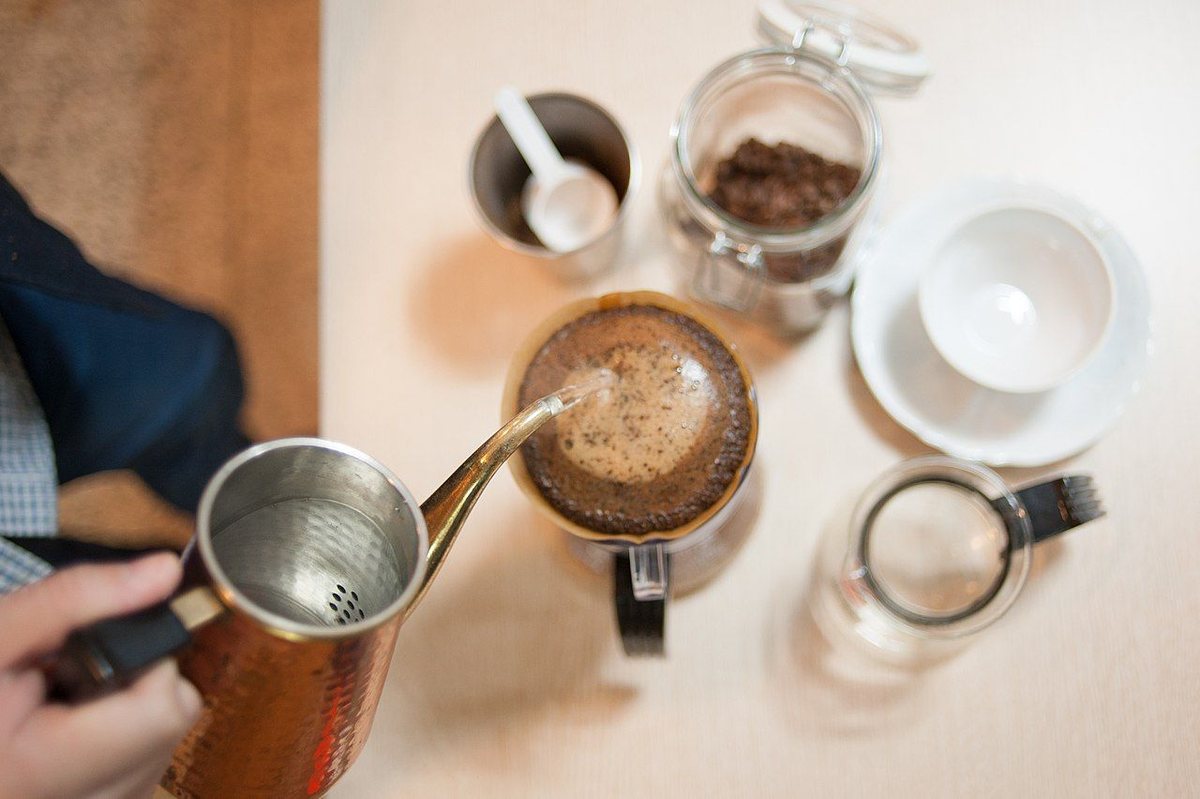
Why Pour-Over? {#why-pour-over}
Pour-over brewing is, at its core, a study in control. Water passes through a bed of ground coffee under gravity alone, and every variable — grind size, water temperature, brew time, and the ratio of coffee to water — is yours to manipulate. As the source material from coffee preparation research makes clear, preferred brew ratios typically fall in the range of 15–18:1 by mass (water to coffee), and even within that narrow band, differences are easily perceived by an experienced drinker. That sensitivity is precisely what makes pour-over so rewarding and, for some, so intimidating.
Unlike a drip machine, a pour-over asks you to be present. You control the pour rate, the bloom, the number of pours. Get those variables right and you unlock what preparation research identifies as the characteristics most vulnerable to method: acidity (brightness), delicate floral and citrus aromas, mouthfeel, and finish. Get them wrong and you end up with a cup that's either bitter and harsh (over-extracted) or thin and weak (under-extracted). Our pour-over brewing guide walks through the full technique — this article focuses on choosing the right brewer.
How We Evaluated These Brewers {#how-we-evaluated}
We assessed each dripper across five dimensions:
- Bed geometry — cone vs flat-bed and how it shapes flow rate and extraction evenness
- Filter type — paper (clarifying) vs metal (body-forward)
- Forgiveness — how much technique variation the brewer tolerates
- Clarity ceiling — maximum cup clarity achievable with good technique
- Practical factors — cleaning ease, fragility, filter availability, and price
No brewer is objectively best. The right one depends on what you want in the cup and how much attention you're willing to give.
Cone vs Flat-Bed: The Fundamental Split {#cone-vs-flat-bed}
Before reaching for a specific brewer, understand the geometry that defines your cup.
Cone drippers — like the V60 — funnel water through a single central point. The coffee bed is deeper at the centre and shallower at the edges, which means flow rate is heavily influenced by grind size and pour technique. A coarser grind drains fast; a finer grind slows things down significantly. As grinding and particle size research confirms, a grind that is too fine will slow filtration, risking over-extraction; too coarse and the cup turns weak. Cones reward dialled-in technique with exceptional clarity and brightness, but they punish sloppy pours.
Flat-bed drippers — like the Kalita Wave — keep the coffee in a shallow, even layer above a flat perforated base. Water drains through multiple small holes rather than one large central aperture, which moderates flow rate and makes extraction more even across the whole bed. The practical result: a more consistent, forgiving brew that trades a small amount of peak clarity for reliability.
Neither geometry is superior. Cones suit the technically adventurous; flat-beds suit those who want great coffee without a steep learning curve.
Our Picks {#our-picks}
Best Overall: Hario V60-02 {#hario-v60}
The Hario V60-02 is the dripper that defined the modern pour-over movement, and it remains our top pick for anyone willing to invest a little time in technique. Its large conical opening and spiral ribs allow for a very free drain, which means the brewer itself imposes almost no ceiling on what you can achieve — clarity, brightness, and aromatic complexity are all accessible at a level few other brewers can match.
Who it suits: Coffee enthusiasts who have already spent time with the pour-over method and want a brewer that rewards continued refinement. Filter geeks chasing floral Ethiopian naturals or clean washed Kenyan coffees will find the V60 an ideal partner.
Trade-offs: That freedom cuts both ways. Grind consistency matters enormously here — a blade grinder will produce chaotic particle distribution that results in a muddy, uneven cup. A quality burr grinder is not optional; it's part of the system. The ceramic version is robust but heavy; the polypropylene version is lightweight, cheap, and nearly indestructible — a legitimate choice for travel.
Paper filters: Hario's own tabbed filters are widely available and do an excellent job of removing fines and oils, producing a clean, bright cup with a lighter body. For more body, some brewers experiment with rinsing the filter less thoroughly — though the effect is subtle.
Best for Consistency: Kalita Wave 185 {#kalita-wave}
If the V60 is the brewer for perfectionists, the Kalita Wave 185 is the brewer for everyone else — said without condescension, because "everyone else" includes many serious coffee professionals who simply prefer the Wave's reliability.
The flat-bed design and triple-hole drain slow the flow rate compared to a cone, keeping water in contact with the grounds for longer and promoting even extraction across the whole coffee bed. The characteristic crimped "wave" filters — unique to the Kalita system — hold the paper away from the dripper walls, preventing suction and keeping extraction consistent even when your pour isn't perfectly centred.
Who it suits: Busy mornings, shared kitchens, anyone new to pour-over who wants good results from day one. Also an excellent choice for coffees with lower acidity where sweetness and body are the target — medium-roast Central Americans shine here.
Trade-offs: Wave filters are proprietary and slightly less universally stocked than V60 papers. The stainless steel version of the Wave is durable but can be harder to keep visually clean over time. Peak cup clarity is marginally below what a dialled-in V60 can achieve — though for most cups and most drinkers, the difference is academic.
Best for Serving: Chemex 6-Cup {#chemex}
The Chemex 6-Cup occupies a different category entirely. It is both dripper and carafe — a single hourglass vessel that brews directly into itself, making it the only brewer here designed from the outset for sharing. Six cups (roughly 900 ml of brewed coffee) is a practical serve for two to four people.
The Chemex uses its own thick, bonded paper filters — roughly 20–30% heavier than standard pour-over papers — which filter out nearly all coffee oils and micro-fines. The result is one of the cleanest, most sediment-free cups available from any brewer, with a pronounced brightness and clarity that showcases delicate aromatics exceptionally well.
Who it suits: Weekend brunches, dinner party coffee service, households of two or more who brew together. Also a natural fit for high-grown, lightly roasted coffees where aroma is the headline.
Trade-offs: Brewing for one is impractical — the geometry of the Chemex means under-filling the bed produces uneven extraction. The vessel is glass and requires careful handling; the wooden collar and leather tie need occasional care. Filters are a little thicker (and slightly more expensive) than standard alternatives, and flow can be slow if you grind too fine — the thick paper compounds any over-grinding. Cleaning the carafe requires a bottle brush or the dedicated Chemex brush.
A note on technique: Because the Chemex is its own serving vessel, heat retention is a real consideration. Pre-heating the carafe with hot water before brewing — and being ready to serve promptly — will do more for your cup than almost any other adjustment.
Best Hybrid (Immersion + Pour-Over): Hario Switch {#hario-switch}
The Hario Switch is the most technically interesting brewer in this roundup. Visually, it resembles the standard V60, but a small silicone valve at the base allows the user to switch between immersion and drip modes mid-brew. Open the valve and it drains like a V60; close it and water pools, steeping the grounds like a small batch-brew.
This makes the Switch the most forgiving of the cone drippers, and in some respects the most versatile brewer available at its price point. A common approach: bloom the grounds with the valve closed (full immersion for 30–45 seconds), then open the valve to drain — producing a cup with more body and sweetness than a standard V60 pour, but retaining cone-level clarity.
Who it suits: V60 fans who find their cups occasionally too bright or under-bodied; people who want to experiment with technique without buying multiple brewers; those transitioning from French press who want more clarity without losing roundness.
Trade-offs: The silicone valve adds a component that needs to be kept clean and will eventually wear. The Switch is slightly heavier and bulkier than a standard V60. And for purists who have their V60 technique fully dialled, the Switch may feel like a compromise in both directions rather than the best of both.
Paper vs Metal Filters {#paper-vs-metal}
Every brewer above ships with or is designed for paper filters, but several (including the V60-02 and Hario Switch) can be used with metal mesh alternatives. The distinction matters.
Paper filters remove the majority of coffee oils (diterpenes) and micro-fines, producing a clean, bright cup with a lighter mouthfeel. They are single-use, which means consistent performance with no flavour carry-over between brews. The thickness of the paper affects how much oil passes through — Chemex's thick papers are at one extreme; lightweight V60 papers pass marginally more oil.
Metal mesh filters allow oils and some fine particles to pass, resulting in a fuller body, a slightly heavier mouthfeel, and — in some coffees — more pronounced low-end sweetness. They are reusable (and therefore lower-waste over time), but require thorough rinsing after every brew to prevent flavour carry-over, and a coarser grind to prevent clogging the mesh.
For most pour-over applications, paper is the default recommendation — the clean cup is what makes pour-over distinctively expressive of a coffee's origin character. Metal filters are worth exploring if you prefer the body profile of a French press but want the cleaner finish that gravity filtration provides.
Key Variables to Get Right {#key-variables}
Whichever brewer you choose, the following factors will determine your cup quality far more than the hardware itself:
- Grind consistency: A uniform particle distribution is critical. As the source research notes, beans ground too finely will expose too much surface area and produce bitter, over-extracted coffee; too coarse and the cup turns weak. Invest in a quality burr grinder and consult our grinding and particle size guide before adjusting your dose.
- Water temperature: Brew hot — close to boiling. Most specialty coffee brewed via pour-over targets 90–96 °C (194–205 °F), though the exact figure interacts with roast level. Lighter roasts generally benefit from higher temperatures.
- Brew ratio: Start at 1:16 (coffee to water by mass) and adjust from there. Our extraction guide explains how yield and strength interact, and why small ratio changes are easily perceived.
- Even saturation: Especially with cone drippers, a slow, centred bloom pour (using roughly twice the coffee weight in water) ensures all grounds are wetted evenly before the main pour begins.
- Fresh coffee: The research is clear that freshness of roast and grind both affect extraction character. Even the best dripper cannot rescue stale beans.
Quick-Reference Comparison {#comparison}
| Brewer | Geometry | Filter | Forgiveness | Best For |
|---|---|---|---|---|
| Hario V60-02 | Cone | Paper (or metal) | Low–Medium | Clarity seekers, technique enthusiasts |
| Kalita Wave 185 | Flat-bed | Paper (Wave) | High | Everyday consistency, beginners |
| Chemex 6-Cup | Cone-carafe | Thick paper | Medium | Brewing for groups, aroma-first coffees |
| Hario Switch | Cone + immersion | Paper (or metal) | Medium–High | Versatility, body without losing clarity |
Our Recommendation in Plain Language {#recommendation}
If you are new to pour-over: start with the Kalita Wave 185. Its flat-bed geometry is genuinely forgiving, and you will brew good coffee consistently while you build your intuition for grind size and pour rate.
If you are already comfortable with manual brewing and want the highest ceiling: the Hario V60-02 is the industry standard for a reason. It will reward every improvement in your technique, and the polypropylene version costs very little for what it delivers.
If you brew for two or more people regularly: the Chemex 6-Cup is in a class of its own for serving at scale, and nothing on the market produces a cleaner cup at that volume.
If you want to experiment and do not want to commit to one style: the Hario Switch is genuinely clever, and for the price of one brewer it gives you meaningful access to two brewing modes.
None of these is a wrong choice. The best pour-over brewer is the one you will use every morning — and then refine, one pour at a time.
Gear for this
Frequently asked questions
- What is the easiest pour-over brewer for beginners?
- The Kalita Wave 185 is our top pick for beginners. Its flat-bed design and triple-hole drain slow the flow rate and produce more even extraction than a cone dripper, meaning small technique imperfections — an off-centre pour, a slightly uneven grind — have less impact on the final cup.
- Do I need an expensive grinder to use a pour-over?
- A quality burr grinder is strongly recommended, especially for cone drippers like the V60. Inconsistent particle sizes from a blade grinder produce chaotic extraction — some particles over-extract (bitter) while others under-extract (sour or weak) in the same brew. The grinder is often a more consequential investment than the dripper itself.
- What brew ratio should I start with for pour-over?
- A ratio of 1:16 (1 gram of coffee per 16 grams of water) is a reliable starting point. Research confirms that preferred ratios generally fall in the 15–18:1 range by mass, and differences within that band are perceptible. Adjust up (more coffee) for a stronger cup or down (less coffee) for something lighter.
- Are paper filters or metal filters better for pour-over?
- It depends on your taste preference. Paper filters produce a clean, bright cup by removing oils and micro-fines — ideal for showcasing a coffee's origin character and aromatics. Metal filters pass more oils and particles, giving a heavier body and richer mouthfeel closer to a French press. For most pour-over brewing, paper is the standard recommendation.
- Can I use the Hario V60 without a gooseneck kettle?
- Technically yes, but a gooseneck kettle makes it significantly easier to control pour rate and target the grounds evenly — both of which matter more with a cone dripper than a flat-bed. For the Kalita Wave or Hario Switch, pour control is somewhat less critical, but a gooseneck remains the best tool for any serious pour-over practice.
- What makes the Chemex different from other pour-over brewers?
- The Chemex is unique in two key ways: it functions as both dripper and serving carafe, making it practical for brewing multiple cups at once, and it uses its own thick bonded paper filters that remove more oils and micro-fines than standard pour-over papers. The result is an exceptionally clean, sediment-free cup with pronounced brightness — and a brewer that doubles as a serving piece at the table.
See also