Guides · Brewing
How to Brew Pour-Over with a Hario V60
A complete step-by-step guide to brewing exceptional pour-over coffee with the Hario V60-02, from first grind to final drip.
Key facts
- Brewer type
- Conical pour-over with spiral ribs
- Standard dose
- 18 g coffee per 300 ml water
- Water temperature
- 92–96 °C
- Total brew time
- 2:45 – 3:15
- Grind size
- Medium, slightly finer than table salt
- Filter type
- Hario tabbed paper filters
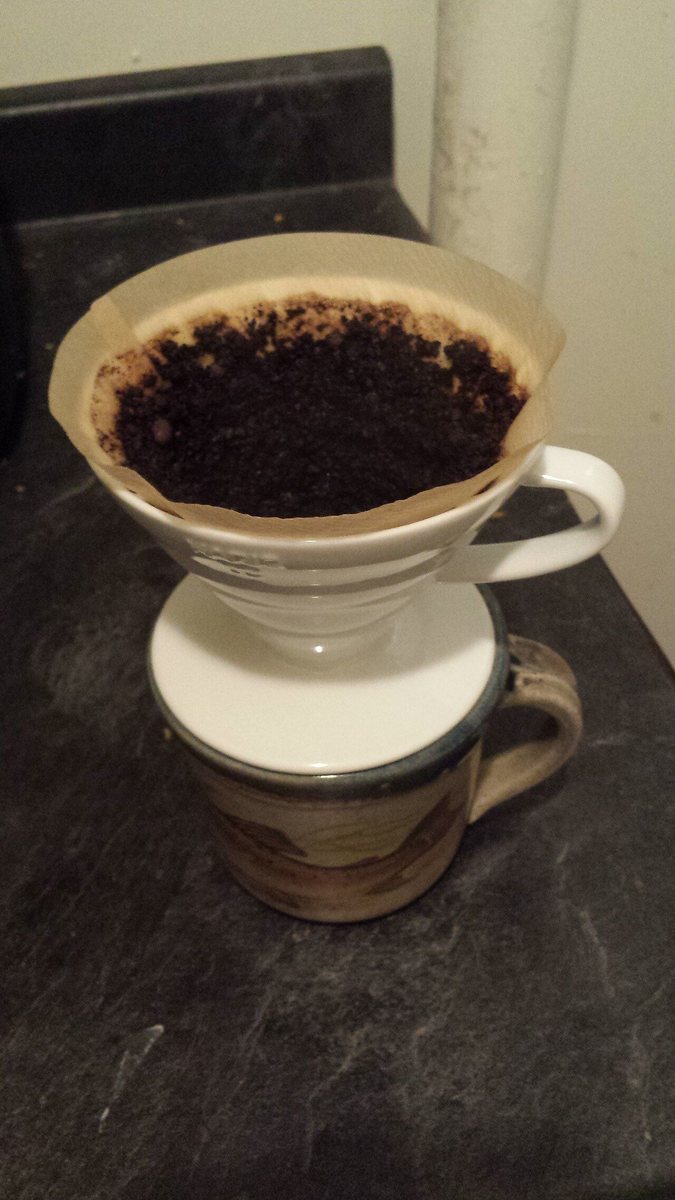
What Makes the V60 Special
The Hario V60-02 is one of the most scrutinised brewers in specialty coffee — and for good reason. Its conical shape, single large drain hole, and spiral ribs give the brewer an unusually wide window of control. Tilt the pour, adjust the grind, slow down the kettle: every variable registers in the cup. That responsiveness is both the V60's greatest strength and the reason so many beginners find it frustrating at first.
Understanding why the V60 works the way it does starts with pour-over brewing as a category. Hot water passes through a bed of ground coffee held in a paper (or metal) filter; gravity does the work of separating liquid from grounds. There is no immersion dwell time like a French press, no pressurised extraction like an espresso machine — just water, coffee, and time. That simplicity means every variable is exposed. As the Wikipedia source on coffee preparation notes, "key variables in coffee preparation include grind size, water temperature, brew time, and the ratio of coffee to water, all of which influence extraction and flavour."
Equipment You Need
You do not need a lot of gear, but the gear you do use matters. Budget substitutions at the grinder or kettle stage create problems that no recipe can fix.
The brewer: Hario V60-02 — the standard 1–4 cup size. Use Hario's own tabbed paper filters (white or natural); rinse them before brewing to remove any papery taste and to pre-heat the brewer.
The grinder: A burr grinder producing a uniform grind distribution is non-negotiable. Blade grinders create an inconsistent mix of fine powder and coarse chunks that extracts unevenly. The Fellow Ode Brew Grinder Gen 2 is a flat-burr electric grinder purpose-built for filter coffee — its burr geometry produces a relatively narrow particle distribution, which translates directly to a cleaner, more predictable extraction. If you prefer a hand grinder, look for one with conical steel burrs and stepless adjustment.
The scale: Acaia Pearl S offers real-time flow-rate display alongside mass measurement, which is particularly useful for the V60's incremental pours. Any scale accurate to 0.1 g and responsive enough to update at least once per second will work, but a sluggish scale makes pour control genuinely harder.
The kettle: A gooseneck kettle is essential — not a preference. The narrow spout gives you directional control over the pour, letting you wet the grounds evenly rather than blasting them from above. The Fellow Stagg EKG holds temperature to within 1 °C and has a built-in stopwatch on its display, making it the tidiest single-device solution for V60 brewing.
Everything else: A server or mug large enough to hold your brew volume, Hario V60-02 paper filters, fresh coffee beans ground immediately before brewing.
The Core Recipe
This recipe produces a 300 ml cup — a practical single-serve amount that the V60-02 handles cleanly. Scale up proportionally for larger batches, staying within the 15–18:1 water-to-coffee ratio range that the research consistently points to as the preferred window for filter coffee.
| Parameter | Target |
|---|---|
| Dose | 18 g coffee |
| Water | 300 g total |
| Ratio | 1:16.7 (coffee:water) |
| Grind | Medium — slightly finer than table salt |
| Water temperature | 92–96 °C |
| Total brew time | 2:45 – 3:15 |
A note on ratio: Preferred brew ratios of water to coffee commonly fall in the range of 15–18:1 by mass; even within this fairly small range, differences are easily perceived by an experienced coffee drinker (per the coffee preparation research). A 1:16.7 ratio sits near the centre of that range and is a reliable starting point. Pull it tighter (1:15) for more body and intensity; open it up (1:17.5) for a lighter, brighter cup.
See our deeper explainer on brew ratio if you want to understand why these numbers matter and how to dial them to your taste.
Step-by-Step Brew Guide
Step 1 — Boil and Prepare (0:00 before brewing)
Boil your water. If your kettle holds temperature (like the Fellow Stagg EKG), set it to 94 °C. If you're working with a standard kettle, bring it to a full boil and let it rest off the heat for 30–45 seconds — this typically drops the temperature to the 92–96 °C range needed for most filter coffee. Dark roasts can tolerate the lower end of this range; light roasts generally benefit from the higher end.
Place a Hario V60 paper filter in the brewer, fold the seam edge, and seat it against the cone wall. Rinse thoroughly with hot water — use around 100 ml — and discard the rinse water from your server.
Step 2 — Dose and Grind (just before brewing)
Weigh 18 g of whole-bean coffee. Grind immediately before brewing; freshness of the grind is one of the extraction variables most sensitive to time. Set your Fellow Ode Brew Grinder Gen 2 to a medium setting — a useful visual benchmark is slightly finer than table salt, noticeably coarser than espresso. A uniform grind is highly desirable: as the source material notes, "a fine grind allows the most efficient extraction but coffee ground too finely will slow down filtration."
Tare your Acaia Pearl S with the V60 and server on top. Add the ground coffee to the filter and gently level the bed with a tap of the brewer.
Step 3 — The Bloom (0:00 – 0:45)
Start your timer. Pour 50 g of water evenly over the grounds, beginning at the centre and spiralling outward to wet every particle. Pour slowly enough to saturate fully without water pooling and immediately draining through.
This bloom phase — sometimes called the pre-infusion — allows CO₂ trapped in freshly roasted coffee to degas. If you skip it, the escaping gas creates uneven channels through the bed during your main pours, leading to inconsistent extraction. You will visually see the grounds "bloom": they swell and bubble as gas escapes. A vigorous bloom indicates fresh coffee; minimal bubbling suggests the coffee is stale and may extract flat regardless of technique.
Let the bloom rest until 0:45.
Step 4 — First Main Pour (0:45 – 1:15)
Pour steadily from 50 g up to 150 g total water (adding 100 g during this interval). Use a continuous, controlled spiral pour — start at the centre, move outward to the edge of the grounds, then back in. Avoid pouring directly onto the filter paper, which bypasses the coffee bed entirely.
The goal is an even, agitated bed with no dry patches. Aggressive pouring here increases turbulence, which speeds up extraction; gentler pouring preserves a softer, more layered flavour. Find the middle ground for your first attempt.
Step 5 — Second and Third Pours (1:15 – 2:15)
Allow the water level to drop but not fully drain between pours — you want to maintain a consistent depth of water above the coffee bed. At around 1:15, pour from 150 g to 225 g total (adding 75 g). At around 1:45, pour from 225 g to 300 g total (adding the final 75 g).
Maintain the spiral pouring technique throughout. Keep the spout of your gooseneck kettle low and close to the bed — 3–5 cm above the coffee surface — for maximum control.
Step 6 — The Draw-Down (2:15 – 3:15)
Once all 300 g of water is in the brewer, stop pouring and let gravity do its work. The coffee should drain completely by 3:00–3:15. A flat, even coffee bed at the end of the draw-down is a good sign that extraction was even. A mounded or "volcano" bed in the centre suggests channelling.
Total brew time — from first pour to final drip — should land between 2:45 and 3:15. Remove the V60, discard the filter and grounds, and serve immediately.
Understanding Extraction
The V60's results are a direct expression of extraction: the percentage of soluble material drawn from the coffee grounds into your cup. Under-extraction produces sour, thin, sharp coffee; over-extraction produces bitter, harsh, dry coffee. The sweet spot — often described as balanced, sweet, and complex — sits between these two failure modes.
Because the V60 is a percolation brewer, the water that passes through the bed early in the brew is more concentrated and extracts more aggressively than the dilute water passing through at the end. This means the bloom and first pour are disproportionately important: they set up the bed's structure and begin the extraction curve. Getting those first 45 seconds right is more important than perfect pour timing later in the brew.
As the coffee preparation research confirms, extraction character is highly dependent on "distribution of particle sizes produced by the grinding process, temperature of the grounds after grinding, freshness of the roast and grind, brewing process and equipment, temperature of the water, character of the water itself, contact time with hot water, and the brew ratio employed." The V60 puts all of those variables in your hands simultaneously.
Troubleshooting
The coffee drains too fast (under 2:30 total)
Fast draw-down almost always means the grind is too coarse. Water is rushing through the bed without sufficient contact time, producing under-extracted coffee that tastes sour, weak, or hollow. Grind finer in small increments — one or two steps at a time on your grinder — until total brew time lands in the target window.
Other causes: pouring too aggressively (increasing turbulence and speeding drainage), or using a very light-roast bean that has been de-gassed and compacts less. Try a slower, gentler pour before adjusting grind.
The coffee drains too slowly (over 3:30 total)
Slow drainage usually means the grind is too fine, the filter is clogged with fine particles, or both. Over-fine grinding exposes too much surface area, and as the research notes, "coffee ground too finely will slow down filtration." This typically produces bitter, astringent, over-extracted coffee.
Grind coarser. If you are already at a reasonable grind setting, check whether you are using freshly roasted coffee — some very fresh, light-roasted coffees produce significant fines that choke the filter.
Bitter, harsh, dry finish
Over-extraction. The water has spent too long in contact with the grounds, or the grind is too fine for the brew time. Grind coarser, shorten brew time, or reduce water temperature slightly (try 92 °C). Also check whether your dose is too low relative to the water — a lean ratio (above 1:18) can cause over-extraction even with a correct grind.
Sour, sharp, thin body
Under-extraction. Grind finer, increase water temperature (try 96 °C), or slow your pour rate. Also consider whether your coffee is simply stale — coffee that has been ground in advance or stored open will extract unevenly and produce flat, sour results regardless of technique.
Uneven bed at the end / channelling
If the spent grounds form an uneven landscape — mounded in the centre, dry patches on the edges, or a clear channel running down one side — water found a path of least resistance through the bed rather than distributing evenly. This means parts of the bed were over-extracted and parts were under-extracted simultaneously, producing a muddled, unfocused cup.
Fix: ensure your grounds are level before brewing, use a more controlled spiral pour, and confirm the filter is fully seated against the cone wall before you start.
Papery or flat taste
Insufficient filter rinsing. Always rinse the paper filter with a full flush of hot water and discard that rinse water before adding your coffee. This step also pre-heats the brewer, which prevents the initial pour from losing heat to cold ceramic or glass.
Dialling In for Different Coffees
The recipe above is a starting point, not a fixed rule. Different coffees respond differently:
- Light roasts (washed Ethiopian, Kenyan) are denser and harder to extract. They reward higher water temperature (94–96 °C), a slightly finer grind, and careful attention to the bloom — these beans often degas vigorously and benefit from a longer, 45-second bloom.
- Medium roasts (Colombian, Guatemalan) are the most forgiving and work well with the baseline recipe as written.
- Dark roasts are more porous and extract faster. Use a coarser grind, cooler water (91–93 °C), and expect a slightly shorter total brew time. Dark roasts tend to lose volatile aromatics quickly after grinding — grind immediately before brewing and do not store ground.
The pour-over brewing method is particularly good at revealing origin character — acidity, floral notes, fruit — precisely because there is no milk fat, emulsified oil (as in espresso), or French press sediment muting the cup. If you want those characteristics in your cup, choose a lighter roast and keep your technique clean.
A Note on Water
Water chemistry matters more than most brewers expect. Very soft water (low mineral content) under-extracts; very hard water (high mineral content) over-extracts and can produce flat, chalky cups. Filtered tap water that is neither extremely soft nor extremely hard is a practical starting point. Avoid distilled water — it lacks the minerals that act as extraction aids — and avoid heavily chlorinated tap water, which contributes off-flavours.
The coffee preparation research specifically notes that the "character of the water itself" is one of the key variables in extraction quality. If you have tried every grind and temperature adjustment without success, water quality is worth investigating.
Keeping Notes
The V60 rewards iteration. After each brew, note: dose, grind setting, water temperature, pour times, total brew time, and a brief taste description. Even a simple framework — too bitter / too sour / balanced — combined with a single variable change per session will get you to your target cup faster than random experimentation. The Acaia Pearl S's app can log brew data automatically if you want a more systematic record.
Once your baseline recipe is dialled in, small adjustments — 0.5 g more coffee, two grinder steps finer, 2 °C hotter — become meaningful because everything else is held constant. That is the real discipline the V60 teaches: not a fixed recipe, but a systematic approach to variables.
Gear for this
Frequently asked questions
- What is the best ratio for V60 pour-over?
- Preferred brew ratios for filter coffee fall in the range of 15–18:1 water to coffee by mass. A starting ratio of approximately 1:16.7 (e.g. 18 g coffee to 300 g water) sits near the centre of that window and works well across most medium and light roasts. Pull it tighter toward 1:15 for more body; open it up toward 1:17.5 for a lighter, brighter result.
- What temperature water should I use for a V60?
- 92–96 °C covers the practical range for V60 brewing. Light roasts generally benefit from the higher end (94–96 °C) because they are denser and harder to extract; dark roasts are more porous and do better at the lower end (91–93 °C). If you lack a temperature-controlled kettle, bring water to a full boil and rest it off the heat for 30–45 seconds.
- How long should a V60 brew take?
- A standard single-serve V60 brew (around 300 ml) should complete its full draw-down in 2:45–3:15 from first pour. Consistently faster than 2:30 suggests the grind is too coarse; consistently slower than 3:30 suggests the grind is too fine or the filter is partially blocked by fines.
- Why does my V60 coffee taste bitter?
- Bitterness in a V60 brew most commonly indicates over-extraction: the water has spent too long in contact with the grounds, or the grind is too fine. Try grinding coarser, reducing water temperature slightly, or shortening your brew time. Also check that your brew ratio is not too lean (more than 1:18 water to coffee), which can cause over-extraction even with an otherwise correct technique.
- Do I need a gooseneck kettle for a V60?
- Yes — a gooseneck kettle is effectively essential for V60 brewing, not just a preference. The narrow spout gives you directional control over the pour, allowing you to wet the grounds evenly and maintain a consistent water level above the bed. A standard kettle's wide spout makes this kind of controlled, spiral pouring extremely difficult and introduces inconsistency that a recipe adjustment cannot fully compensate for.
- Why is the bloom step important?
- The bloom (pre-infusion) allows CO₂ trapped in freshly roasted coffee to degas before the main brew begins. If you skip it, the escaping gas creates channels through the coffee bed during your main pours, leading to uneven extraction. A vigorous, bubbling bloom is a sign of fresh coffee; minimal activity may indicate stale beans that will extract flat regardless of technique.
See also