Discover · For You
Home Espresso for Beginners: Your First Setup
Machines, grinders, scales, and the skills to tie it all together — a beginner's complete guide to home espresso.
Key facts
- Brew Volume
- 25-30 ml
- Extraction Time
- 25-30 seconds
- Learning Curve
- Two to four weeks
- Critical Ratio
- 1:2 coffee to liquid
- Key Equipment
- Machine, grinder, scale, tamper
- Most Important Component
- Grinder over machine
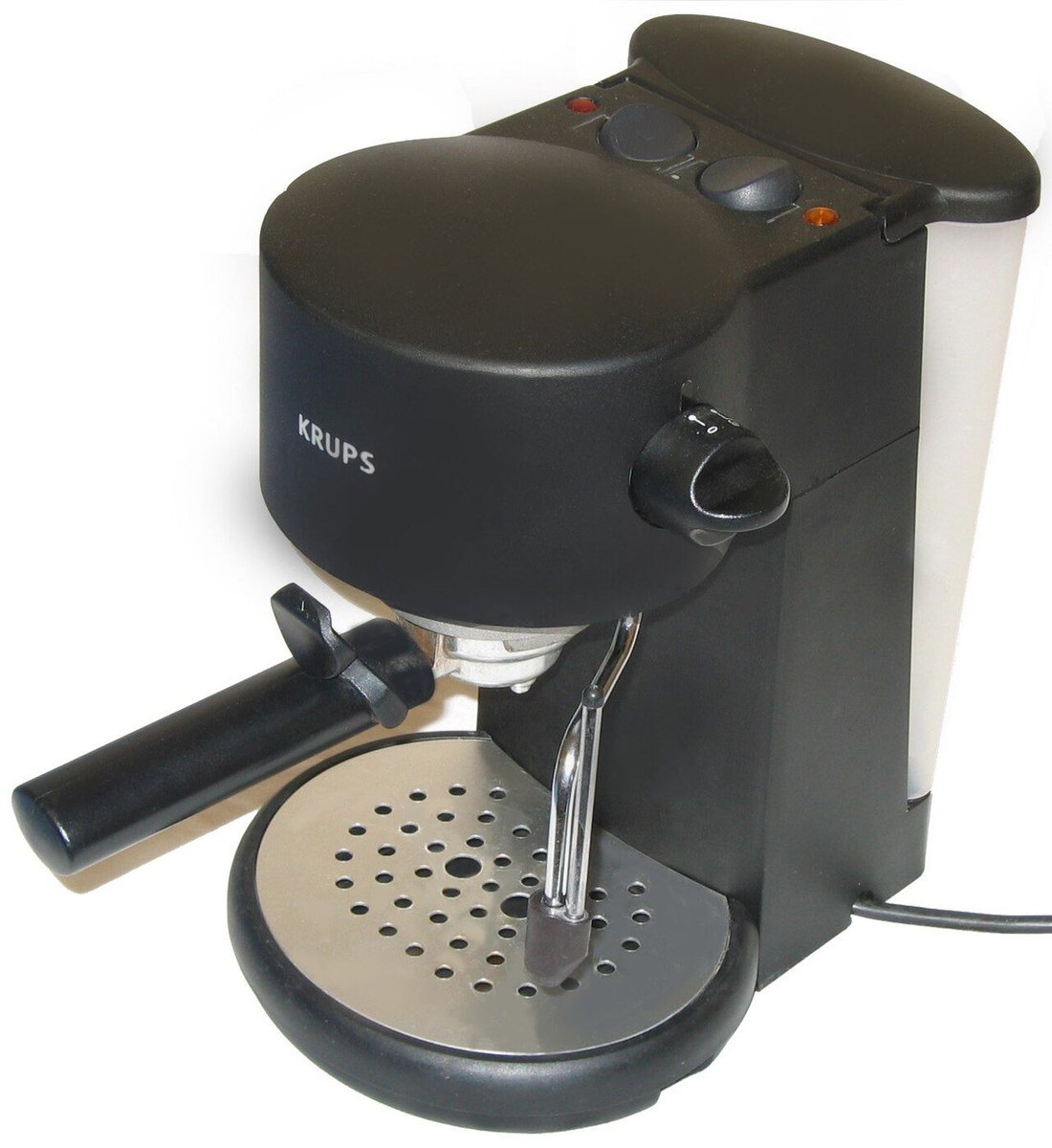
What Is Espresso, Really? {#what-is-espresso}
Before you spend a cent, it helps to understand what you're chasing. Espresso is a concentrated brew — typically 25–30 ml — produced by forcing hot water under high pressure through a tightly packed puck of finely ground coffee, usually in 25–30 seconds. The result is a small, intensely flavoured shot topped with crema, that reddish-brown foam that signals a well-made extraction.
What espresso is not is a roast level or a particular bean. Per Wikipedia's espresso entry, the widespread belief that espresso must use dark-roasted beans is a myth — the method works beautifully across a wide range of roast levels and origins. You can pull a bright, fruit-forward shot from a light Ethiopian just as legitimately as from a classic Italian blend.
Because the brew window is so tight — seconds, not minutes — espresso is unforgiving. Every variable matters: grind size, dose weight, tamp pressure, water temperature, and machine pressure. That's the challenge, and honestly, the joy.
Setting Realistic Expectations {#realistic-expectations}
Here's the part most gear guides skip: your first shots will probably be bad, and that's completely normal.
Even with excellent equipment, dialling in a new bag of coffee takes experimentation. You'll pull sour, under-extracted shots. You'll pull bitter, over-extracted ones. You'll occasionally nail it and not be entirely sure why. This is the learning curve, and it typically runs two to four weeks before things feel consistent.
A few things worth knowing upfront:
- Crema alone doesn't mean quality. Dark roasts produce abundant crema that can taste hollow. Lighter roasts may show thinner crema that tastes exceptional.
- Your café benchmark is hard to replicate immediately. Commercial machines operate at a level of consistency that takes serious home equipment and practice to approach.
- The grinder matters more than the machine. A mediocre machine with an excellent grinder will outperform the inverse, almost every time. We'll come back to this.
- Fresh coffee is non-negotiable. Stale beans are the most common reason beginner shots taste flat, no matter what the machine does.
Go in with patience and curiosity, not perfection, and espresso at home becomes deeply rewarding.
The Four-Piece Kit {#the-four-piece-kit}
A functional home espresso setup has four components. Understanding each one helps you spend wisely.
1. The Espresso Machine
As [S2] notes, espresso machines range from steam-driven budget appliances to pump-driven semi-automatics to fully automatic 'superautos.' For beginners who want to actually learn espresso, pump-driven semi-automatics are the sweet spot — they give you control without demanding a professional barista's muscle memory.
Steam-driven machines (common at the very low end of the market) don't generate sufficient pressure for proper extraction, and tend to produce crema of noticeably lower quality. Avoid these if real espresso is the goal.
2. The Grinder
This is the most consequential purchase in your kit. Espresso demands a very fine, highly uniform grind — and it requires micro-adjustments between doses to dial in a shot correctly. A blade grinder or a cheap burr grinder designed for drip coffee will frustrate you endlessly. A quality burr grinder purpose-built for espresso is where to invest first if budget forces a trade-off.
Read more on why particle size matters so much in our Grinding & Particle Size guide.
3. A Precision Scale
Espresso is a game of ratios. The standard starting point is a 1:2 ratio — so a 18 g dose of coffee should yield roughly 36 g of liquid espresso. Without a scale, you're guessing. A scale that reads to 0.1 g and fits on your drip tray (or sits underneath your cup) is essential. Many baristas weigh both the dry dose and the liquid yield simultaneously.
4. A Tamper
Tamping packs the coffee puck so water distributes evenly across the grounds. An ill-fitting or inconsistently used tamper causes channelling — where water finds weak spots in the puck and rushes through unevenly, producing sour, unbalanced shots. Most machines include a plastic tamper; upgrade to a metal, correctly-sized tamper as soon as you can. Calibrated tampers (which click at a set pressure) can help beginners develop consistency.
Budget Tiers: What You Get at Each Level {#budget-tiers}
Below is an honest breakdown. Prices vary by region and retailer; treat these as relative guidance rather than fixed figures.
Entry Level — The Learning Setup
Machine: Gaggia Classic Pro
The Gaggia Classic Pro is one of the most enduring beginner-to-intermediate machines on the market. It uses a commercial-style 58 mm portafilter (the same diameter found on most professional machines), which means your tampers, baskets, and skills transfer easily if you upgrade later. It has a genuine solenoid valve, a 3-way valve that releases pressure after the shot — a feature absent on cheaper machines that makes dry puck removal and consistent back-to-back shots much easier.
Trade-offs: the stock steam wand can be fiddly for latte art beginners, and the thermostat system is less precise than machines with PID temperature controllers. Many owners eventually add an aftermarket PID — a well-documented modification that meaningfully improves shot consistency. For someone willing to tinker and learn, it's an excellent, honest machine with a huge community of support online.
Grinder pairing: A budget-conscious pairing would be any quality entry espresso burr grinder with stepless adjustment. However, if you can stretch, putting more of your budget into the grinder here pays dividends.
Mid-Range — The 'Buy Once' Setup
Machine: Breville Bambino Plus
The Breville Bambino Plus targets beginners who want a faster path to consistent results. Its key advantage is a 3-second heat-up time (versus the Gaggia's longer warm-up), a built-in PID for temperature stability, and an automatic steam wand that simplifies milk texturing — a genuine help if flat whites and lattes are the goal.
Trade-offs: the portafilter is 54 mm, meaning accessories are slightly less universal than the 58 mm standard. The machine is also smaller in footprint, which suits tighter kitchens but means a smaller water reservoir. It's a polished, beginner-friendly appliance — if you want good shots quickly with less tinkering, it's the easier daily experience.
Grinder pairing: Eureka Mignon Specialita
The Eureka Mignon Specialita is a compact, stepless espresso grinder known for its quiet motor and consistent output. It's a serious grinder that won't become the bottleneck as your skills develop — a key consideration when deciding where to invest at this tier. Pair it with the Bambino Plus and you have a setup that can produce genuinely excellent espresso.
Enthusiast Level — Manual Mastery
Machine: Flair 58
The Flair 58 is a manual lever espresso maker — a nod to the piston-driven machines pioneered in Italy in 1945 — updated with modern engineering. It uses a 58 mm portafilter, accepts standard accessories, and gives the user direct, tactile control over the entire extraction. Experienced users can vary pressure throughout the shot (a technique called pressure profiling) to bring out complexity in high-quality single-origin coffees.
Trade-offs: it has no built-in heating element in the base model, requiring you to pre-heat the brew head with hot water. It also produces no steam, so milk-based drinks require a separate milk frother. This is a machine for someone who wants to deeply engage with espresso as a craft — it will reward patience and study in ways automatic machines cannot, but it is not the easiest daily driver.
Grinder pairing: At this level, the Eureka Mignon Specialita remains an excellent match, or you might consider stepping up to a single-dose grinder with even finer adjustment.
Dialling In: Your First Week {#dialling-in}
Once the kit arrives, here's a practical approach to your first sessions:
- Start with a medium roast espresso blend. Medium roasts are more forgiving and easier to dial in than light roasts. Save single-origin naturals and light roasts for once you have a baseline.
- Use a fixed recipe to start. A 1:2 ratio (e.g. 18 g in, 36 g out) in 25–30 seconds is the classic starting point. Don't change multiple variables at once.
- Taste critically. Sour, thin, or hollow? The shot is likely under-extracted — try a finer grind. Bitter, harsh, or drying? Likely over-extracted — try a coarser grind. Our Extraction: Yield & Strength guide explains the science behind this in detail.
- Keep notes. Even a simple notebook — grind setting, dose, yield, time, your tasting note — accelerates learning dramatically.
- Flush stale beans. If a bag has been open for more than two to three weeks, expect harder-to-dial results. Freshness matters.
Common Beginner Mistakes {#common-mistakes}
Skimping on the grinder. The single most common regret in beginner setups. A great grinder with a modest machine beats the reverse.
Eyeballing the dose. Without a scale, you're guessing. Even 1–2 g variation in dose changes the shot significantly.
Inconsistent tamping. Tamping at an angle, or with wildly variable pressure, creates uneven puck density and channelling. Take time to develop a level, repeatable technique.
Ignoring water quality. Espresso is mostly water. Heavily chlorinated or very hard tap water affects both taste and machine longevity. Filtered water is a small investment with meaningful returns.
Expecting perfection from the first bag. Every new coffee requires dialling in from scratch. That's not a flaw — it's the nature of the craft.
A Word on Milk Drinks {#milk-drinks}
If cappuccinos and lattes are your goal, steaming milk is a separate skill from pulling shots — and it takes practice too. The objective is microfoam: silky, velvety textured milk with tiny, uniform bubbles that integrate with the espresso rather than sitting on top. Machines with manual steam wands (like the Gaggia Classic Pro) give you the most control and the highest ceiling; auto-frothing wands (like the Bambino Plus's) produce acceptable results with far less technique.
For lever machines like the Flair 58 with no steam capability, a handheld or electric milk frother is a practical workaround for home use.
Quick-Reference: Setup Comparison {#setup-comparison}
| Entry | Mid-Range | Enthusiast | |
|---|---|---|---|
| Machine | Gaggia Classic Pro | Breville Bambino Plus | Flair 58 |
| Portafilter | 58 mm | 54 mm | 58 mm |
| PID Temp Control | Aftermarket mod | Built-in | N/A (manual) |
| Steam Wand | Manual | Auto-assist | None (external) |
| Best For | Tinkerers, learners | Quick, consistent shots | Craft-focused enthusiasts |
| Grinder Pairing | Entry espresso burr | Eureka Mignon Specialita | Eureka Mignon Specialita+ |
Where to Go From Here {#next-steps}
Once you're pulling consistent shots, the rabbit hole goes deep — and that's half the fun. Explore our espresso knowledge hub for deeper reading on pressure profiling, water chemistry, and bean selection. The Grinding & Particle Size guide will sharpen your understanding of why your grinder is the engine of the whole system. And when you're ready to move beyond the basics, the Extraction: Yield & Strength article will help you understand why a shot tastes the way it does, not just how to fix it.
Home espresso has a genuine learning curve. But it also has a genuine ceiling — and with the right setup and a curious approach, the coffee you'll be making within a few months will genuinely surprise you.
Gear for this
Frequently asked questions
- Do I really need a separate grinder, or can I use pre-ground espresso?
- A dedicated grinder is strongly recommended. Pre-ground coffee goes stale quickly and cannot be adjusted to suit your machine, your beans, or the current humidity. Espresso requires precise, consistent grind size — a quality burr grinder is arguably the most important piece of kit in the whole setup.
- What pressure should a home espresso machine produce?
- Standard espresso extraction targets around 9 bar of pressure. Spring-piston lever machines typically deliver 8–10 bar. Steam-driven machines fall significantly short of this, which is why they tend to produce lower-quality crema and extraction. When shopping, check that a pump-driven machine specifies 9 bar at the group head, not just the pump rating.
- How long does it take to learn to pull a good espresso shot?
- Most beginners find the process clicks somewhere between two and four weeks of daily practice. The first week is often frustrating; the second week you start seeing patterns; by week three or four, consistency begins to feel achievable. Keeping notes on each session dramatically shortens the curve.
- Is the Gaggia Classic Pro better than the Breville Bambino Plus for beginners?
- They suit different beginners. The Gaggia Classic Pro rewards tinkerers — it has a larger community of modifications and a 58 mm portafilter standard, but requires more warm-up time and benefits from a PID upgrade over time. The Breville Bambino Plus offers faster heat-up, built-in PID temperature control, and an auto-assist steam wand — a smoother out-of-box experience at the cost of a less universal portafilter size (54 mm). Neither is objectively 'better'; it depends on how much you enjoy the process versus the result.
- What is a 1:2 espresso ratio and why does it matter?
- A 1:2 brew ratio means you're targeting a liquid yield that is twice your dry coffee dose — for example, 18 g of ground coffee producing 36 g of espresso. This ratio is the most widely used starting point because it falls within the extraction range where espresso tends to be balanced. Weighing both input and output gives you a repeatable baseline to adjust from, rather than guessing by time or volume alone.
- Can the Flair 58 make milk-based drinks?
- Not directly — the Flair 58 is a manual lever machine with no built-in steam wand. For milk drinks, you'll need a separate handheld or electric milk frother. This is a worthwhile trade-off for enthusiasts focused on shot quality, but if flat whites and cappuccinos are a daily priority, a machine with a steam wand (like the Gaggia Classic Pro or Breville Bambino Plus) is a more practical choice.
See also