Discover · By Region
The London Coffee Scene: A Local Guide
Flat whites, world-class roasters, and the antipodean influence that transformed how London drinks coffee
Key facts
- Scene emerged
- Mid-2000s with Australian and New Zealand baristas
- Key movement
- Third wave coffee treating coffee as artisanal
- Signature drink
- Flat white from Australia and New Zealand
- Founding roaster
- Square Mile Coffee Roasters founded 2008
- Notable roaster
- Workshop Coffee with multiple London locations
- Major cities served
- London with dozens of specialty roasters
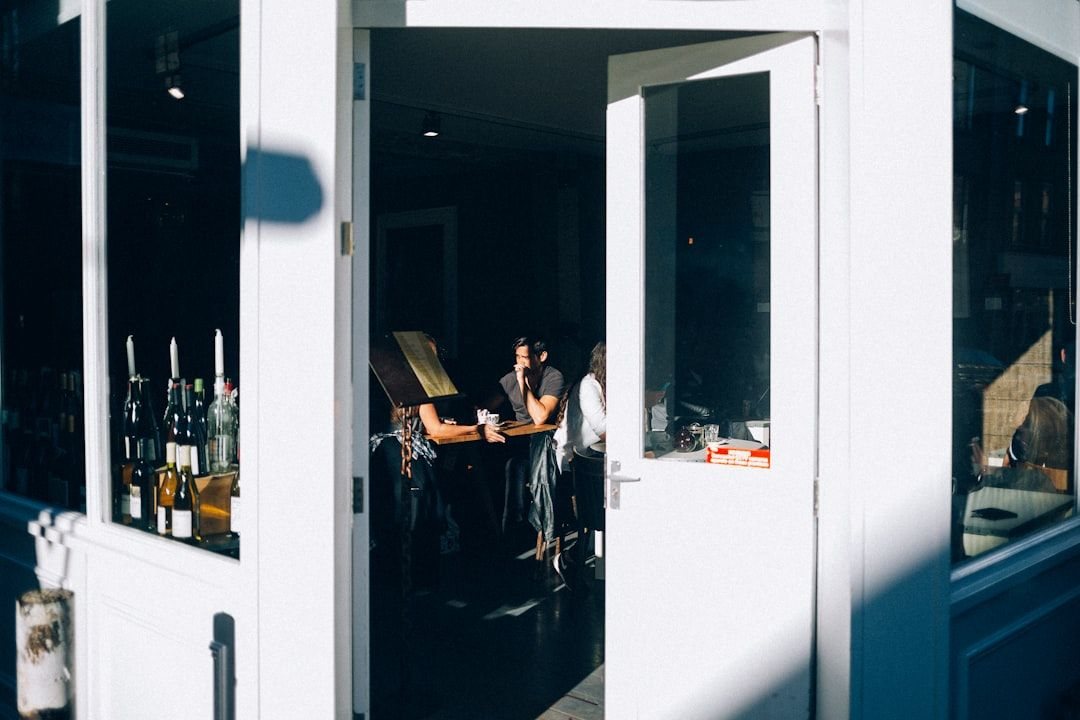
The Scene That Changed Everything {#the-scene-that-changed-everything}
Ask any serious coffee drinker when London's café culture grew up, and they'll point to roughly the mid-2000s — when a wave of Australian and New Zealand baristas arrived with an entirely different set of expectations. They wanted milk drinks made with precision, espresso pulled with care, and beans sourced with the same seriousness a good sommelier applies to wine. What followed was a quiet revolution that produced one of the most sophisticated specialty markets in the world.
The term third wave coffee — the movement that treats coffee as an artisanal product worthy of transparency, traceability, and skilled preparation — found remarkably fertile ground in London. The city's density, its appetite for food culture, and the concentration of cash-rich, time-poor professionals created ideal conditions for a scene that could sustain not just great cafés, but great roasters.
Today, London is home to dozens of specialty roasters, hundreds of serious independent cafés, and a drinking public that has largely moved past the burnt robusta of the high-street chains. This guide anchors on the roasters who did the most to build that foundation, explains the culture that grew around them, and helps you navigate the scene whether you're a visitor or a long-time resident looking to go deeper.
Square Mile: The Roaster That Set the Standard {#square-mile-the-roaster-that-set-the-standard}
No account of London specialty coffee is complete without Square Mile Coffee Roasters. Founded in 2008 and based in east London, Square Mile has operated for nearly two decades at the intersection of competition-grade sourcing and accessible, approachable blends — a combination that made them the reference point for a generation of London baristas.
Their current lineup reflects that philosophy in granular detail. The Red Brick espresso blend — built on Costa Rica and Colombia — is described as delivering red apple, toffee, chocolate, and hazelnut at £15.25 for 350g, and has become something of a benchmark espresso for the city's independent cafés. For those who want more complexity, the Mikuba from Burundi (washed process, cherry, raspberry, toffee) sits at £26.75 for 350g, while the Aquiares from Costa Rica (milk chocolate, pecan, maple, washed) comes in at £18.25.
On the filter side, the Gitwe Hill from Burundi (blackberry, orange blossom, grape) and the Nafuna from Uganda (peach, orange blossom, silky) represent the kind of single-origin traceability that defines the third wave ethos — coffees where the farm or washing station matters as much as the roast profile. The Zarza, a Colombian anaerobic natural, leans into the fruitier, more experimental end of the market with mango and blackcurrant cordial notes at £18.25.
Square Mile also runs a subscription service with workplace options, a wholesale arm that supplies a significant portion of London's best independent cafés, and educational events under their "Twelve Lessons" programme. Their free UK-wide shipping makes them as accessible to someone in Leeds as to a Shoreditch local. If you're trying to understand London's espresso culture from the inside out, starting with a bag of Red Brick is not a bad move.
Workshop Coffee: Precision in Every Borough {#workshop-coffee-precision-in-every-borough}
Workshop Coffee occupies a slightly different position in the London landscape. Where Square Mile built its reputation partly through wholesale and retail coffee, Workshop has always had one foot firmly in the café experience — operating multiple sites across the city, from Clerkenwell to Marylebone, while maintaining a roastery that supplies both their own shops and external accounts.
What Workshop represents for London coffee culture is a commitment to consistency at scale without sacrificing the craft rigour that specialty demands. Their cafés are known for precise espresso technique and a menu that respects both the bean and the drinker — you'll find well-made flat whites, but you'll also find baristas who can talk you through a filter option with genuine knowledge. That combination — hospitality with expertise — is the hallmark of the best London specialty venues.
Workshop's sourcing approach emphasises direct and close relationships with producers, a practice that has become standard at the top end of the London scene but which Workshop helped normalise for a broader audience. For visitors trying to benchmark London's café standards, a Workshop site offers a reliable, high-quality reference point.
The Flat White and Antipodean Influence {#the-flat-white-and-antipodean-influence}
The flat white deserves its own section, because it is the drink most responsible for changing what Londoners expect from a coffee shop. Originating in Australia and New Zealand (a point of friendly dispute between the two countries), the flat white is essentially a double ristretto or short espresso served with microfoamed whole milk in a smaller vessel than a latte — typically 150–165ml. The result is a stronger, silkier drink with more pronounced coffee character.
When antipodean baristas brought the flat white to London in the early-to-mid 2000s, they brought with them a set of assumptions: that espresso should be extracted carefully, that milk should be texturised rather than simply steamed, and that the ratio between coffee and milk mattered. These assumptions cascaded through London's café culture. By the time major chains began adding flat whites to their menus (Starbucks UK introduced theirs in 2010), the drink had already been refined and iterated upon by independent cafés for years.
The antipodean influence went beyond the drink itself. Australian and New Zealand café culture tends to treat the coffee bar as a neighbourhood anchor — a place of genuine hospitality rather than transactional caffeine delivery. That ethos, transplanted to Shoreditch and Fitzrovia and Brixton, produced a style of café that London had not previously seen at scale: technically serious but socially warm, with food programmes that matched the coffee ambition.
Other Roasters Shaping the Scene {#other-roasters-shaping-the-scene}
London's roasting community extends well beyond its two most storied names. Several other roasters have made significant contributions to the city's character.
Assembly Coffee has built a reputation for approachable specialty — coffees and cafés that take quality seriously without the intimidation factor that some specialty venues project. Based in south London with cafés across the city, Assembly has consistently been a gateway roaster for drinkers moving from high-street chains toward something more considered.
Origin Coffee, though headquartered in Cornwall, has a significant London presence and has long been regarded as one of the UK's most serious sourcing-led roasters. Their approach — deep relationships with farming communities, careful processing transparency — represents the ethical backbone that the best of London's wholesale supply chain is built on.
Beyond these, the London scene includes a rich ecosystem of independent roasters and micro-roasters, many of whom supply cafés that have become neighbourhood institutions. The concentration in east London (Hackney, Bethnal Green, Bermondsey) reflects both rental economics and the creative-industry demographics that tend to be early adopters of specialty coffee culture.
A note on diversity: London's specialty scene has faced legitimate criticism for being demographically narrow — predominantly white, often expensive, and concentrated in gentrifying neighbourhoods. The most interesting recent development in the scene is the growing number of roasters and cafés led by people of colour and immigrants from coffee-producing countries, bringing perspectives on origin and flavour that the scene has historically lacked.
How to Navigate the London Scene as a Visitor {#how-to-navigate-the-london-scene-as-a-visitor}
London is a large and bewildering city, but its specialty coffee geography is legible once you know the nodes.
East London (Shoreditch, Hackney, Bethnal Green) is where much of the roasting happens and where café density is highest. This is where the scene's aesthetic was established — exposed brick, V60s on the bar, single-origin filter on the menu.
Central London (Fitzrovia, Soho, Clerkenwell) has seen the most mature development of the scene, with Workshop and others operating sites that demonstrate specialty coffee can work in high-footfall, high-rent environments without compromising on quality.
South London (Brixton, Peckham, Borough) has developed its own character — slightly less self-conscious, more neighbourhood-focused, with Assembly and others anchoring a scene that feels genuinely local.
Practical tips for visitors:
- Order a flat white to benchmark a café's espresso and milk technique in a single drink.
- Ask what's on filter — the answer will tell you quickly how serious a café is about its coffee programme.
- Look for the roaster name on the menu or bags behind the bar. Serious cafés are proud of their wholesale relationship and will tell you who they're serving.
- Wholesale lists as quality signal: if a café is supplied by Square Mile, Workshop, Assembly, or Origin, you're likely in good hands.
- Avoid the obvious chains for your specialty benchmark — the gap between the best London independents and the high-street offer is substantial and worth experiencing.
Buying London Coffee at Home {#buying-london-coffee-at-home}
One of the underappreciated features of London's specialty scene is how much of it is accessible remotely. Square Mile offers free UK-wide shipping and a subscription service — their Red Brick espresso blend is a sensible starting point for home espresso, while the Filter Blend (Burundi/Guatemala, apple, fig, frangipane, £17.25 for 350g) is an excellent introduction to their filter range.
For those building a home setup, Square Mile's wholesale relationships mean they understand what it takes to produce café-quality espresso at home. Their equipment range — including machines such as the Sage Barista Pro and Sage Bambino Plus (currently offered with a subscription discount on their site) — acknowledges that the bean is only half of the equation.
The subscription model, pioneered in the UK largely by London roasters, has made it possible to drink at the level of the city's best cafés without leaving your kitchen. If you're outside London entirely, this is arguably the most practical way to engage with what the scene produces.
Why London Coffee Culture Matters Beyond London {#why-london-coffee-culture-matters-beyond-london}
London's specialty scene matters not just as a local amenity but as a model that has influenced café and roasting culture across the UK and, to some extent, Europe. The roasters who established their reputations here — Square Mile chief among them — have shaped what a generation of baristas expects from sourcing, roasting, and service. Their wholesale relationships have seeded serious coffee culture in cities from Edinburgh to Bristol to Manchester.
The flat white, once a marker of antipodean-inflected London cool, is now a standard menu item from coffee shops in Leeds to Lagos. The vocabulary of tasting notes — the blackberry and orange blossom on a Gitwe Hill, the mango and blackcurrant of a Zarza — has moved from competition judging sheets to the labels on bags sold in supermarkets. London did not invent specialty coffee, but it did more than almost any other city outside the Nordic countries and the Pacific Northwest to mainstream it.
That process is ongoing. The scene continues to evolve — toward greater diversity, toward more experimental processing, toward a more honest reckoning with the economics of coffee farming. The roasters and cafés that matter are the ones engaging with that evolution seriously. In London, there are quite a few of them.
Roasters featured
Frequently asked questions
- What is a flat white and why is it so popular in London?
- A flat white is a double espresso served with microfoamed whole milk in a small vessel — typically around 150–165ml — producing a stronger, silkier drink than a latte. It was brought to London by Australian and New Zealand baristas in the mid-2000s and became the drink most associated with London's specialty café culture because it showcases both espresso quality and milk technique simultaneously.
- Which London coffee roasters are considered essential?
- Square Mile Coffee Roasters and Workshop Coffee are the two names most central to how London's specialty scene developed. Assembly Coffee and Origin Coffee (with a significant London presence despite being based in Cornwall) are also widely respected. Between them, these four roasters supply a large proportion of London's best independent cafés.
- Where should I start if I want to try Square Mile Coffee at home?
- The Red Brick espresso blend (Costa Rica/Colombia, £15.25 for 350g) is a widely recommended starting point for home espresso — it's approachable, consistent, and gives a clear sense of Square Mile's house style. For filter brewing, the Filter Blend (Burundi/Guatemala) is a good introduction. Square Mile offers free UK-wide shipping and subscription options.
- What neighbourhoods in London have the best specialty coffee?
- East London — particularly Shoreditch, Hackney, and Bethnal Green — has the highest concentration of specialty roasters and cafés. Central London areas like Clerkenwell, Fitzrovia, and Soho have mature, high-quality café scenes. South London, including Brixton, Peckham, and Borough, has developed a more neighbourhood-focused specialty culture in recent years.
- How do I tell if a coffee shop in London is genuinely specialty?
- Look for the roaster name displayed on the menu or on bags behind the bar — serious cafés are proud of their wholesale relationships. Ask what filter options are available; the answer reveals how committed the café is to its coffee programme. Ordering a flat white is a quick benchmark for espresso quality and milk technique. Being supplied by Square Mile, Workshop, Assembly, or Origin is generally a positive signal.
See also