Guatemala · Cascara - Dried Coffee Cherry
CASCARA COFFEE CHERRY
Roasted by The Barn
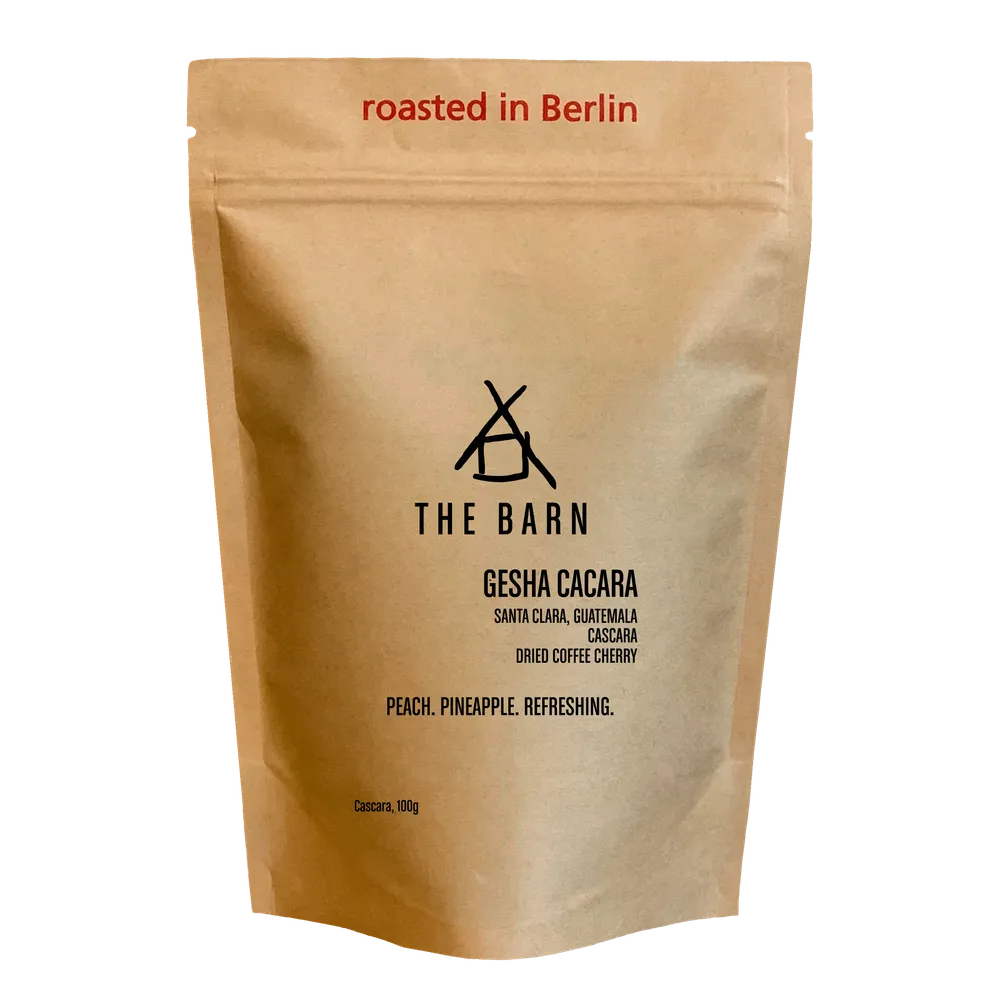
Dried coffee cherry tea from Santa Clara Estate's rare Geisha varietal in Guatemala.
From the roaster
Origin:
Antigua, Guatemala
Producer:
Santa Clara Estate / Ricardo Zelaya
Altitude: 1800 Meters
Varietal: Geisha
Process: Cascara - Dried Coffee Cherry
Flavour Profile Peach. Pineapple. Refreshing.
Cascara means peel or skin in Spanish - it is in fact the dried skin of our coffee cherries. It is generally applied as a natural fertiliser to feed coffee plants with nutrition. It can also be processed as a loose fruit tea and is often enjoyed as a hot beverage.
Finca Santa Clara is located in Antigua, Guatemala. Surrounded by three volcanos, it is in operation since 1930. Only under the management of our partner Ricardo Zelaya, this farm received a sharp focus on quality. First winning the precious Cup of Excellence award in 2001, years of success and recognition followed. At an elevation of up to 1890 meters, Santa Clara is pushing out delicious coffees year after year.
From his vast range of Geisha coffees, Ricardo uses the coffee cherries to produce his Cascara. We fell in love with the unique flavour profile of his Malawi Geisha Cascara.
Geisha Varietal
Geisha Coffee is rare and rated as one of the best coffees in the world. The story of Geisha coffee reaches back to 1936, the time of a British colony in «Abyssinia,» and Captain Richard Whalley, who was tasked with collecting 10 pounds of coffee seeds from the area around Geisha Mountain in what is now Ethiopia. Fast forward, the Peterson family famously re-discovered the Geisha varietal on their farm, La Esmeralda in Panama, in 2004. In the leadup to the Best Of Panama competition, the Petersons did something they had never done before: during processing they separated production from different areas of the farm out into individual lots.
One of the lots they separated out came from high up in Jaramillo. When it landed on the cupping table, it blew everyone away. This was the first time cuppers had tasted a sample that was 100% Geisha coffee, and when they did, it was clear Hacienda La Esmeralda had something new on their hands: The explosion of juicy brightness and layered aromatics in a high-altitude Geisha coffee were more reminiscent of a coffee from Ethiopia then Latin America. Once the initial shock was processed, the cuppers could not get enough of it. Hacienda La Esmeralda went on to win the 2004 Panama competition with their Geisha coffee, and that year set a record for the highest price ever paid for a coffee at auction.
Brew Recipes
Hot Use 6 gr of Cascara and 200 ml of hot water at 95 degrees. 4 min steep time.
Cold Use 20 gr of Cascara and 1000ml of cold water. Keep 8 hours in your fridge. Served over ice.
— The Barn
Context
This cascara offering from The Barn showcases the dried cherry fruit of Geisha varietal grown on Santa Clara Estate in Guatemala's Antigua region. Rather than the bean itself, cascara processing steeps the whole dried cherry—a practice that emphasizes the fruit's natural sugars and creates a distinctly different sensory profile from standard coffee preparation. The roaster identifies peach and pineapple notes with refreshing brightness, characteristics typical of cascara's fruit-forward nature. Produced by Ricardo Zelaya at altitude, this lot represents an alternative way to experience the terroir and varietal character already prized in specialty coffee circles.
In the Encyclopedia
Frequently asked questions
Where is CASCARA COFFEE CHERRY grown?
CASCARA COFFEE CHERRY, roasted by The Barn, is sourced from Antigua, Guatemala.
What does CASCARA COFFEE CHERRY taste like?
Expect tasting notes of Peach, Pineapple, and Refreshing.
How is CASCARA COFFEE CHERRY processed?
CASCARA COFFEE CHERRY uses the Cascara - Dried Coffee Cherry process.
More from The Barn
View all →Colombia · Fermentation
FUNKY COFFEE BUNDLE
Colombian coffee bundle featuring Pink Bourbon and experimental farm coffees.
CORE COFFEE BUNDLE
SWEET COFFEE BUNDLE
A curated bundle featuring Brazil, Guatemala, and Honduras coffees with sweet, balanced profiles.
ViewWashed
GATARE
Red Bourbon from Nyamasheke District with fresh complexity and fruity layers.
More from Guatemala
View all →Merit Coffee · Carbonic Maceration
La Senda Dulce Fuego
Intensive carbonic maceration Bourbon from Acatenango with vibrant fruit and floral notes.
Padre Coffee
Guatemala Paraiso - Single Origin Filter
Single origin Guatemala with bergamot, cinnamon, vanilla and apricot notes.
Padre Coffee
Guatemala Paraiso - Single Origin Espresso
Creamy Guatemala espresso with notes of bergamot, cinnamon, vanilla and apricot.
Axil Coffee Roasters · Washed
Chuito
Guatemalan washed Bourbon espresso from fourth-generation producer with chocolate and guava notes.
Last verified: June 29, 2026 · Browse all beans.