Knowledge · geography
Bani Matar, Yemen
Yemen growing region
Key facts
- Location
- Terraced mountains west of Sana'a, Yemen
- Altitude
- 1,800–2,400 metres
- Typical varieties
- Typica, Heirloom
- Process
- Natural drying on rooftops
- Flavor profile
- Winey, spiced, dried fruit, cocoa, heavy body
- Climate
- Arid, high-altitude with minimal irrigation
- Historic significance
- Yemen's first coffee cultivation region
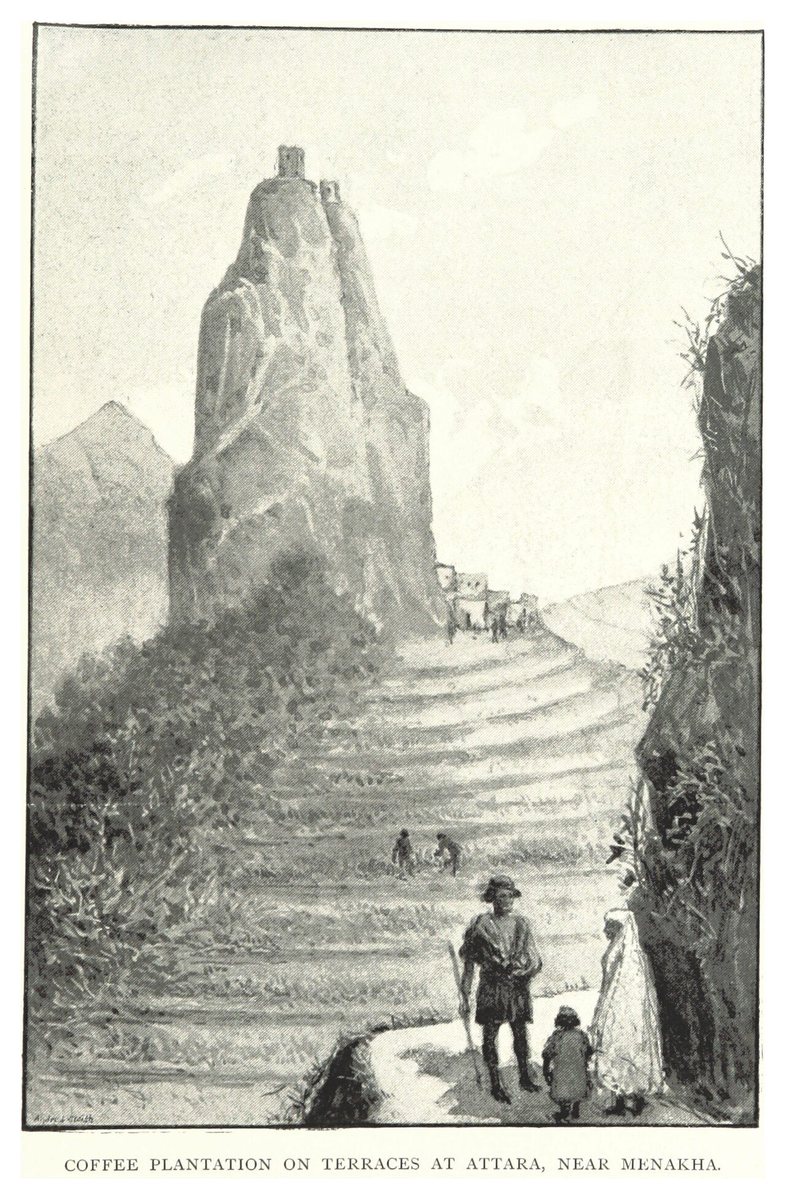
Bani Matar, a district of terraced mountains west of the Yemeni capital Sana'a, is part of one of the oldest commercial coffee landscapes on earth — Yemen was the first place coffee was cultivated and traded at scale, giving its name to the port of Mokha from the 15th century onward. Farmers grow ancient, diverse landraces on hand-built stone terraces between roughly 1,800 and 2,400 metres, drying cherry naturally on rooftops in an arid climate with little irrigation. The coffees are intense and wild: winey, spiced, with dried fruit, cocoa, and a heavy body that defined the historic 'Mocha' flavour. Bani Matar represents both extraordinary heritage and the fragility of coffee farming amid Yemen's difficult conditions.
At a glance
- Altitude: 1800–2400 masl
- Typical varieties: Typica, Heirloom
- Common processes: Natural
- Harvest: 10, 11, 12
Climate
Arid, high-altitude mountain climate relying on terracing and minimal water.
Soil & terroir
Rocky, mineral terraced mountain soils.
See also