
Grinder · Electric flat-burr (filter)
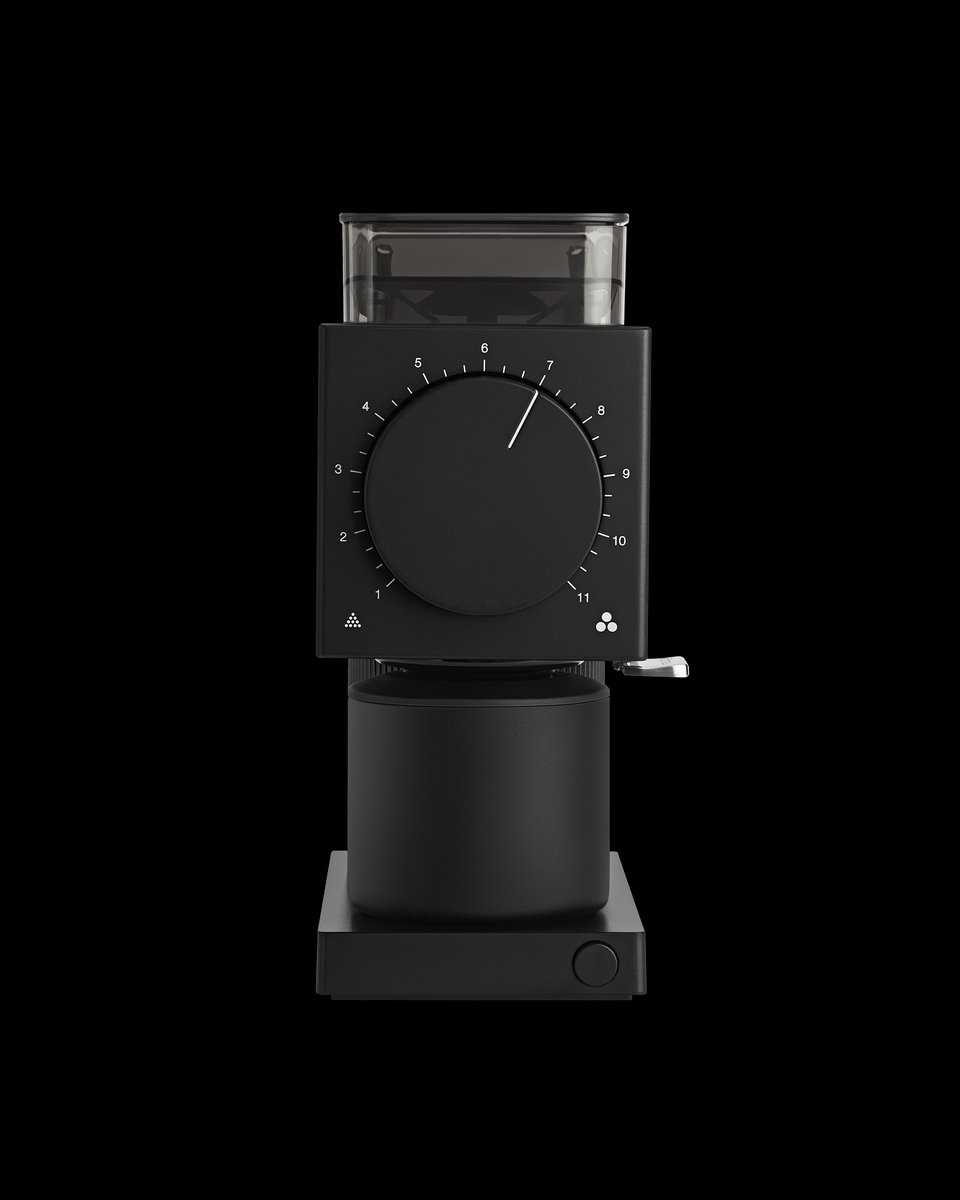
Fellow Ode Brew Grinder Gen 2
Fellow · $$$
A compact 64mm flat-burr grinder built specifically for filter coffee, refined in its second generation.
Price range
$320 – $375
Fellow Ode Brew Grinder Gen 2 on video
James Hoffmann covers the Fellow Ode Brew Grinder Gen 2 in a 14-minute video. Watch the review below, then see the details and where to buy — all without leaving the page.
James Hoffmann takes a hands-on look at the Fellow Ode Brew Grinder Gen 2. We link it for its specs walkthrough and real-world impressions — form your own view by watching.
We may earn a commission when you buy through links on this page, at no additional cost to you.
More videos
Why this matters
The Fellow Ode Brew Grinder Gen 2 occupies a precise niche: a purpose-built, flat-burr electric grinder designed exclusively for filter coffee, priced at around $320–$375 and aimed squarely at the home pour-over enthusiast who wants café-caliber grind quality without a café-sized machine. At its core are 64mm steel flat burrs — a geometry and diameter more commonly found in grinders costing significantly more — which produce a relatively uniform, high-clarity particle distribution well-suited to methods like V60, Chemex, and batch brew. The Gen 2 revision addressed the most persistent complaints about the original Ode: grind consistency in the medium range and static-related retention. For the single-dose, filter-focused home brewer who values counter space, low mess, and repeatable results, the Ode Gen 2 is one of the most cohesive propositions in its class. It is not for espresso users, and it is not a hopper-based grinder for high-volume households. It is, however, one of the cleanest executions of a "one job, done well" philosophy in the sub-$400 electric grinder market.
At a glance
Best for
- Pour-over
- Filter
- Single dosing
Look elsewhere if
- You pull espresso: the Ode Gen 2's grind range does not reach espresso-fine particle sizes reliably, and Fellow does not position it for that use — consider the Fellow Opus 2 or a dedicated espresso grinder instead.
- You want a hopper-based workflow: the Ode has no bean hopper and requires weighing each dose individually before grinding, which is slower and more involved than traditional on-demand grinders.
- You need one grinder for multiple brew methods across a household: the single-dose, filter-only design is optimized for a specific ritual and not well-suited to high-volume or mixed-method households.
- Budget is a primary constraint: at $320–$400, the Ode Gen 2 is a premium purchase; buyers on tighter budgets can achieve solid filter results from the Baratza Encore at roughly half the price, accepting trade-offs in burr quality and retention.
Closest alternatives
The Fellow Ode Brew Grinder Gen 2 is the second iteration of Fellow's filter-dedicated flat-burr grinder, refining the original 2020 model with upgraded burrs and improved grind consistency. The core architecture remains the same: a compact, upright steel body housing 64mm flat steel burrs, a single-dose workflow, and a magnetic grounds catch that snaps neatly beneath the burr stack.
**Build and Design** The Ode Gen 2 continues Fellow's signature industrial-minimalist aesthetic. The body is steel with a matte or gloss finish depending on colorway, and it feels meaningfully solid on the counter — not plasticky, not overbuilt. The footprint is deliberately compact, making it a realistic choice for smaller kitchens where counter real estate matters. The magnetic grounds catch is one of the better-executed catch systems in this price tier: it aligns easily, holds securely during grinding, and releases cleanly for transfer to a portafilter or brew device.
The grind adjustment dial offers 31 settings with physical markers — a meaningful upgrade over stepless systems for users who want repeatability without fuss. Settings are spaced in a way that makes medium and medium-coarse filter ranges — the Ode's sweet spot — easy to dial in and return to reliably. The numbered markers mean you can log your preferred setting for a given coffee and return to it precisely.
**The Gen 2 Burr Upgrade** The headline change from Gen 1 to Gen 2 is the replacement of the original SSP-manufactured burrs with Fellow's redesigned "Gen 2 brew burrs." These burrs were engineered to improve particle uniformity specifically in the medium grind range — the zone most relevant to pour-over and drip — where the original Ode drew occasional criticism for uneven output. The result is a grind profile with better clarity and separation of flavor in the cup, particularly noticeable in lighter-roasted, high-clarity coffees where particle size distribution has a direct impact on extraction evenness.
**Performance** For filter coffee, the Ode Gen 2 performs at a level that competes with grinders in considerably higher price brackets. The 64mm flat burrs run at a low RPM to minimize heat transfer during grinding, and the motor is notably quiet compared to similarly sized grinders — a real consideration if you're grinding at 6am in a shared living space. Grind speed is fast for a home filter grinder; a typical 15–20g single-dose grinds in well under 30 seconds.
Retention is genuinely low. Fellow has consistently prioritized minimal grind retention in the Ode's design, and the Gen 2 continues that: most users report sub-0.5g retention, which matters for single-dosing accuracy where losing even a gram per dose distorts your brew ratio. The grounds catch and burr chamber geometry together minimize the coffee that clings to internals between doses.
**Day-to-Day Workflow** The Ode Gen 2 is unambiguously a single-dose machine. There is no hopper for pre-loading beans. You weigh your dose, drop it in the top, and grind directly into the catch. This workflow suits the specialty coffee ritual of weighing each dose fresh, and it keeps the grinder free of stale grounds between sessions. For users accustomed to hopper-based grinders who want to start single-dosing, the transition is intuitive. Cleanup is straightforward — the catch wipes clean, and the exterior resists fingerprints reasonably well in matte finishes. The grind chamber benefits from occasional brushing to clear fine particles, but this is true of any flat-burr grinder at this price.
**Trade-offs and Honest Limitations**
The Ode Gen 2's most important limitation is also its most clearly stated one: it is not designed for espresso. The 31-step adjustment range does not extend fine enough to produce espresso-appropriate particle sizes with the consistency that method demands. Fellow's own product positioning makes no claims to espresso capability. Buyers who want a single grinder for both espresso and filter will need to look elsewhere — the Fellow Opus 2, for instance, covers both use cases.
The second constraint is single-dosing only. There is no hopper, and the workflow requires weighing beans before every grind. For users who want to load a week's worth of beans and grind on demand without re-weighing, this grinder will feel laborious. It is designed for a specific ritual, not a fast-and-convenient one.
The price point — officially listed at $399.95 from Fellow directly, with street prices in the $320–$375 range — positions the Ode Gen 2 as a considered purchase. At that price, it competes with the Baratza Encore ESP (a more versatile but less clarity-focused option), the Eureka Mignon Filtro (which extends into hopper territory), and the entry-level Comandante hand grinders. Against these peers, the Ode Gen 2 wins on grind clarity for filter specifically, flat-burr particle separation, and design cohesion, but loses on versatility.
**Peer Comparison**
Against the original Ode Gen 1, the Gen 2 is a meaningful improvement in grind uniformity at medium ranges — the difference is audible in cleaner, more transparent pour-overs from lighter roasts. Against the Baratza Virtuoso+, the Ode Gen 2 offers flat-burr clarity and lower retention but at a higher price and with no hopper. Against the Niche Zero — a conical-burr single-dose grinder that does cover espresso — the Ode Gen 2 is more affordable and arguably produces a brighter filter cup, while the Niche Zero's versatility justifies its premium for dual-purpose users.
For the buyer who brews exclusively by filter methods, values cup clarity, and is comfortable with a single-dose workflow, the Ode Gen 2 represents a strong value-to-performance ratio. Its limitations are real but clearly bounded, and its strengths within those bounds are genuine.
Pros
- Excellent filter grind clarity
- Low retention and footprint
- Quiet and fast
Cons
- Not intended for espresso
- Single-dose only
Who reviewed it
We synthesized this page from independent reviews and the manufacturer's own materials. Conclusions below are paraphrased, not quoted.
Fellow Products (Manufacturer)
Fellow positions the Ode Gen 2 as a purpose-built filter grinder featuring upgraded Gen 2 brew burrs, 31 grind settings, and a low-retention single-dose workflow designed to maximize clarity in pour-over and drip coffee.
Source ↗Prima Coffee
Prima Coffee has generally praised the Ode Gen 2 for its meaningful burr upgrade over the original, noting improved grind uniformity in the medium filter range and strong overall value for dedicated filter brewers.
Source ↗James Hoffmann
Hoffmann has assessed the Ode Gen 2 favorably in the context of home filter grinders, recognizing the Gen 2 burr revision as a genuine improvement in grind quality while acknowledging the grinder's narrow, filter-only scope.
Source ↗Wirecutter (NYT)
Wirecutter has noted the Ode Gen 2 as a strong contender for filter-focused home brewers, citing its flat-burr performance and low retention as standout features, though flagging its single-use-case design as a consideration for buyers seeking versatility.
Source ↗Seattle Coffee Gear
Seattle Coffee Gear has highlighted the Ode Gen 2's grind clarity and compact design as major selling points for pour-over enthusiasts, while confirming it is not a practical option for espresso preparation.
Source ↗Sprudge
Sprudge has covered the Ode Gen 2 within the context of Fellow's broader product ecosystem, noting its appeal to the specialty-coffee home brewer demographic and the brand's consistent design language across its lineup.
Source ↗
Frequently asked questions
Can the Fellow Ode Gen 2 grind for espresso?
No. The Ode Gen 2 is designed exclusively for filter coffee methods such as pour-over, drip, and French press. Its 31-step grind range does not extend to espresso-fine particle sizes, and Fellow explicitly does not position it for espresso use. For espresso, Fellow offers the Opus 2 Conical Burr Grinder.
What size burrs does the Ode Gen 2 use?
The Ode Gen 2 uses 64mm flat steel burrs. These are Fellow's own Gen 2 brew burrs, redesigned from the original Ode's burrs to improve particle uniformity specifically in the medium grind range used for filter coffee.
How many grind settings does the Ode Gen 2 have?
The Ode Gen 2 offers 31 grind settings, each with physical markers on the adjustment dial. This allows users to log their preferred setting for a given coffee and return to it precisely across brewing sessions.
Is the Ode Gen 2 a single-dose grinder?
Yes. The Ode Gen 2 is designed for single-dose use only — there is no bean hopper. Users weigh their dose before each grind and load it directly into the top of the grinder. This workflow suits specialty coffee practice but requires a scale and slightly more preparation time.
How much does the Fellow Ode Gen 2 cost?
Fellow's official retail price is $399.95. Street prices and periodic sales can bring the cost down to approximately $320–$375, depending on retailer and timing.
What is the grind retention like on the Ode Gen 2?
Retention is very low — a deliberate design priority for Fellow. Most users report sub-0.5g of retained grounds between doses, which is important for single-dosing accuracy and keeping brew ratios consistent.
How does the Gen 2 differ from the original Ode Gen 1?
The primary change in Gen 2 is the replacement of the original burrs with Fellow's redesigned Gen 2 brew burrs, which improve grind particle uniformity — particularly in the medium grind range most relevant to pour-over. The overall body design, footprint, and workflow remain largely the same.
What brew methods is the Ode Gen 2 best suited for?
The Ode Gen 2 is best suited for pour-over (V60, Chemex, Kalita Wave), drip/batch brew, and French press. Its flat-burr design favors methods that benefit from high particle clarity and even extraction in the coarser filter range.
Is the Ode Gen 2 quiet compared to other electric grinders?
Yes, the Ode Gen 2 runs at a relatively low RPM to minimize heat and noise, and it is noticeably quieter than many similarly priced electric grinders — a practical advantage for early-morning use in shared spaces.
How do I clean the Fellow Ode Gen 2?
The magnetic grounds catch can be wiped clean after each use. The burr chamber benefits from periodic brushing to remove fine particle buildup. The burrs are accessible for deeper cleaning, and Fellow recommends occasional use of grinder cleaning tablets to maintain burr performance.
Does the Ode Gen 2 work with a portafilter?
The Ode Gen 2 is not designed for espresso portafilter use, and its grind range does not produce espresso-appropriate particle sizes. The grounds catch is designed to be used as a vessel for transferring grounds to a brew device, not as a portafilter holder.
What are the main alternatives to the Fellow Ode Gen 2?
Key alternatives include the Baratza Virtuoso+ (hopper-based, more versatile, lower price), the Niche Zero (conical burr, single-dose, covers both filter and espresso at a higher price), and the Fellow Opus 2 (Fellow's own dual-use option covering espresso and filter). Each involves trade-offs in grind clarity, versatility, workflow, and price.
Compare with
DF / Turin
DF64 Single Dose Grinder
An affordable 64mm flat-burr single-dose grinder with a vast modding community.
Baratza
Baratza Encore ESP
An espresso-capable update to Baratza's classic Encore, aimed at affordable home espresso.
More grinders
Niche
Niche Zero
The single-dose grinder that popularised low-retention conical grinding for home espresso.
Baratza
Baratza Sette 270Wi
A fast, low-retention espresso grinder with built-in grind-by-weight dosing.
DF / Turin
DF64 Single Dose Grinder
An affordable 64mm flat-burr single-dose grinder with a vast modding community.
1Zpresso
1Zpresso K-Ultra
A fast, versatile 48mm hand grinder with an intuitive external adjustment dial.
We may earn a commission when you buy through links on this page, at no additional cost to you.
Last updated: June 13, 2026